Traditional Kazakh Leather Craft


For centuries, Kazakh artisans developed highly specialized techniques for processing animal hides and turning them into practical, durable, and often beautifully decorated objects. Leather was not simply a raw material: in a nomadic society, it could become clothing, footwear, containers, household equipment, riding gear, and many other objects essential to everyday life.
In traditional terminology, raw, untanned cattle hide was known as shylgy teri or shylgy kais, while properly tanned hide was called kais.
There were two main approaches to processing hides: removing the hair or leaving it intact. Hair-on skins were used for floor coverings, warm bedding such as bostek, leather containers such as tulyk, water buckets called kauga, and various bags. Hairless hides were processed into durable material for footwear, drums, heavy-duty straps, and other hard-wearing items.
Skins that had undergone a curing process involving heat, smoke, and drying in sand could be made into vessels such as saba (large containers for kymyz, fermented mare milk), torsyk (flask-shaped leather bottles), and konek (milk pails). Once fully tanned, leather could be transformed into garments, belts, saddles, storage chests, wall hangings, and specialized headwear.
Categorizing Hides
The first stage of traditional leatherworking was careful selection and sorting. Artisans considered not only the species and age of the animal but also the particular part of the hide. The back, flanks, neck, and lower legs differed in thickness, flexibility, and strength, making them suitable for different purposes.
- Cattle: Hides were classified according to the age and sex of the animal, including mature cow, egiz (steer), tainsha (heifer), and calf hides.
- Horse: Artisans distinguished mare, yearling, and foal skins.
- Camel: Hides were divided into those of adult camels and young bota (camel calf). The back sections of adult bulls and oxen were regarded as especially durable and were used for heavy leatherwork.
- Sheep: Sheep pelts were divided into ten varieties, including autumn-fleece, shorn, seasonal, and various juvenile skins.
- Goat: Goat skins were classified as long-haired, hairless, cashmere-bearing, and kid-goat skins. Because goat hide is particularly resilient, it was valued for durable clothing, rugs, and liquid containers.
This careful classification was important because nomadic craftspeople had to make the most of every animal hide. Different sections could be directed toward different tasks rather than being treated as interchangeable material.
Making and Smoking the Torsyk and Saba
To make a torsyk or saba, artisans selected flawless hides from cattle, horses, or goats. The hair was removed with a razor, after which the hide was aged for several days on top of a nomadic dwelling or inside a pile of hot, fermented felt. This curing stage firmed the leather and gave it a deep, dark color.
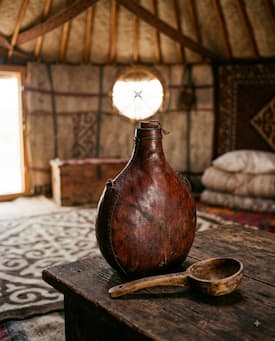
After sewing, the vessel was taken to a riverbank and packed tightly with hot sand. The sand was compacted with a mallet, forcing the leather into the rounded form characteristic of the torsyk. The vessel was then left exposed to heat and wind for four to five days until the leather became extremely hard.
Once the sand had been removed, the inside was coated with salted butter or cured horse fat and placed in the sun for further curing.
The final stage was smoking, a process that contributed to the vessel's durability and helped protect it from spoilage. Artisans built a specialized smoking structure by digging a trench approximately 10–15 meters long. A fireplace was placed at one end, while a ventilation system directed the smoke through brick baffles. The arrangement allowed warm, relatively clean smoke to reach the smoking chamber rather than exposing the leather directly to flames.
The chamber was a teepee-like structure covered with old felt or fresh grass, and the vessels were hung upside down inside it.
Craftsmen burned tobylgy (meadowsweet), shiy (reed grass), and aromatic plants such as wormwood or juniper. These materials gave the leather its characteristic scent and contributed to the traditional smoking process.
Properly treated, a torsyk could hold kymyz for up to six months without leaking, molding, or losing its freshness. After long use, when the vessel's protective qualities declined, it could be cleaned, re-oiled, and smoked again rather than discarded.
This ability to restore and reuse leather vessels was particularly valuable in nomadic life, where durable equipment had to withstand constant travel, changing weather, and repeated daily use.
The Traditional Process of Tanning Leather
For traditional tanning, craftsmen prepared a fermenting solution in a large vat or bucket and immersed the hides directly in it. This technique was known as malma.
The tanning agent, called i, was traditionally made from fermented dairy products. These included katyk (thickened fermented milk), airan (a fermented dairy drink similar to kefir), mashed kurt (dried cheese curds), and the whey left over from kurt production.
Other materials could also be used. Fermented grain porridge called koje, or a brine made from flour and salt, could serve as substitutes.
The use of fermented dairy products reflects the close relationship between leatherworking and the broader material culture of pastoral communities. The same livestock that supplied meat and milk also provided hides, while dairy by-products could be incorporated into craft processes.
Soaking and Curing
Before the main treatment, the hide was washed in cold water to remove dirt and other debris. It was then placed in the tanning vat, where the artisan repeatedly churned the solution, a process called sapsy, several times a day to ensure that the liquid penetrated the entire hide.
Complete immersion was essential. Any part of the hide that remained above the liquid could become hard, shriveled, and unusable.
Sheep and goat skins generally required six to nine days in the vat, while heavier cattle hides could require fifteen to twenty days.
Artisans tested the hide to determine whether the tanning process was complete. The surface was scratched, and the texture was examined. If the grain had become thicker and the flesh side felt supple, the hide was considered ready.
After removal from the vat, the hide was dried in the shade and then cleaned with sakar (traditional wood-ash soap).
The soaking process caused the hair to become matted and clumped. Once the skin had dried, it was beaten with soft willow switches or combed with a wide-spaced tool. The best results were achieved by working the leather while it was still slightly damp. As it dried, the warmth of the artisan's hands and repeated manipulation helped keep the fibers soft and flexible.
Scraping and Cleaning
Once the leather had been tanned and dried, the flesh side had to be cleaned of remaining muscle and fat.
To do this, one end of a sturdy wooden pole was braced against a wall or post while the other end rested on the ground, creating a sloping support. The support was covered with heavy felt or another durable fabric. The hide was then placed over it with the flesh side facing upward.
To make the removal of remaining tissue easier, the artisan dusted the surface with flour or powdered chalk.
The scraping tool, called a kyrgy, was generally made from a curved scythe blade or a piece of sharpened iron.
This stage required considerable skill. Too much pressure could damage the hide, while insufficient scraping would leave unwanted tissue that could affect the leather's strength and appearance.
Surface Tanning for Delicate Hides
Smaller and more delicate skins—such as lamb pelts, kid-goat skins, young camel hides, and small animal furs—could be treated without completely immersing them in a tanning bath. Instead, the tanning solution was applied directly to the skin. This method required only one or two days.
For thin-skinned animals such as rabbits, foxes, sables, desert foxes (karsau), and squirrels, artisans used a rapid technique known as sabaulau.
The animal was skinned whole, keeping the fur intact. A fresh fox pelt, for example, was turned inside out and rubbed with a mixture of salt and dried cheese curds (kurt). Two sticks were inserted into the pelt to stretch and rotate it.
Using this specialized method, a fox skin could be prepared for a winter hat called a tymak in only seven to eight hours.
Unlike heavier hides, these delicate furs were not scraped. Instead, the artisan manually removed excess fat and thick muscular tissue, preserving the softness and structure of the pelt.
The Art of Leather Dyeing
Among traditional methods of coloring leather, dyeing with tree bark was one of the most widespread and effective.
Artisans used the bark of willow, oak, black bird-cherry, and sometimes larch. Bark was collected in autumn from fallen trees because stripping bark from living trees could seriously damage or kill them.
The collected bark was washed in warm water, dried, and then ground into powder in an iron mortar or crushed with a hand mill.
To prepare enough dye for a large coat made from 11–12 sheepskins, approximately 4–4.5 kilograms of bark powder were boiled in about two buckets of water, with a small amount of salt added.
The boiling time depended on the desired depth and saturation of the color. If too much water evaporated, more was added. If the pigment remained too weak, additional bark powder was introduced.
When the dye reached the required color and consistency, the fire was extinguished and the solid material was strained out.
After the solution had cooled to a lukewarm temperature, it was applied evenly to the leather with a horsehair brush or a piece of clean felt.
The dyed hide was then folded with the grain side inward and left for several hours, allowing the color to penetrate the fibers. It was subsequently spread out to dry in a well-ventilated shaded place or in a warm room.
As the leather began to dry and firm up, it had to be repeatedly stretched and massaged by hand. Without this treatment, the leather could become stiff or brittle.
Other traditional dyes included madder, known as tomar, and lichen, called kyna.
Fur Clothing and Leather Craftsmanship
Dyed and processed leather was essential for making both practical clothing and highly decorated garments.
Clothing made from the hides of the four principal types of livestock—cattle, horses, camels, and sheep or goats—was known as on kiim (fur clothing). Such garments were highly valued for their ability to provide warmth in the severe climate of the steppe.
- Sheep and goat: Their skins were used for coats called ton, trousers, and various fur garments known as ishik. These included sen-sen, made from lambskin, and eltiri, an astrakhan-style fur.
- Young animals: Lamb and kid skins were particularly suitable for headwear such as tymak (winter hats), barik, and kulakshyn (ear-flap caps).
- Specialized coats: A coat made from foal skin with the fur worn outward was called a kulyn ishik, also known as a doha. A coat made from young camel skin with the fur worn inward was called a bota ishik.
- Children's garments: Artisans also made patchwork clothing for children from the lower-leg pieces of sheep, goats, and young camels, known as pushpak. These garments were lightweight while providing considerable warmth.
Wildlife Pelts and Decorative Furwork
Wild animal pelts were also used for luxury clothing and headwear. These included wolf, fox, raccoon, and sable coats, as well as hats made from pine marten fur.
Sometimes a garment was named according to the particular part of the animal used to make it. The back, neck, and lower-leg sections of a pelt could each be selected for different purposes. This gave rise to names such as tamak ishik (throat-fur coat) and pushpak bork (leg-fur hat).
Soft animal pelts were also used to make luxurious floor coverings called bostek.
Finished fur garments could be lined with plain or embroidered fabric. Edges, collars, and cuffs were decorated with needlework, piping, and other forms of ornamental trim.
Among particularly elaborate examples were beaver-fur caps known as kundyz bork and richly decorated brocade coats called kamka ton.
The Art of Fine Leatherworking
The craft of tanning and dyeing hides to produce bylgary (fine, refined leather) became highly developed in Kazakh culture.
Properly processed leather was resistant to moisture, held fasteners securely, kept seams strong, and retained an attractive appearance. These qualities made it especially valuable for objects that had to withstand intensive daily use.
Traditional leatherworkers recognized several distinct varieties of fine leather, including koksaiyr, opayke, bylgary, kurym (chrome-tanned leather), kozel, shegiren, saktyan, and ultan.
The Prestige of Koksaiyr
Koksaiyr was made from the rump, or sauyr, of horse or goat hides.
It was traditionally dyed in vivid shades of blue, red, yellow, or green and developed a distinctive glossy surface. Artisans could combine pieces of differently colored leather to create intricate mosaics or embroider monochrome leather with fine silk threads.
This material was used to make kebis (leather overshoes), masi (soft-soled boots), and various pieces of equestrian equipment. These objects could themselves be referred to collectively as koksaiyr.
The most elaborate examples were decorated with gold, silver, or brass nails, as well as pearls and other sparkling stones.
Because such work required exceptional precision and artistic skill, the production of richly decorated leather goods was sometimes associated with master jewelers, particularly when the objects were intended as luxury items.
Among these were tokym (saddle pads), koramsak (quivers), and saukele (bridal headwear).
Traditional Kazakh Footwear
Leatherworking was especially important in footwear production. Craftsmen who specialized in making boots were known as etikshi (bootmakers). Their work could also include belts, bridles, cruppers, and other leather equipment associated with riding.
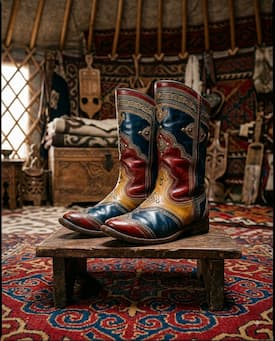
- Saptama: Tall, spacious winter boots with low heels, designed to be worn over thick felt socks and trousers. The shaft was made from a single piece of leather and extended above the knee, with a slight dip behind the calf for comfort. Such boots were well suited to long journeys, herding, and travel by sled.
- Shonkaima: A variation of the saptama with a higher heel, a shorter shaft ending below the knee, and a pointed toe. Because the shaft was joined along the sides, this type was sometimes described as a split-shaft boot.
- Mykshyma: A high-heeled boot with a thick sole, a narrow waist, and a strongly upturned toe. Historically, it was associated with young men and gallants and could feature koksaiyr reinforcement.
- Kok Etik: Lightweight ceremonial boots with sharp toes and elaborate embroidery. They were associated with warriors and members of the social elite. Their prestige is reflected in the traditional saying: “A girl who waits for a kok etik wearer will never be wed.”
- Kebis: Leather overshoes shaped over a wooden mold to protect the masi worn underneath. They had strong soles and heel counters reinforced with birch bark. Wooden pegs and taramys (sinew thread) were used to secure the construction. Because kebis could be richly decorated, their rims might feature metal trim, silver details, or engraved patterns.
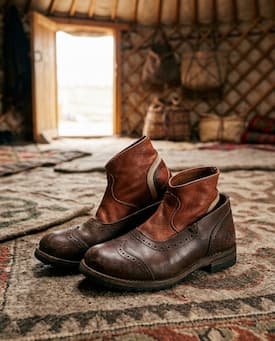
- Masi: Lightweight house boots with soft soles, made from supple leathers such as shegiren or kozel. Their single-layer soles were attached using an internal blind-stitch technique with sinew. A decorative heel panel called the kulshin, often made from contrasting leather, added both visual detail and structural reinforcement. Masi were worn inside heavier boots for comfort and warmth.
Taramys: Traditional Sinew Thread
An important material in traditional Kazakh leatherworking was taramys, a strong thread made from animal sinew.
Leather artisans used it to stitch etik (boots), kebis (overshoes), masi (soft house boots), and many other leather objects.
They were then beaten with wooden mallets until they became soft and pliable. As the tendon broke down, it separated into fine, thread-like fibers. Artisans carefully divided these strands and twisted them together to produce a strong two-ply thread.
Depending on its thickness and intended use, taramys was traditionally divided into three main grades:
- Kayu taramys: A heavy-duty thread used for structural work.
- Burme taramys: A finer form used for gathering and more delicate work.
- Tigis taramys: A standard thread for general sewing.
Why Taramys Was So Valuable
Taramys was particularly well suited to traditional leatherworking techniques, including hidden stitching and decorative star-shaped embroidery.
Its greatest advantage was durability. Unlike many ordinary threads, properly prepared sinew resisted rot and fraying and retained considerable strength even after years of intensive use.
For a nomadic society whose clothing, footwear, riding equipment, and household containers had to endure constant movement and harsh environmental conditions, such a material was more than a craft detail. It was part of a broader system of practical knowledge in which animal products were transformed into durable tools and objects with remarkably long working lives.