Hospitality


Aq Alyp Shyghu: Welcoming with the "White Fill"
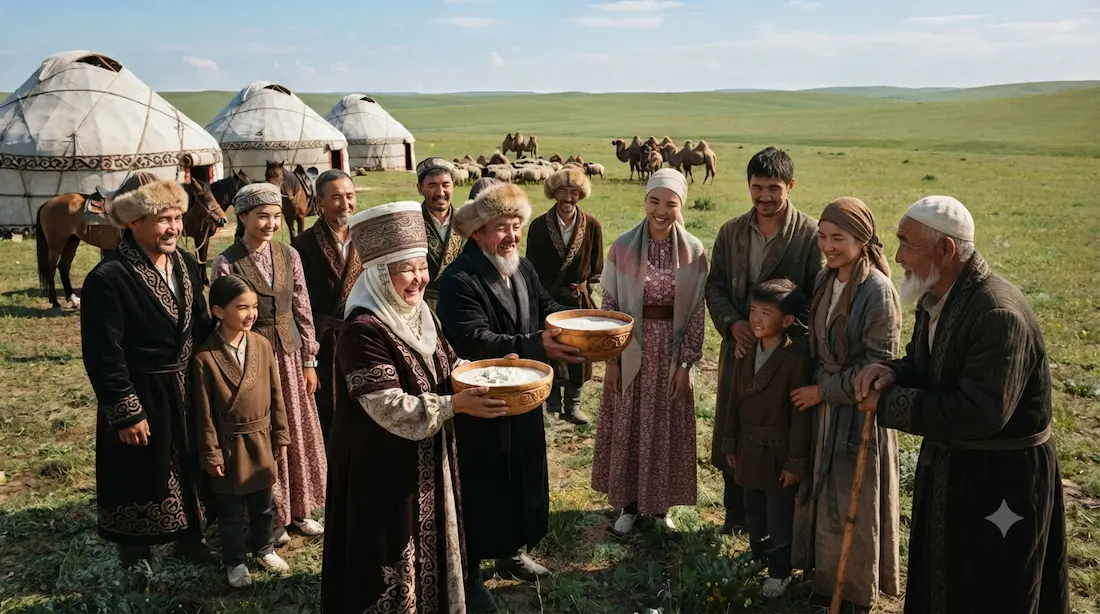
Kazakhs collectively refer to all dairy products—such as milk, mare’s milk (kymyz), fermented camel’s milk (shubat), and kefir (ayran)—as Aq (literally, "White"). Dairy is viewed as sacred, symbolizing purity, honesty, and goodwill. When new neighbors move into a nearby pasture or village, the established families immediately walk out to greet them carrying bowls of dairy. This gesture signifies that they wish for a transparent, sincere relationship. Following this initial greeting, the hosts throw a formal welcome feast called Erulik to help the newcomers integrate into the community. Failing to host an Erulik for a new neighbor was viewed as incredibly rude and a major breach of steppe etiquette.
Aq Kyyp Shygaru: Ritual Pouring and Unexpected Diplomacy
Because dairy is sacred, spilling it intentionally is normally forbidden. However, exceptions were made under unique circumstances:
- During Wildfires: Dairy was ritually thrown into major fires to spiritually subdue the flames.
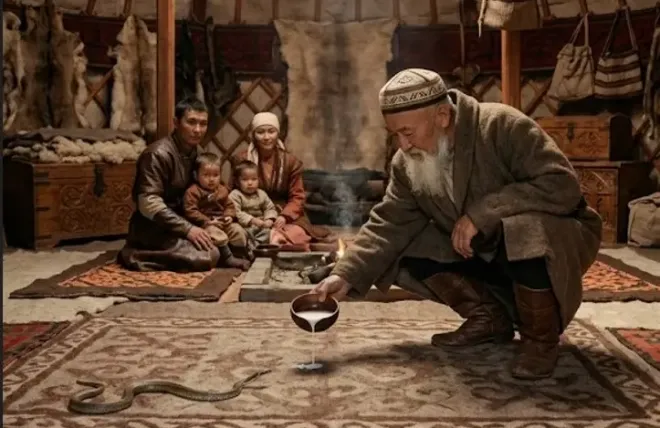
- Venomous Intruders: If a venomous snake slithered into a yurt, the hosts would not kill it inside. Instead, they carefully poured milk over its head (Aq kyyp shygaru) to neutralize its aggression and gently guided it back outside out of respect for nature.
This philosophy extended to human interaction. If an enemy or rival entered a Kazakh yurt peacefully, the host was culturally obligated to serve them their finest kymyz or shubat, setting aside geopolitical animosities in favor of absolute hospitality.
Barmaq Zhalau: Sharing the Honor of a Guest
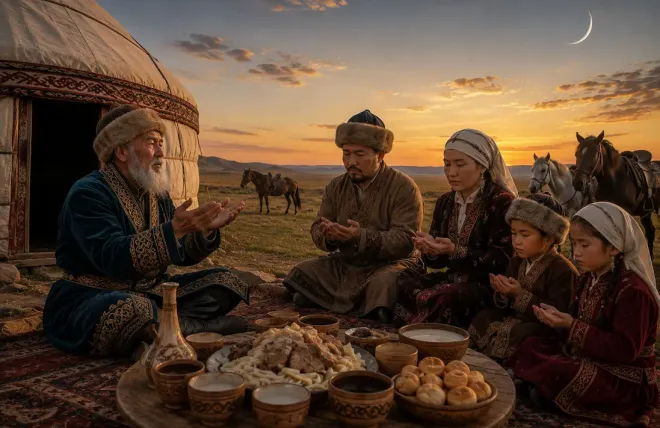
When an exceptionally esteemed elder or guest visits a home, the host prepares a special feast. By tradition, close friends and youth from neighboring tents will quietly drop by without a formal invitation. This spontaneous gathering is called Barmaq Zhalau (literally, "licking the fingers"). Far from being seen as rude intruders, these uninvited guests are welcomed with open arms. The host is genuinely delighted to share the blessings of the guest-table, using the opportunity to introduce local youth to the wisdom, stories, and cultural inheritance of the visiting elder.
Dengene: The Gluttony Trap and Communal Tax
Dengene is a fascinating, high-stakes hospitality custom that doubled as an informal wealth-redistribution tax on affluent livestock owners. A group of three or four robust young men would visit the home of a wealthy herder and boldly declare: "We have arrived for Dengene!"
Understanding the rules of the game, the wealthy host would immediately slaughter a plump, mature sheep, cooking every single piece of meat in a massive cauldron.
Step 1: Youth demand Dengene
Step 2: Wealthy host cooks whole sheep
Step 3: Youth must eat everything
Step 4 (Failure): Pay two sheep fine
The visiting youth were required to eat all the meat and drink every drop of the rich broth (sorpa) in a single sitting. If they successfully cleared the table, the meal was completely free. However, if they failed to finish the food, they were heavily penalized for wasting resources and had to pay the host a double fine—surrendering two live sheep in place of the one they couldn't finish. In southern regions, this culinary tradition evolved into a friendlier cooperative event called Sirne, where four or five neighboring families pool their livestock together to host massive communal barbecues for visiting in-laws.
Erulik: The Welcome Wagon
When a new family moved into a neighboring pasture or winter camp, the community immediately hosted a welcoming feast called Erulik. Beyond the celebratory meal, neighbors actively helped the newcomers settle into their new environment by sharing resources like firewood, clean water, and extra labor. This mandatory gesture built immediate friendships, strengthened communal solidarity, and integrated newcomers into the local social fabric.
Qazan Shegeleu: The "Pot-Repairing" Prank
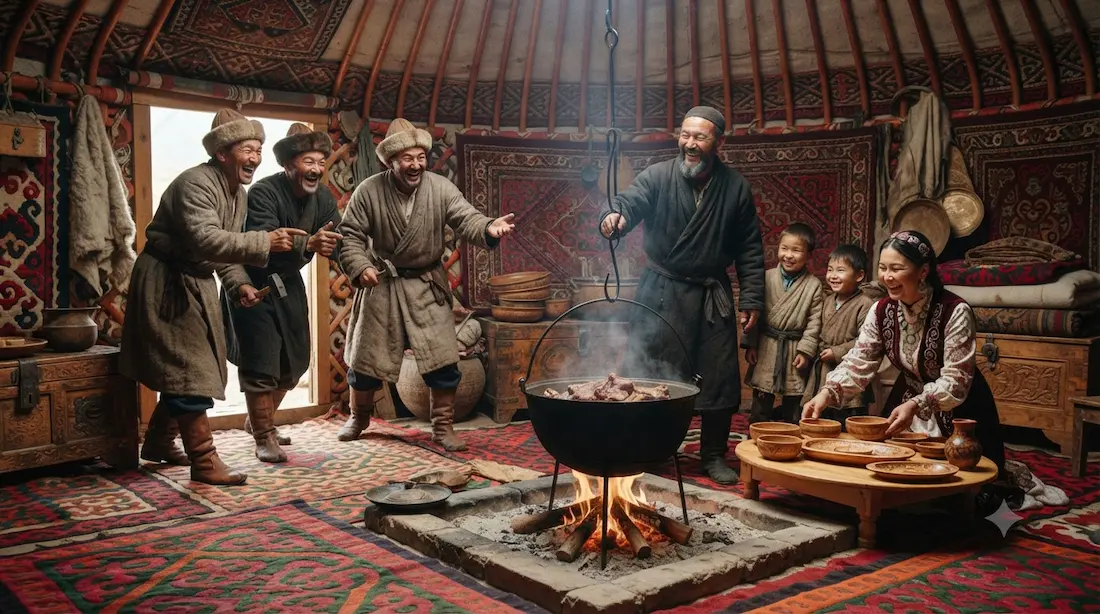
Qazan Shegeleu (literally, "coming to nail down the cauldron") is a playful, lighthearted prank played between close friends and good neighbors. A group of friends will unexpectedly arrive at a neighbor's tent, laughing and loudly announcing: "We have arrived to patch up and nail down your cooking cauldron!"
Playing along with the joke, the hosts respond: "What a relief! We were just looking for someone to secure our pot. How wonderful that you arrived!"
The host immediately hangs up a fresh cauldron of meat to feed the visitors. This custom highlights the spontaneous hospitality, wit, and generosity embedded in everyday village life.
Qonaq Asy: The Sacred Law of Guest Food
Kazakh hospitality is world-renowned for its absolute generosity. A family will save their sweetest delicacies, finest preserves, and premium cuts of meat exclusively for guests, content to eat simple fare themselves. Traditional law classifies guests into three strict categories:
Arnayy Qonaq: An honored guest who was explicitly invited, or a distinguished traveler arriving on official business.
Qudayi Qonaq: A "God's Guest"—a random stranger, wandering traveler, or lone herder seeking shelter from the elements.
Qydyrma Qonaq: A local villager or neighbor who happens to drop by the tent exactly when the meat finishes cooking.
Historically, if a wealthy herder or local chieftain discovered that a family maliciously refused to provide shelter and a warm meal (Qonaq Asy) to a weary traveler, they would penalize the unhospitable family with a severe fine, forcing them to surrender a live camel or horse to the wronged traveler.
Qonaq Kade: The Guest’s Performance Fee
In exchange for absolute hospitality, a host has the right to request a Qonaq Kade (the guest’s performance fee) from their visitor. The guest is expected to sing an inspiring song, recite a heroic epic, play a beautiful melody on the dombra, or compose a poetic verse on the spot. Because children on the steppe were trained in oral poetry from infancy, travelers rarely felt embarrassed by this request, transforming ordinary evenings into vibrant, lyrical concerts.
Soghym Basy: The Winter Gathering
As winter approaches, Kazakh families slaughter their choice livestock for winter storage (soghym). Affluent families often harvest multiple animals to feed their large households. Hosting a Soghym Basy (literally, "the head of the winter meat") is a mandatory hospitality ritual. The host invites village elders, neighbors, and close friends to enjoy a feast of freshly boiled meat. This gathering provides a warm, comforting space for storytelling and community bonding during the cold months, concluding with the guests offering blessings of prosperity to the household.
Sybagha: The Rightful Gastronomic Share
When meat is prepared, specific prime cuts are strictly reserved for honored guests, elders, and in-laws under the rule of Sybagha. Elders and senior in-laws receive the most prestigious cuts, including the head (bas), rump (zhaya), pelvis (zhambas), and choice loin vertebrae. Daughters-in-law, daughters, and sons-in-law are each designated their own specific symbolic cuts. Crucially, any traveling stranger or unexpected guest who arrives at the tent is legally entitled to their own full Sybagha. If a host fails to provide this, the traveler has the right to voice their grievance publicly, bringing social disgrace upon the unhospitable household.
Qap Qaghar: Clearing Out the Winter Pantry
As winter turns to spring, the large stores of preserved winter meat (soghym) naturally come to an end. When the very last scraps of meat are scraped from the bottom of the storage sacks, the family hosts a Qap Qaghar (literally, "shaking out the sack"). They boil these final, highly flavorful cuts and invite their neighbors over for an intimate meal. This gathering is also called Et Qaytar (the return of meat), serving as a joyful celebration that the community successfully survived the harsh winter together while looking forward to the fresh dairy of spring.