Kazakh Beliefs and Taboos


In Kazakh culture, traditional beliefs, taboos, and omens are collectively known as yrym-tyiym (folk beliefs and prohibitions). Rooted in centuries of nomadic life on the Great Steppe, these customs were created to protect families from evil spirits, maintain order within the community, and honor the sacred laws of hospitality.
Beliefs Around Brides and Newborns
Life transitions like marriage and childbirth were considered spiritually vulnerable moments. Kazakh nomads observed strict yrym-tyiym to safeguard the health and future prosperity of young women and infants.
Feeding the Bride: Upon arriving at her new home, a bride is fed the ultabar (a choice section of animal tripe) from the first livestock slaughtered in her honor. This ancient omen is performed to bless her with the birth of a son.
Taboos for Expectant Mothers: A pregnant woman visiting another home must never eat food brought from her own table, as old omens suggested this would result in giving birth to a daughter (historically, sons were essential as future protectors and herders). She is also forbidden from cutting her hair, as a mother’s vitality is believed to reside in her hair, and cutting it could strip her unborn child of their fortune or physical strength.
Caring for New Mothers: Elders returning from social visits always bring back a treat for a new mother. Neglecting this is believed to cause the young mother’s breasts to swell painfully.
Handling the Umbilical Cord: The umbilical cord of a newborn boy is thrown over a distant hill to ensure he grows up brave, adventurous, and mobile across the steppe. A girl's cord is buried near the hearth or foundation of the home so she will grow up to be the protective guardian spirit of the household.
Purifying Visitors: A traveler arriving from a long journey is strictly forbidden from entering a room where a woman has just given birth. Even close relatives must first rest, bathe, and change out of their road-weary clothes. Nomads believed that exhaustion and road dust could carry jyn (malevolent spirits) or startle the fragile infant and weakened mother.
The Sacred Code of Kazakh Hospitality
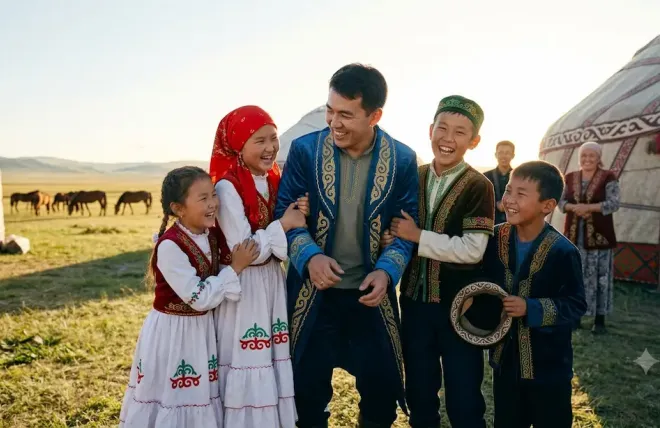
Hospitality is the absolute cornerstone of Kazakh culture. A traveler on the steppe could travel for months relying entirely on the generosity of strangers, governed by a timeless cultural code.
Approaching the Yurt and Greeting Hosts
Riding Protocol: A rider must always approach a home from the right side and dismount from the right without circling the house. Charging directly toward a door or entering unannounced was the behavior of enemies or messengers bearing tragic news. Arriving from the right signifies peaceful, honorable intentions.
Stumbling at the Door: If a guest accidentally trips while entering, the host immediately offers them the tor (the seat of honor, located furthest from the door). A stumble at the entrance is seen as an omen that unexpected wealth and blessings have tripped into the home.
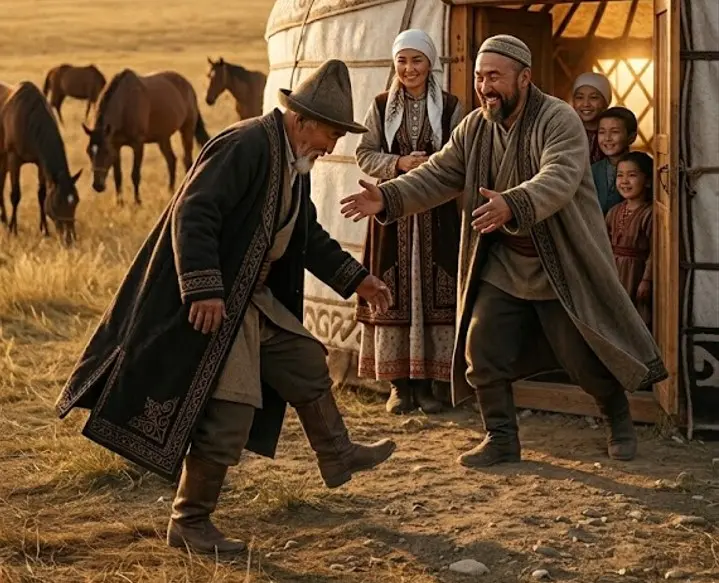
Seating Young Female Guests: A visiting girl is always seated at the tor. Kazakhs believe a girl carries "forty lights of happiness" and "forty angels," and seating her in the place of honor leaves those blessings behind for the host family. Conversely, she is never seated near the door to avoid leaving behind "forty misfortunes" or the cold drafts associated with evil spirits at the threshold.
Etiquette, Food, and the Dastarkhan
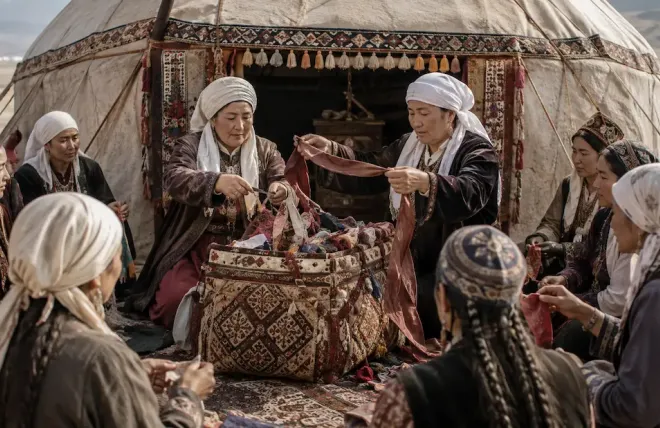
Setting the Table: When spreading the dastarkhan (traditional dining tablecloth), the closed folded edge must face the tor. Setting it incorrectly is believed to bring disruption to the household's affairs.
Door Etiquette: The host must personally open the door when a guest arrives to welcome them warmly. However, when the guest leaves, they must open the door themselves. If the host opens it for a departing guest, it is feared that the kut (the spiritual essence of household prosperity and abundance) will escape with the visitor.
Serving Qonaqasy: The meal served to a guest is known as qonaqasy (the guest’s rightful portion). Hosts must first taste the food themselves to prove its purity and demonstrate sincere goodwill. Serving food in chipped dishes is forbidden, as nomads believed spirits or devils feed from the cracks, insulting the visitor.
The Sacred Shin Bones: If a choice platter contains two kari jilik (the precious shin bones of an animal), the guest is deeply honored. The guest gnaws the bones clean and takes them home to hang by their own threshold to attract continuous wealth.
Gifts and Fortunes: If livestock gives birth while a guest is staying overnight, the guest receives a kiit (a ceremonial gift of clothing or fine fabric) and is celebrated as an aqjolytai (a bringer of good fortune). This is the origin of the saying: "When a lucky guest arrives, the sheep gives birth to twins."
The Oath of Bread and Salt: Kazakhs never let anyone leave without offering food, even if it is just simple airan (fermented milk), irimshik (dried cheese), or qurt (hard salted curd). Sharing a meal creates a sacred bond. The phrase "taste my dam-tuz" (taste my bread and salt) is a binding oath of loyalty; betraying someone whose food you have eaten is considered a profound moral failure.
Everyday Beliefs, Nature, and House Omens
The Sacred Hearth: A qazan (iron cooking pot) must never tilt toward the door, or the family's luck will spill out. A teapot's spout must not face the hearth fire, as boiling tea spilling onto the flames is believed to bring suffering to the daughters of the home.
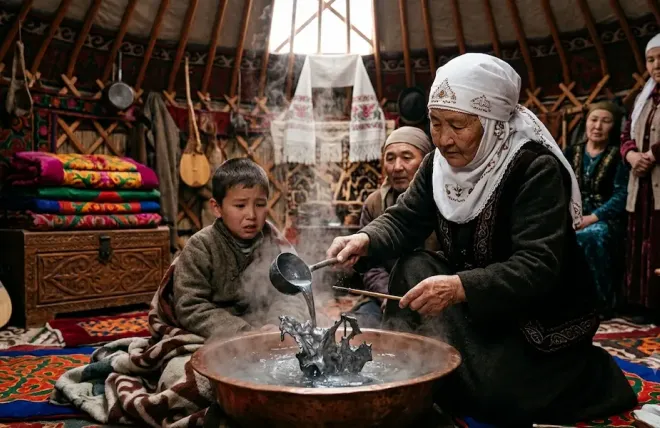
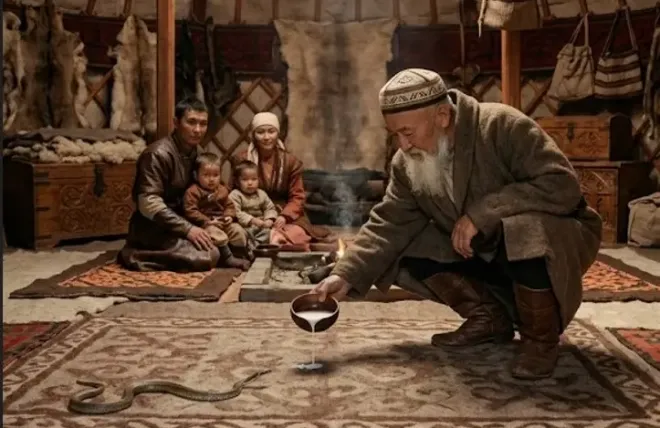
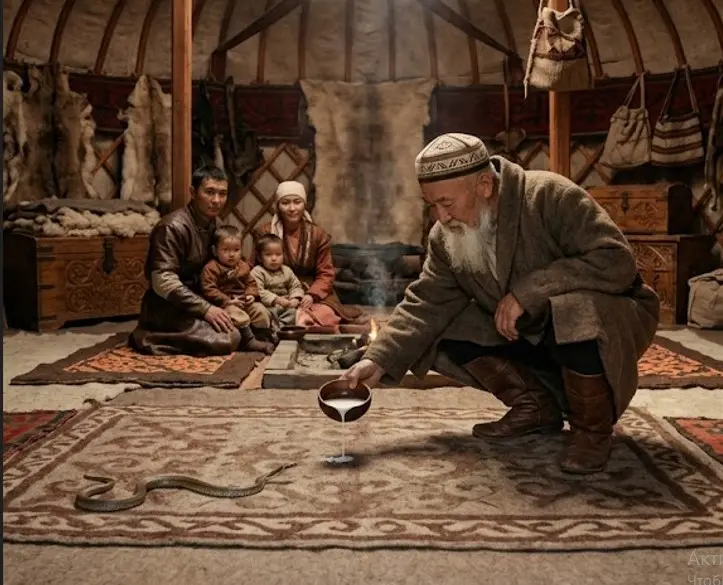
Animals and Spirits: A snake inside a yurt must never be killed; instead, milk is dripped onto its head as it is gently guided outside, because good spirits or angels sometimes travel in the form of snakes.
(A snake encountered in the wild, however, is treated as a dangerous foe).
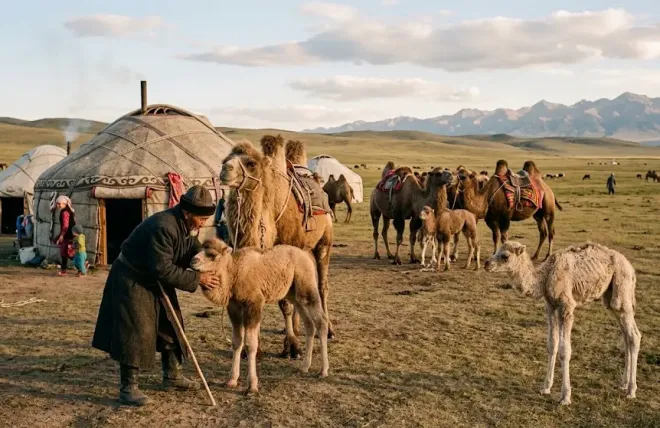
Horses and Riders: A horse is a nomad's closest companion. If a horse yawns or drops dung while being saddled, it is a lucky omen for the journey. A rider must never strike a horse on its hindquarters, as the guiding spirit Qyzyr (a benevolent saint who protects travelers) is believed to sit there. Mane and tail trimming is strictly forbidden during normal times, as it is reserved only for tuldanu (mourning rites for the deceased).
Dogs and the Jeti Qazyna: Dogs are honored as one of the Jeti Qazyna (Seven Treasures of Kazakh nomadic wealth). If a dog urinates near the home’s foundation or follows a rider setting off on a trip, it signals good fortune. However, a dog howling at the sky is viewed as a grave omen of death.
Protection from Elements: During severe thunderstorms, nomads lit small fires around the perimeter of the yurt while praying. Thunder was viewed as divine arrows shot at demons, and the fire prevented fleeing evil spirits from hiding against the home.
Body Postures and Taboos: Body language carried deep meaning. Standing with hands on hips, resting both hands on top of the head, or interlacing fingers behind the back were strictly forbidden, as these postures were historically associated with prisoners, deep grief, or funeral mourning. Pointing a finger at a person is considered disrespectful, as pointing was only used when counting livestock or captives.