Kazakh Camel Breeds and Types


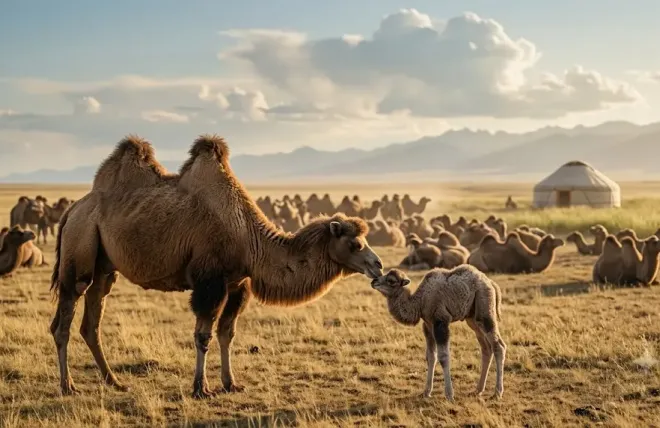
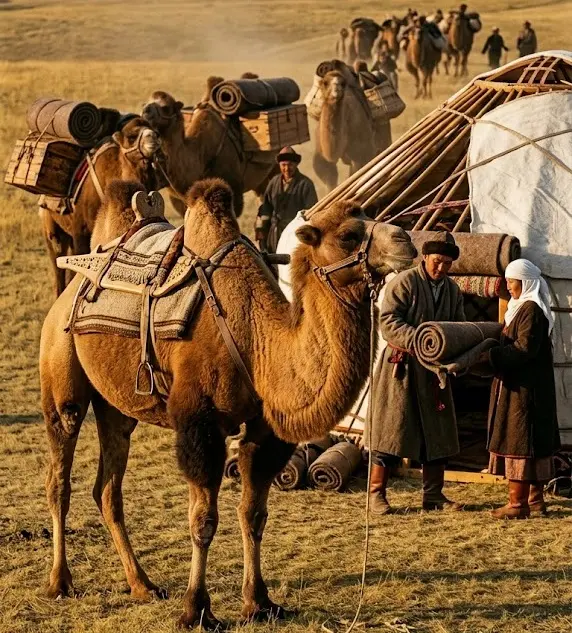
For Kazakh nomads, a camel was far more than a pack animal. It could carry a felt yurt across the steppe, provide milk for the household, transport heavy supplies, and withstand long journeys through harsh and unpredictable environments.
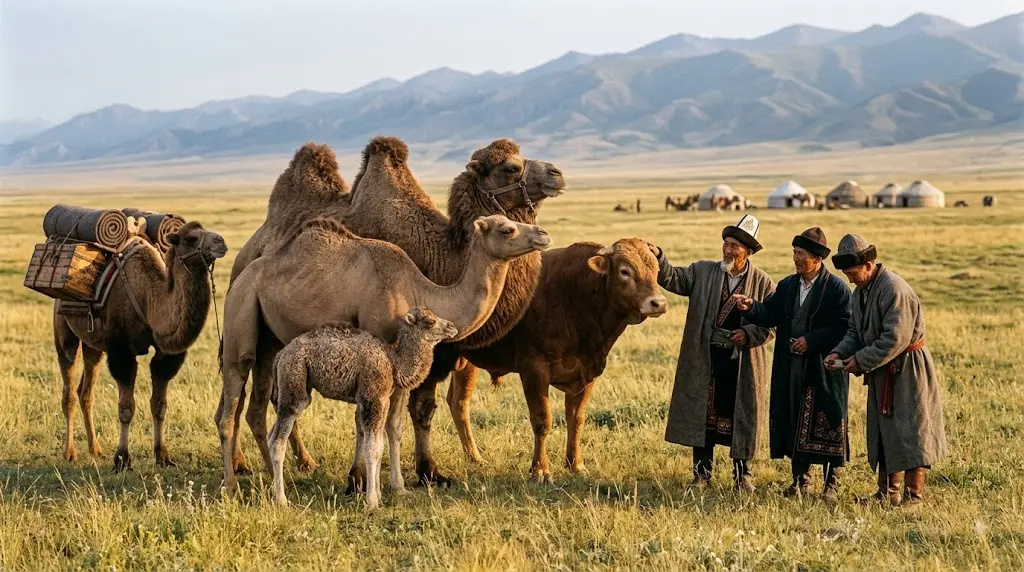
Because so much depended on these animals, Kazakh camel breeders developed an extraordinarily detailed vocabulary for describing them. A camel's name could reveal its ancestry, age, reproductive condition, physical strength, temperament, or the particular work it was suited for.
This was not simply a system of animal names. It was a practical body of knowledge passed down through generations.
A breeder needed to know which animals were best for producing milk, which were suitable for breeding, which could carry heavy loads over long distances, and which were too weak, aggressive, or fragile for demanding work. The appearance and condition of an animal could also reveal its age, health, and history.
The complexity of this terminology reflects the sophistication of traditional Kazakh camel breeding. Breeders used selective breeding and successive crossbreeding between one-humped and two-humped camels to produce animals with different combinations of strength, endurance, milk production, temperament, and resistance to harsh conditions.
The result was a remarkably precise classification system containing dozens of traditional terms.
Some names described particular breeds or hybrid lines. Others referred to females at different stages of reproduction, young animals, breeding bulls, or castrated males trained for transport.
The following terms show just how closely camel breeding was woven into everyday nomadic life.
Breeds and Crossbred Types
Kazakh breeders used selective breeding and controlled crossbreeding to produce animals suited to different environmental and practical needs. Crosses between one-humped dromedaries and two-humped camels produced a wide range of hybrids.
The traditional terminology could vary between regions, so some names appear in slightly different forms in historical and ethnographic sources.
- Aruana: The purebred one-humped dromedary, traditionally associated with a large body, slender legs, fine curly hair, and a distinctive tasseled tail known as shal kuyryk ("shawl-tail"). Although sensitive to cold, the Aruana is resistant to flies, remarkably calm, and known for its high milk yield. In traditional Kazakh camel husbandry, the Aruana was especially valued as a dairy animal.
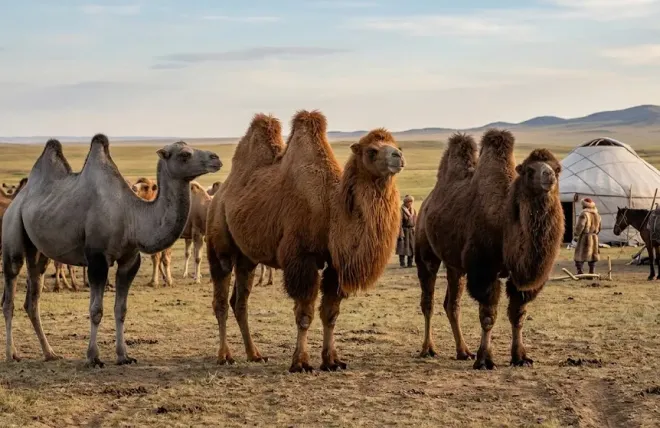
- Bekpatsha Nar: A first-generation hybrid produced by crossing a two-humped camel with an Aruana. It has dense, curly brown wool, strong legs, and a powerful body. These hybrids are valued for their strength, resistance to difficult conditions, and good milk production.
- Kolpatsha Nar: Another first-generation hybrid produced by crossing an Aruana with a two-humped camel. It is characterized by dense reddish wool and strong physical endurance. These animals are capable of tolerating hunger and severe weather and can move effectively through difficult, muddy terrain.
- Zhampoz Nar: A second-generation hybrid produced by crossing Bekpatsha Nar and Kolpatsha Nar. It has curly wool, a relatively low hump, and two distinctive tufts of hair on the chest known as zulip. The type was valued as part of the complex Kazakh breeding system.
- Zhonek Nar: A later hybrid type associated with crossbreeding between earlier hybrid lines. It has a sturdy body, a large belly, relatively thin legs, and coarse, somewhat goat-like wool. Historical sources also record the expression keng koltyk, meaning "wide-chested," in connection with this type.
- Kalbaghai Nar: A subtype regarded as poorly suited to hard labor. These camels have sparse, goat-like hair, lack a mane known as shuda, produce little milk, and may display restless and noisy behavior.
- Kylaghai Nar: A weak hybrid resulting from complex crossbreeding. These camels may have splayed legs and poor tolerance of cold. They are prone to illness and persistent distressed vocalizations and were considered unsuitable for heavy transport.
- Okbak or Sokbak Nar: Tall, ungainly hybrids with thin wool and relatively weak legs. Their physical build made them difficult to manage and poorly suited to demanding nomadic journeys.
- Laylik Nar: A hybrid produced by crossing a Lok with a two-humped camel. It lacks a mane, has low milk production and limited endurance, and may sometimes display aggression toward people.
- Ale Nar: A hybrid produced by crossing a purebred Lok with a purebred Aruana. These camels were valued for their strength, sure-footedness, high milk production, and generally gentle temperament.
- Jelmaya: A highly prized hybrid associated with the crossing of Ale and Aruana lines. Renowned for speed and endurance, the Jelmaya occupies a special place in Kazakh folklore and traditional nomadic culture. Its extraordinary stamina made it an ideal animal for long-distance travel. Historical descriptions associate the Jelmaya with journeys lasting many days under extremely difficult conditions.
- Lakir Nar: A fragile hybrid produced by crossing a two-humped bull with an Aruana. It is characterized by limited endurance and low milk production.
- Kiytyk Tos Nar: Named for its distinctive "crooked chest" structure. These camels have soft, slippery hooves and may therefore be prone to slipping. They were described as stubborn, aggressive, and physically unreliable.
- Bir Tuar Nar: One of the most highly valued transport camels in traditional Kazakh culture. It was regarded as second only to an exceptional warhorse in prestige and practical value. Massive and extremely strong, it could carry heavy and uneven loads while maintaining balance and enduring severe weather.
- Ulek Nar: A hybrid associated with a Kiytyk Tos female and a Lok. These animals were considered physically weaker and particularly sensitive to seasonal changes in climate.
- Kyzyl Nar: Literally "Red Camel." This hardy type, developed from pure lines, was valued for its physical strength, ability to withstand drought, and steady temperament.
- Kez Nar, also known as Kara Nar ("Black Nar"): A robust camel with a heavy coat, suited to cold conditions and demanding physical work.
- Kurt Nar: A hybrid type associated with the traditional camel-breeding system. It has relatively thin, coarse wool and moderate physical strength.
- Jardai Nar: A general hybrid type produced by crossing a two-humped bull with a one-humped female.
- Kerderi Maya: A lean female offspring associated with the crossing of a Lok and a Maya, a general term for a female camel. The type was historically associated with the Kerderi clan of the Alshyn tribal group.
This elaborate terminology was not simply a naming system. It allowed breeders to recognize an animal's ancestry and characteristics and to decide whether it was best suited for breeding, milk production, transportation, or other tasks.
Classification of Females by Age and Reproduction
Female camels were particularly important because they provided milk and produced the next generation of the herd. As a result, Kazakh pastoralists developed precise terms describing their reproductive condition and stage of life.
- Botaly Nar: A female camel nursing a newborn calf, known as a bota.
- Buaz Nar: A pregnant female carrying a calf during her approximately twelve-month gestation period.
- Kenzhe Buaz Nar: A female that became pregnant later than the usual breeding period.
- Kesh Nar: A female bred considerably later than the optimal period, resulting in a late birth.
- Kayghan Nar: A female that has successfully mated with a breeding bull, or Lok.
- Tailaqty Nar: A mother that is being milked while still caring for her yearling calf, known as a tailaq.
- Sauuly Nar: A female that has lost her calf because of illness or predators. To maintain milk production, breeders could use a traditional artificial calf called a tulip, made from preserved hide and stuffed with straw, or train the female to continue giving milk through specialized care.
- Tel Nar: A "foster mother" camel trained or induced to nurse a second calf alongside, or instead of, her own.
- Boshalauyk Ingen Nar: A pregnant female with a tendency to leave the herd and give birth in solitude. Such a camel might attempt to return to the place where she was born or hide her newborn from predators.
- Shar Nar: A middle-aged female actively nursing a calf.
- Buzbasha Nar: A four-year-old female whose reproductive status has not yet been confirmed.
- Maya: A general term for a purebred, smooth-coated female dromedary kept primarily for milk production.
- Narsha: A young female camel between three and four years old.
- Narshashyk: A young female camel between two and three years old.
Non-Reproductive Females and Young Camels
Kazakh camel terminology also distinguished young animals and females that were not reproducing.
- Tu Nar: A young, unridden female that has never produced a calf.
- Kysyr Nar: A barren female that has failed to conceive or has suffered a miscarriage.
- Nar Tailaq: A young camel between one and two years old.
- Nartoltailaq: A rare calf that nurses simultaneously from two mother camels.
- Tailaqsha: A late-born young camel slightly younger than two years.
- Kenzhe Nar Tailaq: The youngest group of yearlings, usually three to four months younger than standard yearlings.
- Shozhe Bas Nar: An un-crossbred line of the elite Bir Tuar type. Its males were known for extreme territorial aggression.
- Astaubas Nar: An exceptionally large, heavy-boned individual belonging to the Bir Tuar lineage.
- Zhapyryq Nar: A descriptive term for a malnourished or exhausted camel whose hump has lost its firm structure and fallen or tilted to one side.
Classification of Male Camels
Male camels were classified according to their role in breeding, transportation, labor, and herd management. Particularly detailed terminology was used for breeding bulls because their qualities directly affected the future of the herd.
Breeding Bulls
- Ulek: A purebred male one-humped camel.
- Lok: A regional term, traditionally associated with Persian terminology, for a purebred male dromedary used for breeding. The term is also used in descriptions of camel crossbreeding.
- Lok She: A young male that is approaching breeding maturity.
- Nar Burasy: A general term for male one-humped breeding camels.
- Nar Bura: An uncastrated breeding bull of hybrid or elite lineage.
- Jongbai Bura: A young bull reaching mature breeding age.
- Shaqa Nar Bura: An aggressive, ill-tempered bull that may roar and bare its teeth at people.
- Jaraghan Nar Bura: A prime breeding bull in peak reproductive condition. During the breeding season, traditionally described as lasting from January to May, a healthy bull may mate with up to thirty females. During the peak of the breeding period, some bulls may eat and drink very little for extended periods and become exceptionally lean and muscular.
- Belgisiz Nar Bura: An infertile or physically incapable uncastrated male.
- Shartyq Nar Bura: A bull that has undergone incomplete castration, with one testicle remaining.
- Shabynghan Bura: A bull at the height of its seasonal breeding drive during winter.
- Ayu Nar Bura: Literally "Bear-like Bull." This term describes an exceptionally dangerous and aggressive camel. Such animals could pose a serious threat to people, and breeders used muzzles and restraints to control them.
- Dau Nar Bura: The largest and most massive type among one-humped breeding bulls.
Castrated Draft Males
Castrated male camels, known as atan, were among the most important working animals of nomadic life. They carried heavy felt tents, or yurts, household chests, supplies, and other equipment during migrations that could cover thousands of kilometers.
Because a nomadic household had to move its entire way of life from one seasonal pasture to another, a strong and dependable pack camel was essential. The terminology surrounding atan therefore reflected age, physical condition, training, and workload.
- Qur Atan Nar: A castrated male between six and nine years old, in peak physical condition and carrying abundant fat reserves.
- Tol Atan Nar: An animal raised with particular care from birth and castrated at the appropriate age so that it could develop into a reliable pack animal.
- Aqta Ulek: A castrated purebred Ulek male.
- Aqta Nar: A castrated hybrid Nar male.
- Atan Nar, also known as Nar Atan: A mature pack camel between seven and ten years old, trained for heavy, long-distance transport.
- Atansha Nar: A young castrated male over five years old beginning its training for draft work.
- Azghan Atan Nar: A working male that has become emaciated as a result of heavy labor and harsh seasonal conditions.
- Yghyratan Nar: A completely exhausted, aged draft camel worn down by many years of labor.
- Jardai Atan Nar: A castrated Ulek allowed to graze freely, becoming exceptionally well nourished and fat.