Gifts, Greetings, and Rituals: The Social Traditions of Kazakh Culture


For centuries, the Kazakh nomadic lifestyle relied heavily on shared social bonds, hospitality, and intricate codes of conduct. These ritualistic gifts, emotional welcomes, and community notices served as the foundation of steppe solidarity and cultural identity.
Kade: The Sacred Tokens of Steppe Etiquette
In traditional Kazakh culture, a Kade (an obligatory social token, gift, or fee) is required at specific milestones during major celebrations, life events, and competitive games. Arriving at a family gathering without bringing an appropriate Kade was viewed as a severe breach of steppe etiquette and a deep personal insult to the hosts. This custom ensured social reciprocity and mutual respect across distant communities.
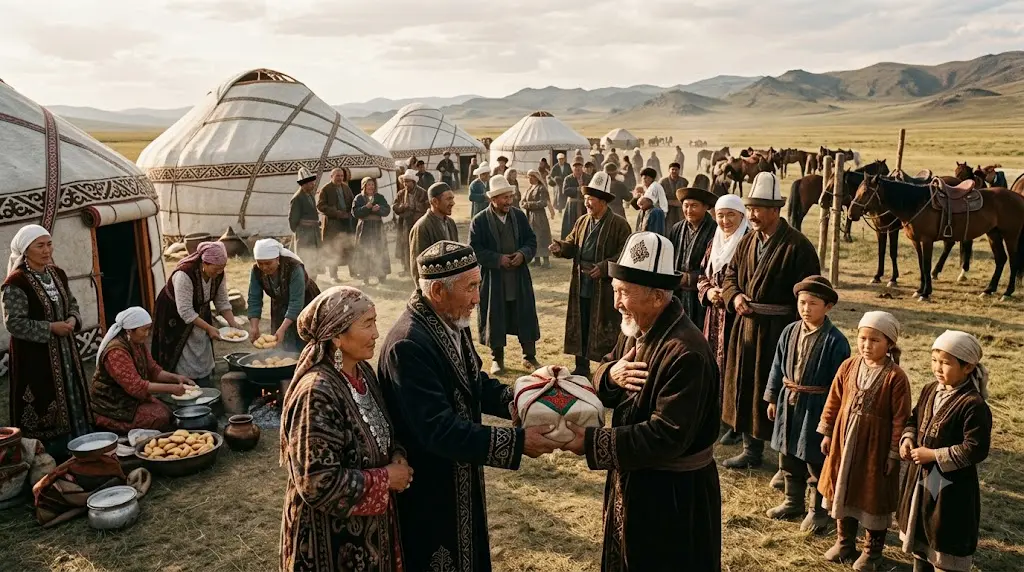
Wedding and In-Law Rituals
- Toybastar (opening song gifts): Special presents distributed to the person who sings the opening song of a celebration, initiating the festivities.
- Korimdik (first-viewing cash gift): A traditional monetary gift given for the privilege of seeing a new bride's face for the first time.
- Shege Shapan (the "nail" robe): A high-grade ceremonial robe gifted between families to solidly "nail down" and cement an alliance.
- Sut Aky (milk fee): A direct financial payment given to the bride’s mother to honor and thank her for raising her daughter.
Childbirth and Growing Up Milestones
- At Koyu (naming ceremony tokens): Ritual gifts bestowed during the formal naming of a newborn child.
- Kindik Kesu (umbilical cord cutting fee): A token of honor given to the respected individual chosen to cut the infant’s umbilical cord.
- Tusau Kesu (first-steps rope cutting token): A customary gift presented when cutting the leg-shackling rope of a toddler to bless their very first steps in life.
Funeral and Remembrance Rites
- Sadaqa (charitable contributions): Voluntary distributions of food or money given to support the needy in memory of the deceased.
- Aruylau (ritual cleansing tokens): Tokens or gifts offered to those assisting with the formal ritual washing and preparation of the body.
Korisui: The Three Ritual Welcomes
The poignant, emotional act of Korisui (formal greeting, embrace, and tearful reunion) carries deep cultural significance. Far from being simple tears, this custom allowed nomads to release pent-up emotions, process separation, and honor ancestral ties. It manifests across three primary situations:
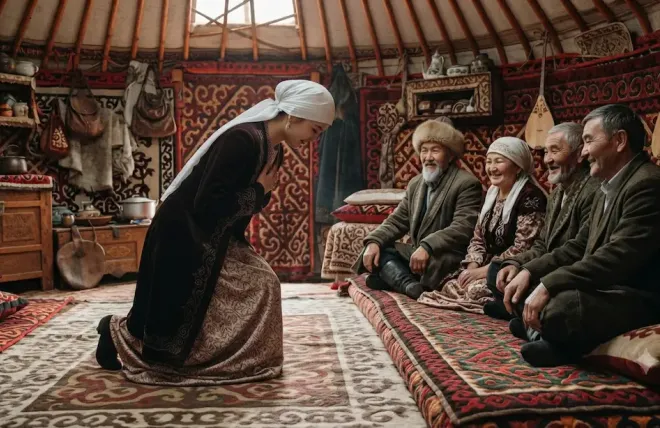
- The Bride’s Tears: By nomadic custom, a newly married bride was barred from returning to her parental home during her first year of marriage to allow her to fully integrate into her husband's clan. When her siblings later visited her distant camp, she would greet them with Korisui—a weeping embrace in which she openly poured out her joy, homesickness, and life updates.
- Long-Distance Reunions: Daughters often married into tribes located hundreds of miles away across the vast steppe. Given the harshness of travel, family reunions were rare and uncertain. When parents and daughters finally reunited, their meetings were marked by an intensely emotional, tearful embrace.
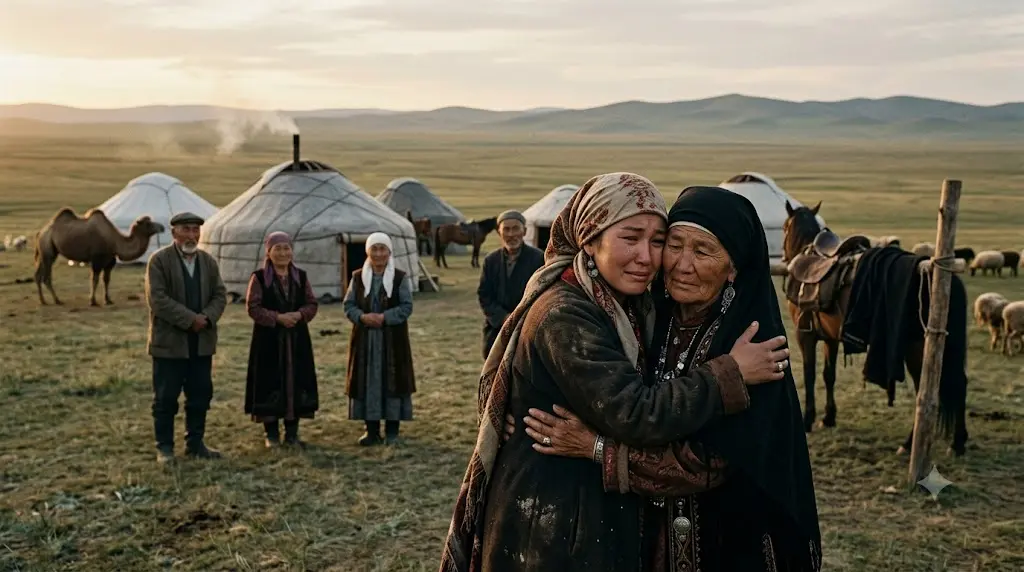
- Grief and Mourning: When entering a home in mourning, arriving guests immediately embraced the grieving family. By strict tradition, men expressed their deep sorrow through stoic, silent embraces, whereas women expressed their grief with structured vocal laments.
Sauyn Aytu: The Public Notice of Grand Gatherings
Whenever a major feast was planned—whether a massive celebration known as a toy or an extensive memorial feast called an as—the hosts issued an official public invitation termed Sauyn Aytu (grand event notice).
This formal notice was dispatched several months, or sometimes an entire year, before the event. Advanced notice was vital across the vast steppe because participating clans needed ample time to cross meanderous routes and huge distances. Following steppe protocol, arriving guest clans did not come empty-handed; they brought their champion wrestlers, famed racing stallions, legendary improvisational poets, livestock for slaughter, and large barrels of fermented mare's milk (kymyz — a traditional fermented dairy drink central to nomadic hospitality) to ensure the festival's grandeur.
Zhyrtys: The Sacred Sharing of Textile Wealth
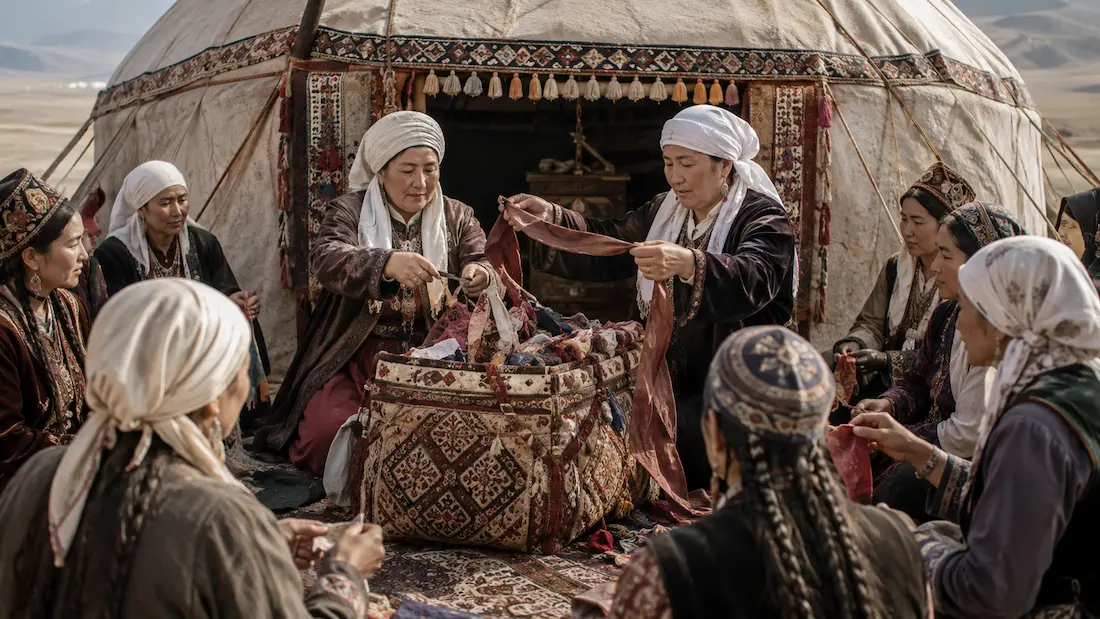
Zhyrtys (textile tearing ritual) is a unique ritual involving the distribution of cloth, traditionally practiced among women to share luck, joy, and blessings.
During a wedding celebration, a richly decorated double saddlebag (korzhyn) filled with presents is presented. When the bag is officially opened, long strips of fine fabric tied to its handles are unraveled and ritually torn (zhyrtu) into small pieces, ensuring that every woman present receives a fragment.
This custom is also observed during a Kudayi (remembrance feast) or at the funeral of an elder who lived an exceptionally long, prosperous, and honorable life. Taking home a piece of fabric allowed attendees to carry a symbolic portion of that individual's lifelong good fortune and blessings into their own households.