Otau Koteru: From Wedding to Family Life


To understand the depth of Otau Koteru, one must follow the entire path of the wedding cycle. Each ritual is a stepping stone that prepares the couple, their families, and the community for the birth of a new independent hearth.
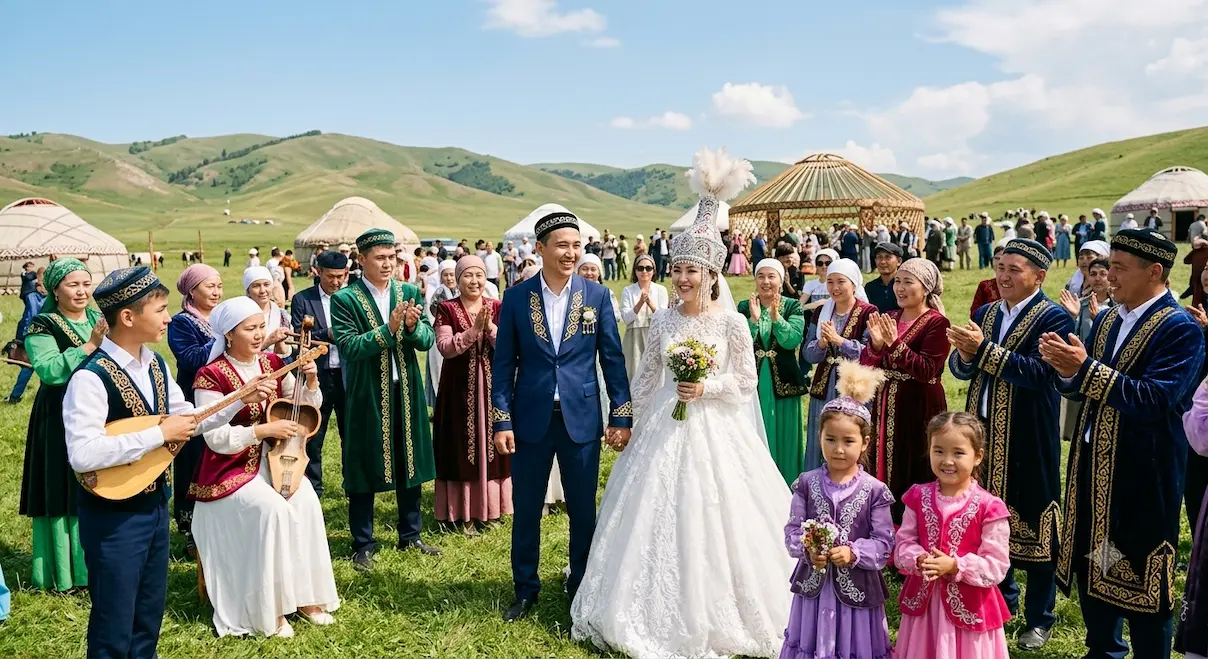
The Journey and Arrival
The Hearth Caravan (Shanyraq Tuie)
When the bride travels to the groom’s village, her carriage carries a close circle of women: her mother, younger sister, friends, and sisters-in-law (zhenge).
- The Rule of the Road: Traditional etiquette strictly forbids anyone from stopping or sitting down along the way. The journey must remain continuous, symbolizing a steady, uninterrupted path forward.
- First Impressions: Upon arrival, the community quietly observes how the new bride (kelin) manages her transition.
- The Dawn Ritual: To demonstrate her respect and diligence, she wakes up early at dawn to open the roof flaps (tundik) of her own tent, as well as those of her neighbors and parents-in-law. This small gesture is seen as an early sign of wisdom and good breeding.
Welcoming the Bride (Kelin Tusiru)
In Kazakh culture, abruptly bringing a bride directly into her new village is considered bad manners.
- The Approach: She is requested to dismount a short distance away and walk into the settlement. Four young married women hold the corners of a large white shawl, shielding her from view as a large group of local girls accompanies her.
- The Messenger: One of the groom's youngest brothers or cousins rides ahead on the bride's horse to deliver the good news to the village.
The Sweet Welcome (Shashu): Upon her arrival, guests shower the bride with sweets and small coins—a traditional ritual called shashu, meant to bring good fortune and sweetness to her new life.
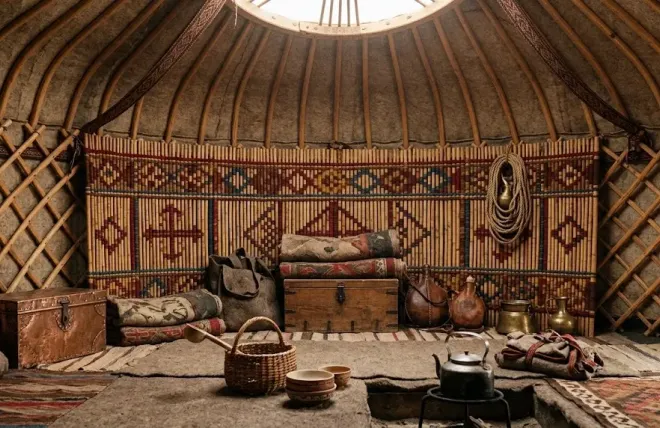
- The Bridal Space: Her bridal bed is set up behind a privacy curtain on the left side of the main family tent. However, if the groom's family is wealthy enough, they provide a separate new yurt (otau) immediately.
- The Modest Gaze: Until her face is formally revealed, no one is permitted to see her. She keeps her gaze demurely lowered; looking around boldly would invite gentle teasing from her new brothers-in-law and disapproval from the elders.
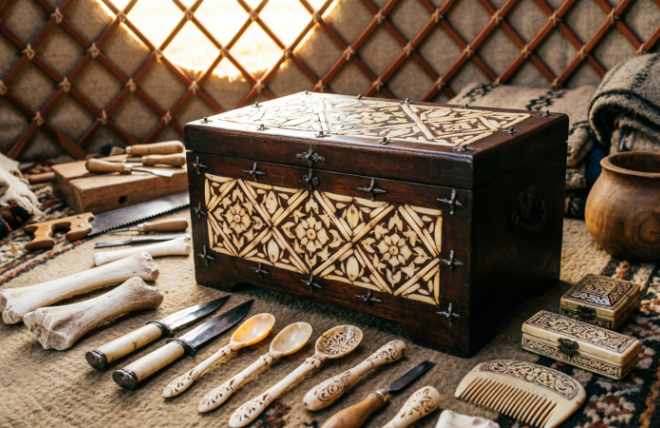
Cultural Note: There is a traditional saying: "When a daughter leaves, the finest things leave with her." Families spare no expense preparing a daughter's trousseau (zhasau), organizing items in traditional sets of nine. While men rarely notice these details, the village women meticulously inspect and discuss every piece.
The Sacred Threshold Rituals
The Face Reveal (Betashar)
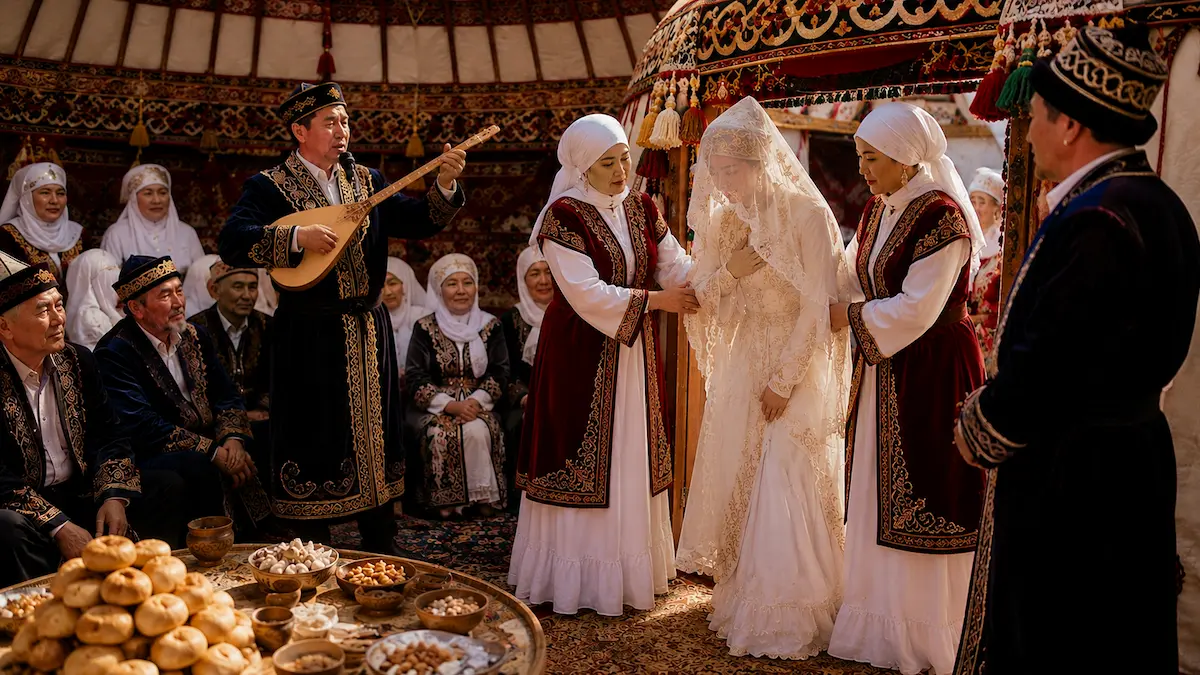
A bride cannot cross the family threshold until her face is formally revealed to the community.
- The Role of the Poet: A designated folk poet (aqyn) learns the names, reputations, and personalities of the groom's family beforehand.
- The Introduction: During the betashar song, the poet introduces each family member one by one. As each name is called, the bride bows gracefully (salem) to them. This is the official moment the community finally sees her face.
- Entering the Home: Once the song concludes, the bride steps over the threshold backward while facing outward as a sign of respect. She also bows toward the wooden crown of the yurt (shanyraq) before stepping behind her privacy curtain.
The Hearth Blessing (Otqa Mai Salu)
Before the bride steps across the threshold, her new mother-in-law pours animal fat onto a roaring fire.
- Ancient Roots: This ritual dates back to ancient shamanistic traditions of fire worship, today kept alive mostly by traditional elders.
- Symbolism: It represents a wish that the household's hearth never grows cold. A blazing fire is essential for boiling meat and brewing tea for travelers.
The Ultimate Kazakh Blessing: "May your smoke never die out" — a profound wish for an uninterrupted family lineage and a hospitable home.
Anointing the Doorposts (Bosagha Mailau)
As soon as the bride steps over the threshold with her right foot, a close female relative rubs animal fat or butter onto the doorposts (bosagha).
- The Blessing: This acts as a wish for a life that is smooth, prosperous, and agreeable. The woman who performs this custom is rewarded with a special gift.
Blessings of Abundance and Unity
The Blessing of Fertility (Biye Qysyrmas)
After the fire blessing, the mother-in-law invites the bride to move from the domestic left side of the yurt to the honored right side.
- The Ritual: A white cloth is placed in the center of the room. The gathered women tear it into small strips to take home and tie to their leather koumiss (fermented mare's milk) vats (saba).
- The Meaning:
- It shows that the mother-in-law embraces the bride as her own daughter by seating her in a prestigious place.
- Sharing the white cloth invokes a blessing for the family's most sacred assets—horses and koumiss.
- The Timing: Weddings traditionally took place in the summer when herds moved to the highland pastures (zhailau). At this time, horses were well-fed, winter chores were distant, and fermented milk was plentiful.
Meaning of the Name: Biye qysyrmas translates to "may the mare never remain barren." A fertile mare yielded the national drink, provided fine meat, and bred stallions for defense—aligning the bride's fertility with the prosperity of the entire community.
The Chosen Cuts (Asyqty Zhilik and Tos)
An animal is slaughtered specifically to welcome the bride, and she is served the most meaningful portions:
- Asyqty Zhilik: The knuckle-bone shinbone.
- Tos: The brisket, which represents tender harmony, symbolizing a wish for the couple to remain close and share a unified life.
- Community Hospitality: The bride's sister-in-law carves and distributes these pieces to the guests. Missing out on a taste of this meat can cause long-lasting offense among the village women, who might interpret it as a sign that the new household does not wish to socialize.
Raising the Roof Beam (Shanyraq Kotertu)
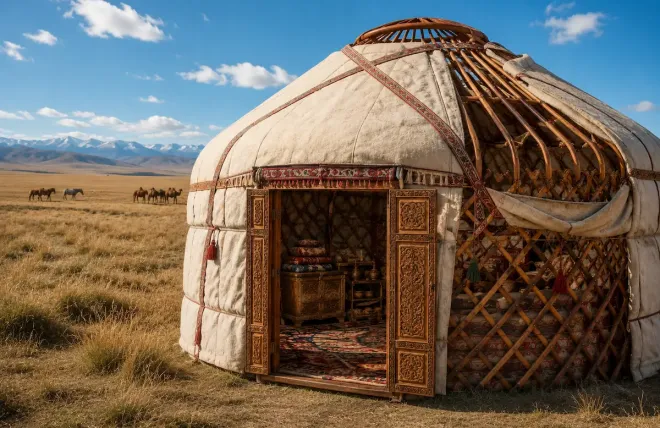
Raising the central wooden crown (shanyraq) of a new bridal yurt is a heavy task and a massive honor.
- The Builder: It is reserved exclusively for a respected, older son-in-law (kari kuieu) who has many children. If the yurt is exceptionally large, he might stand on horseback to lift the heavy frame into place.
- The Reward: In return for his labor, the family presents him with a horse or a camel. This act serves as a living wish that the newlyweds will one day be blessed with a large family just like his.
Integration into the Community
The Hearth Invitations (Otqa Shaqyru / Ui Korsetu)
Once the main wedding festivities wind down, neighboring families begin inviting the new bride to their homes for dinner.
- The Introduction: She never visits empty-handed, bringing a gift selected from her dowry. This serves as an official introduction so that neighbors and children get to know her.
- The Evaluation: During these visits, the bride displays her finest manners. Afterward, the community shares its impressions: while the youth focus on her beauty, the elders evaluate her efficiency and poise to gauge what kind of homemaker she will become.
The Matrix of Matrons (Onyr Salu)
Concurrently with the hearth invitations, older matrons visit the new bridal yurt.
- The Gifts: They shower the bride with sweets and bring practical items to decorate the home: clothing, fabrics, curtain ties, or protective charms (like eagle talons and owl feathers).
- The Hospitality: In return, the hosts treat these visitors using foods and textiles brought in the bride's traveling bags.
Tethering the Steeds (At Bailar)
This custom appears in two distinct forms:
- The Yurt Blessing: Once the frame of the new yurt is erected, close relatives tether a horse outside and offer a blessing: "May your hitching posts always be full of horses, your place of honor full of guests, and your table never empty!"
- The Matchmaker Ritual: It also refers to the ritual where the bride’s sisters-in-law tether the horses of the visiting matchmakers and the groom, receiving gifts or tokens of good fortune (tabarik) in return.
The Congratulations Visit (Quttyq)
After the matchmakers head home, the local young women from the village visit the bride's new father-in-law. They ask for quttyq (blessing gifts), which usually consist of feminine items like earrings, rings, or household utensils. Wealthy families used this opportunity to showcase their generosity by handing out expensive clothing or livestock.
Maturation and Married Life
Opening the Door (Esik Ashar)
Following the wedding, the groom makes his first formal visit back to his parents-in-law's house alongside his bride and friends.
- The Character Test: The groom must arrive with appropriate gifts and observe every rule of etiquette. The bride's sisters-in-law will tease and banter with him to see how quick-witted he is, turning the visit into a joyful celebration.
The Silver Blessing (Itayaghyna Salu)
An elder matron presents the young bride with pure silver jewelry, such as a ring, a coin, or a bracelet.
- The Purification: When the bride gives birth to her first child, these silver items are placed directly into the baby's very first bathwater, as silver is traditionally revered for its purifying qualities.
- The Transition: After the bath, the women who assisted with the newborn divide these silver items among themselves as keepsakes, celebrating the woman's transition into motherhood.
Bridal Mentorship (Kelindi Mushelikke Qabyldau)
In traditional society, a young girl comes under careful guidance as soon as she reaches maturity.
A Comparative View: Some Eastern cultures, such as the Uyghurs, provide explicit marital education to daughters before marriage, teaching them exactly how to defuse a husband's stress using warm words and private conversations. Historically, Kazakh traditions favored a more reserved, quiet approach to marital roles, meaning young brides often had to figure out these domestic dynamics through direct experience.
The Journey to Independence
The Year of Mentorship (Ata-Enenin Bauluu)
Kazakh custom dictates that a new bride cannot visit her biological home (torkin) until a full year has passed. This initial year serves as a rigorous school of adulthood.
- Her Daily Duties Include:
- Memorizing and properly using respectful nicknames for all her new in-laws.
- Managing nomadic chores: opening the roof flap at dawn, lighting the fire, brewing tea, milking livestock, churning koumiss, making curd, and gathering fuel.
- Maintaining patience, even if her young brothers-in-law playfully disrupt her sleep.
The Sacred Veil (Kieli Kiyim)
This intense period of training changes once she gives birth to her first child.
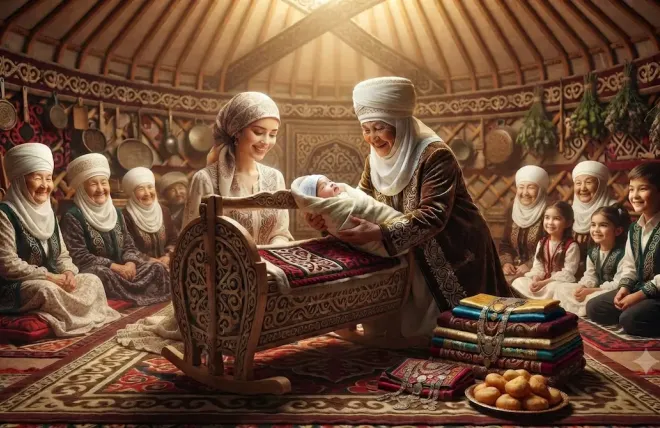
- The Acceptance: After the baby is forty days old, the mother-in-law formally invites the bride to sit at the place of honor (tor), kisses her forehead, and declares her an equal member of the family. The bride is finally granted authority to manage the pantry and host guests on her own.
- The Change of Dress: To seal this transition, her parents-in-law dress her in a traditional white cloth headdress (kimeshek-shylauysh). This garment symbolizes dignity and motherhood, marking her transition away from the flashy, attention-grabbing bridal headdress (saukele) of her youth into a protected, respected status within her husband’s lineage.
The Return Feast (Torkindeu)
After her first year, the bride is finally permitted to visit her biological family—a highly anticipated event known as torkindeu.
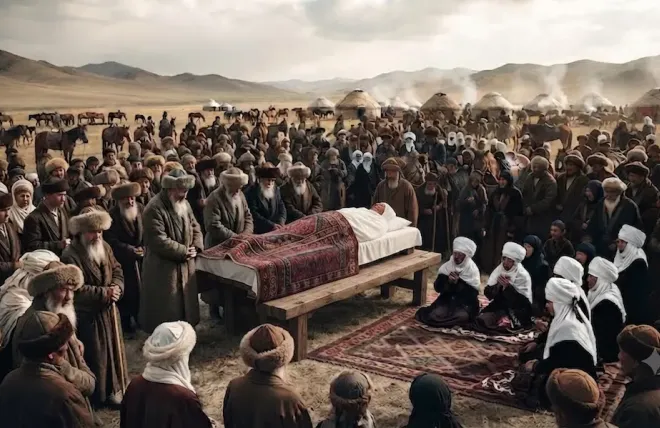
- The Arrival: Accompanied by her husband and child, she returns home bearing symbolic gifts, such as fine clothes for her parents and white burial cloths (kebindik) for the family elders.
- The Stay: The bride stays with her family for at least a month to ease the homesickness built up over the year while her family throws feasts in her honor.
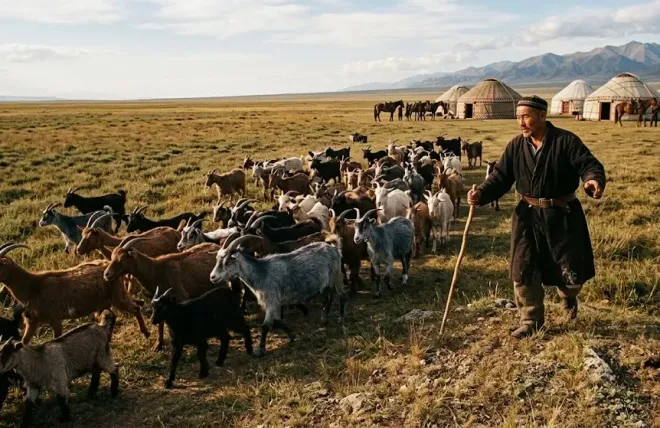
- The Inheritance (Enshi): When the visit ends, her parents present the couple with livestock (a cow with its calf, a mare with its foal, and a prized colt for the grandchild) to support their independent household. Kazakhs famously refuse to count pennies when providing for their daughters.
Dividing the Estate (Enshi Beru and Otau Bolu)
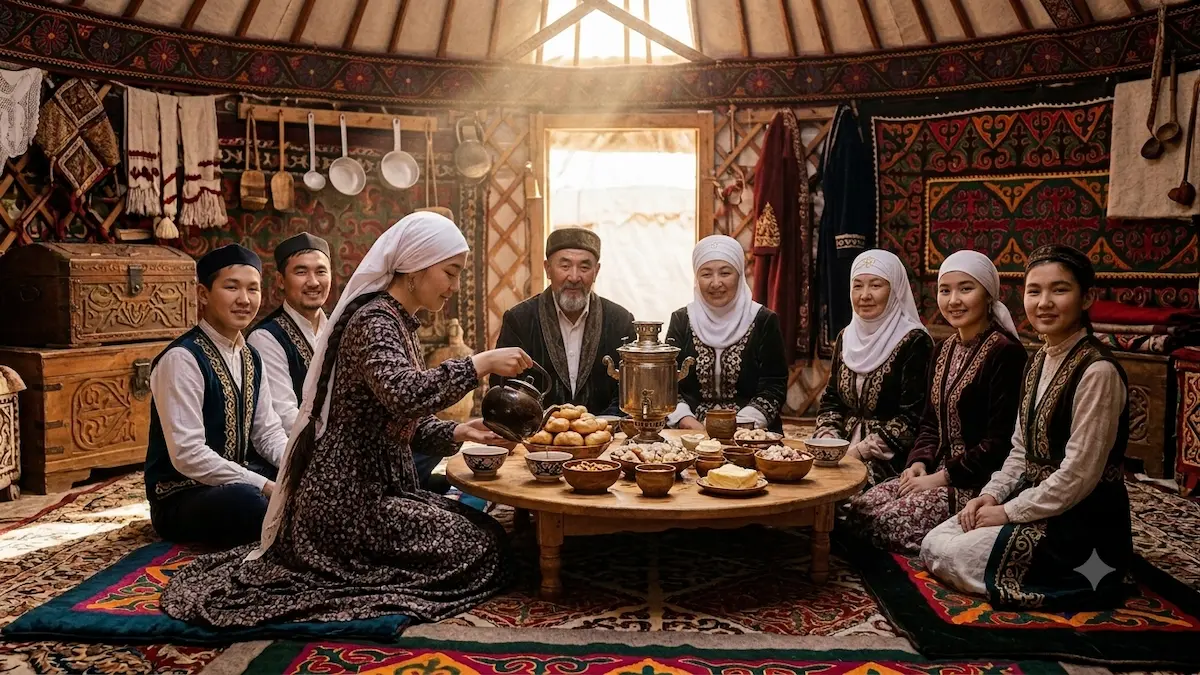
Once the parents see that the young couple is fully capable, they formally separate them into an independent household by providing them with livestock and a dedicated yurt.
- Community Solidarity: Neighbors and relatives show support by bringing gifts (emeurin), ranging from livestock to beautiful floor mats, to help furnish the new home.
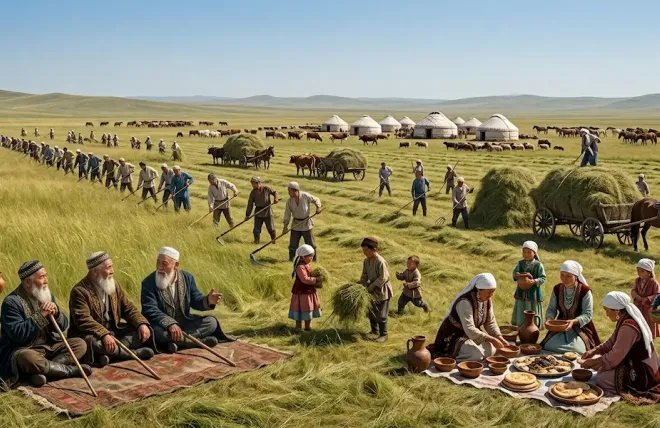
- The Extended Bond: Even though their finances and daily cooking pots become separate, the entire extended family remains close-knit, cooperating through daily chores and answering to the undisputed guidance of the clan elder.