Family and Kinship Relations


Abysyn Asy: The Secret Sisterhood Feast
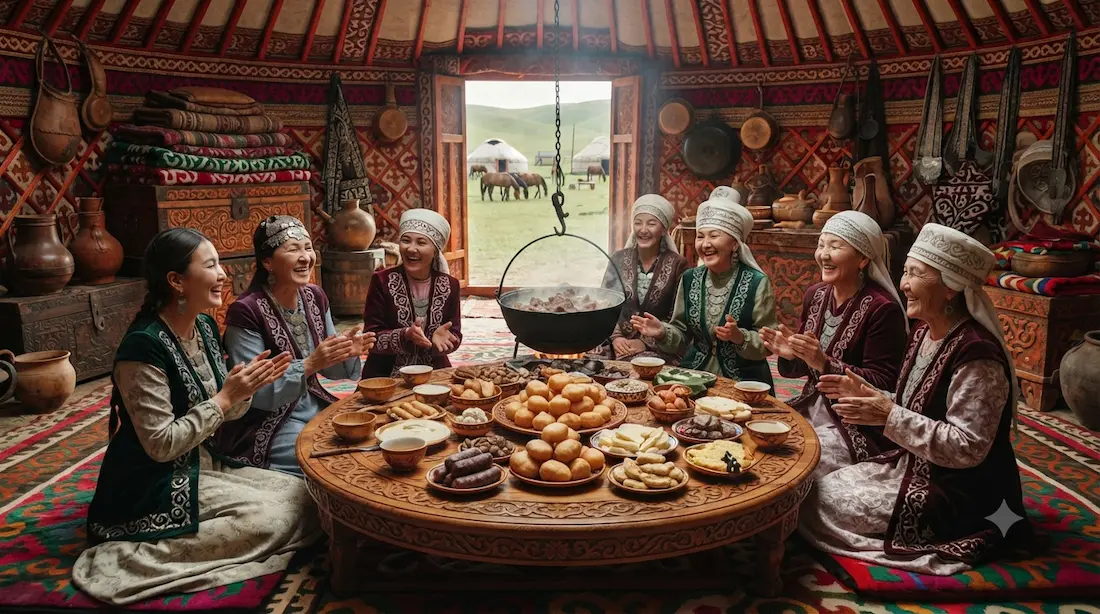
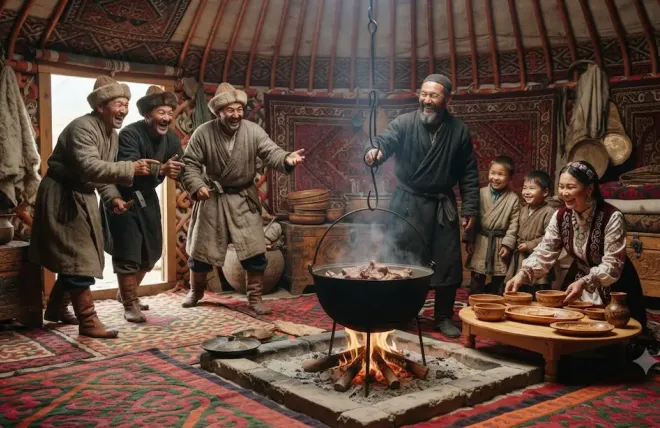
The wives of brothers and close male relatives within a clan are known as Abysyndar (sisters-in-law). Because traditional life kept women busy managing households under the watchful eyes of patriarchs, these women rarely found time to socialize completely alone. When the men and village elders left the camp for a multi-day wedding or distant festival, the sisters-in-law would instantly organize an Abysyn Asy. They boiled meat, fired up the samovars, shared jokes, discussed family strategy, and bonded without restriction. This private ritual built incredible solidarity and emotional harmony among the women running the camps.
Amengerlik: Levirate Marriage
When a married man passed away, Kazakh society used the ancient practice of Amengerlik to ensure the widow and her children were never abandoned or left without protection. The widow was traditionally given the choice to marry one of her late husband’s younger brothers or a close cousin within the lineage. Crucially, the woman's consent was a core factor. If she chose to leave the clan entirely to marry a stranger from another tribe, she was free to do so, though she could not claim the late husband’s ancestral herds; she departed strictly with the dowry (zhasau) she originally brought from her parents' home—a process known as irgeden shygaru (exiting the foundation). If she chose Amengerlik, her new husband assumed full financial and emotional responsibility for her children, keeping the family lineage whole.
At Tergeu: The Etiquette of Respectful Names
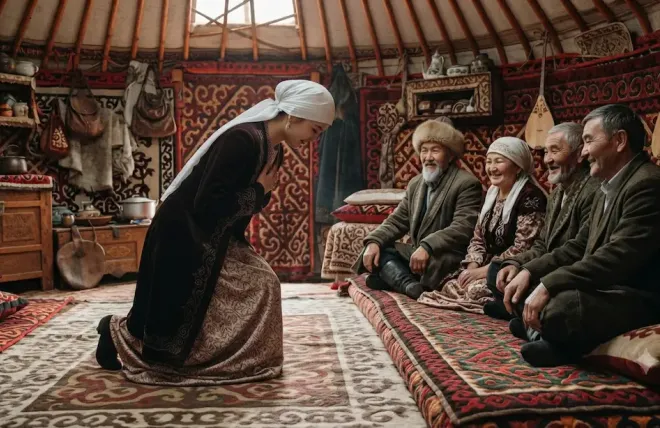
To instill modesty and respect for elders, young brides entering their husband's village practiced At Tergeu (avoiding direct names). It was considered highly disrespectful and improper for a daughter-in-law to call her husband’s relatives by their birth names. Instead, she invented affectionate, honorable titles for everyone:
- Father-in-law
- Traditional Birth Name Replaced By: Ata or Biy
- Meaning / Tone: Grandfather / Judge Father
- Mother-in-law
- Traditional Birth Name Replaced By: Apa
- Meaning / Tone: Mother
- Older Brother-in-law
- Traditional Birth Name Replaced By: Aga or Myrza Kaynaga
- Meaning / Tone: Respected Brother / Generous Lord
- Husband's Sister
- Traditional Birth Name Replaced By: Kayninsilim
- Meaning / Tone: My Cherished Little Sister
- Elder Brother's Wife
- Traditional Birth Name Replaced By: Zhengeshe
- Meaning / Tone: Respected Sister-in-Law
This linguistic politeness preserved harmonious boundaries within large extended households. While fading in urban centers, it remains a beautiful mark of traditional upbringing.
Irgeden Shygaru: The Widow's Autonomy Decree
Following the old custom of levirate marriage (Amengerlik), if a husband passed away, his widow was traditionally expected to marry one of his brothers or close male relatives after the one-year mourning period to keep the family intact. However, if no eligible relatives existed or if the widow firmly requested her independence, a council of elders and judges would formally review her case. If granted her freedom, she could leave to marry outside the clan, though she had to leave the late husband's livestock property behind, taking only her personal bridal dowry (Zhasau). This formal process of granting autonomy and separating her household was called Irgeden Shygaru.
Karashanyrak: The Ancestral Hearth
The Karashanyrak is the main ancestral yurt and the ultimate physical inheritance passed down from father to son. While the older brothers are systematically given livestock and dowries to establish their own independent households as they mature, the Kenzhe (the youngest son) automatically inherits the Karashanyrak. As the ultimate guardian of the family line, the youngest son assumes full responsibility for looking after his aging parents and preserving the family's honor. If the Karashanyrak belonged to a legendary warrior, an esteemed judge, or a holy man, travelers and spiritual seekers would ride out of their way just to visit this specific home, pay their respects, and receive a blessing from the lineage before embarking on long journeys.
Suyek Zhingyrtu: Renewing the Family Bone
To strengthen long-term alliances between clans, Kazakhs frequently practiced Suyek Zhingyrtu (literally, "renewing the bone"). If a family successfully married their eldest son to a daughter of another clan, they would later arrange a second marriage between their younger son and the bride's younger sister. This double-alliance created incredibly tight family connections. Clan leaders carefully monitored these arrangements to ensure that all generational lineages remained perfectly aligned with customary laws, ensuring regional peace and unity.
Zheti Ata: The Law of Seven Ancestors
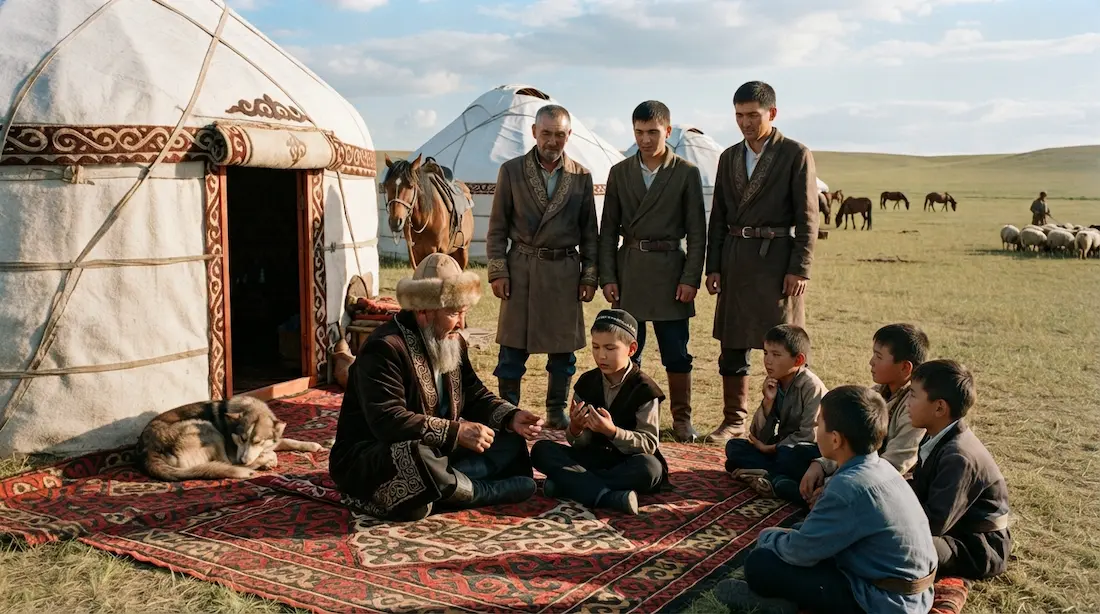
An ironclad rule of the steppe dictates that all descendants branching from a single forefather up to seven generations are considered direct siblings and close blood relatives. Because of this, every young Kazakh was fiercely trained to memorize their Zheti Ata (Seven Ancestors). Marrying anyone within this seven-generation lineage was strictly forbidden, a genetic and social law that successfully prevented inbreeding and preserved strong alliances across the plains.
Zhien Kuryk: The Grandchild’s Birthright
A child born to a daughter of the clan is known as a Zhien. In Kazakh family law, a Zhien possesses a fascinating, protected birthright called Zhien Kuryk. Whenever the grandchild visits their mother’s home village (nagashy zhurt), they are legally entitled to claim any three items or animals they desire from their maternal uncles. The uncles are forbidden from denying these requests or showing anger. A Zhien must never be offended or sent away empty-handed; according to steppe lore, if an uncle refuses to honor the Zhien Kuryk, their remaining herds will succumb to disease.