Customs and Beliefs for Children in Kazakh Tradition


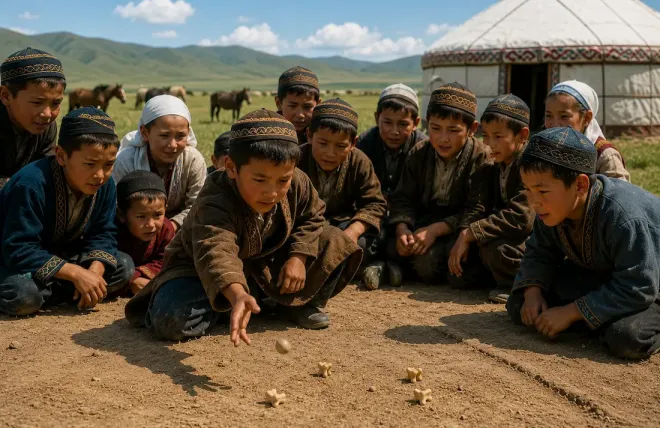
The birth of a child has always been regarded as one of the greatest blessings in Kazakh culture. From prayers for fertility and rituals welcoming a newborn to protective customs and symbolic gifts, every stage of a child's life was surrounded by traditions intended to ensure health, happiness, and a prosperous future. These customs reflect the Kazakh people's deep respect for family, community, and the belief that every child should grow up under the protection of blessings, good wishes, and ancestral wisdom.
Moinyna Burshak Salu: The Prayer for Children
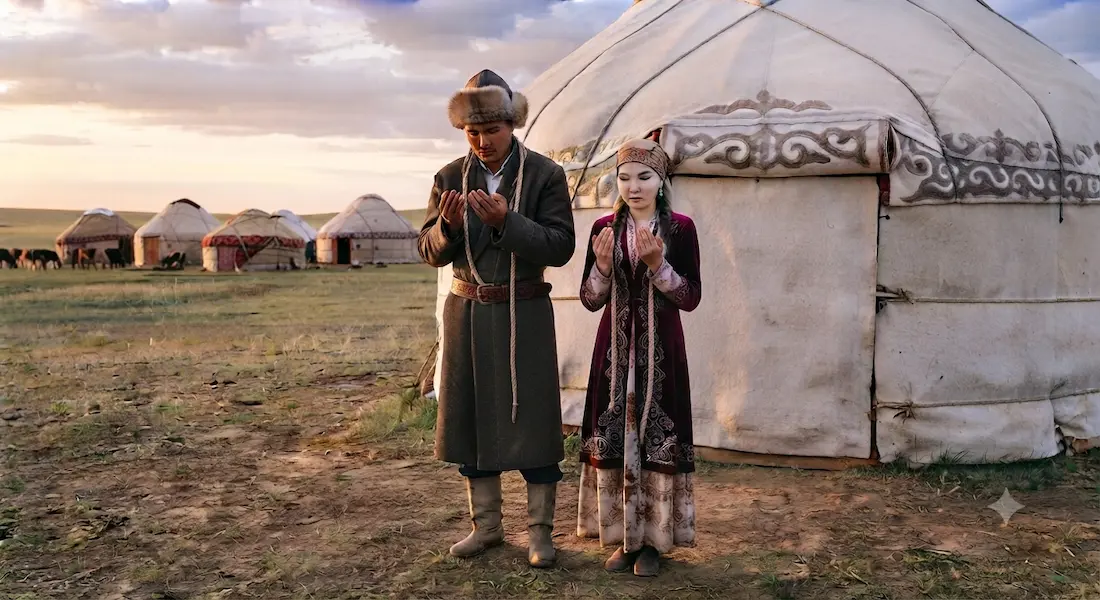
When a married couple faced difficulties conceiving a child, they performed a touching, humble ritual of faith called Moinyna Burshak Salu. The husband and wife would drape a soft, woven rope—the type traditionally used to tether young lambs or foals—around their necks. They would then stand together in sincere prayer, bowing before the Creator to request the blessing of a child, using the humble animal tether as a symbol of their readiness to nurture new life.
Kade: The Fabric of Steppe Etiquette
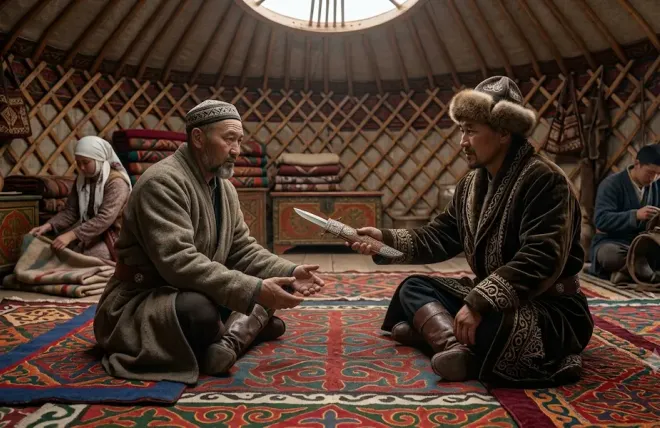
A Kade is an obligatory token, gift, or fee required at specific milestones during major celebrations, weddings, and games. Arriving at a family function without a Kade is viewed as a severe insult to the hosts and a total breach of etiquette. The traditional catalog of these gifts is immense:
- Wedding & In-Law Rituals: Toibastar (gifts for the person who sings the opening song), Korimdik (a cash gift to see the new bride's face), Shege Shapan (the "nail robe" gifted to cement an alliance), and Sut Aky (the milk-fee paid directly to the bride's mother for raising her).
- Childbirth & Milestones: At Koyuu (naming tokens), Kindik Kesu (the umbilical-cord cutting gift), and Tusau Kesu (the toddler's first-steps rope-cutting fee).
- Funerary Rites: Sadaka (charitable distributions) and Aruylau (cleansing tokens).
Korimdik vs. Baighazy: The Visual Distinction
While foreigners often confuse these two gift-giving terms, they apply to completely different categories:
- Korimdik: Paid exclusively to look upon something living or natural for the first time—such as a newborn baby, a new daughter-in-law, or a prized pedigree horse. It expresses pure, unselfish joy and familial connection.
- Baighazy: Paid exclusively when celebrating a tangible, manufactured object—such as a new coat, a car, or a modern appliance.
Koz Tiyu: Protecting Against the Evil Eye
Koz Tiyu: Protecting Against the Evil Eye
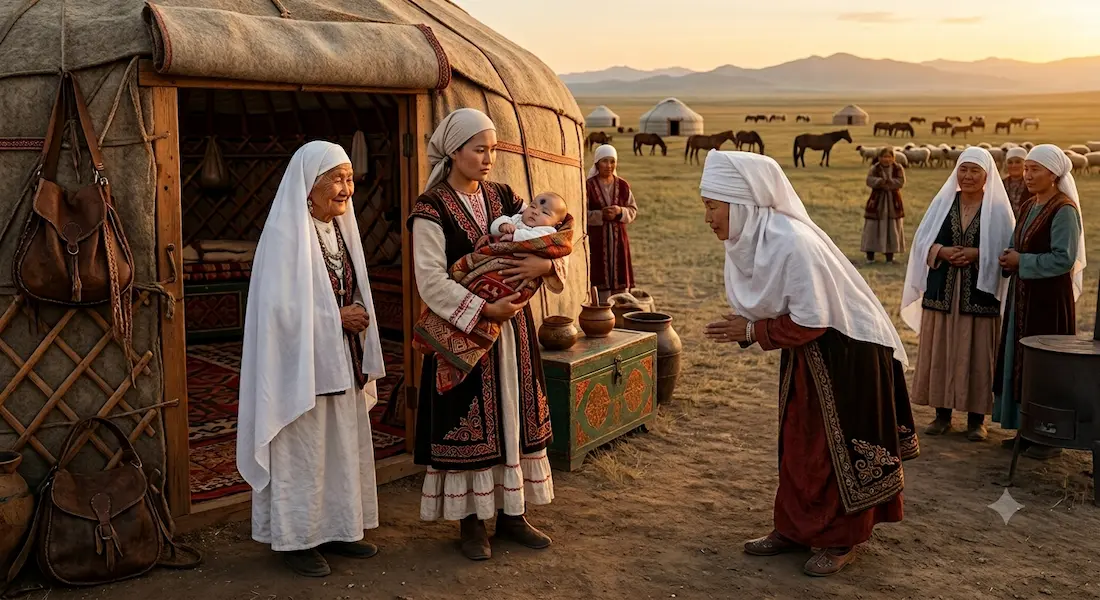
Nomadic communities firmly believed in the destructive power of envy, known as Koz Tiyu (the Evil Eye). Beautiful young girls, swift racing stallions, and innocent babies were considered highly vulnerable to this spiritual harm.
- To safeguard a champion racehorse, owners would deliberately hide it from public view until the race began.
- To protect a beautiful baby, mothers would rub a smudge of soot (kuye) onto the child’s forehead to disrupt its perfect appearance.
- If a stranger looked too intensely at a child or a new bride, the family would firmly command them to spit toward the ground, whispering protective phrases like "Toba-toba" (Repent, repent) or "Til gozim tasqa" (May the envious tongue and eye strike a stone).
Otpen Alastau: Purification by Fire
Fire has long been used as a powerful symbol of spiritual purification and protection (Otpen Alastau). When a newborn baby is placed into their cradle (Besik) for the first time, elders wave a small torch of burning wild juniper (arsha) around the wooden frame to clear the space. Similarly, when a young couple moves into a new home, elders perform a fire-purification ritual to welcome positive energy and bless the household.
Koryktyk Kiyu: Pouring Out the Fright
If a child or an adult suffered a severe emotional shock, panic attack, or mysterious trauma, traditional elders performed a psychological ritual called Koryktyk Kiyu. A basin of cold water was held directly over the patient's head. The healer then poured molten lead into the water. As the liquid metal instantly hardened, it formed an abstract, jagged shape. The healer would analyze this lead sculpture to diagnose exactly what caused the trauma—such as the shape of a lunging dog, a snake, or a falling branch. Identifying the root of the fear was believed to instantly cure the patient's anxiety.
Yrym: Daily Expressions of Hope and Aspiration
The daily lives of the Kazakh people are filled with positive omens and symbolic practices called Yrym. For instance, parents often name newborns after respected national figures—such as Abai (Abai Kunanbaiuly) — Great poet, philosopher, and founder of written Kazakh literature, Saken (Saken Seifullin) — Pioneer of modern Kazakh literature and poet, Baurzhan Legendary WWII military commander and writer, Fariza (Fariza Ongarsynova) — Famous female poet and public figure, or Mukhtar (Mukhtar Auezov) — Renowned writer and scholar, author of The Path of Abai—in the hope that the child will inherit their noble qualities. Similarly, elders pass sweets from a wedding table down to children to share the good fortune, and young people gladly accept clothing items from healthy centenarians as a physical wish for a long life. These daily gestures reflect a deep optimism and a constant focus on encouraging good fortune within the family.