Mutual Aid and Community Support


Asar (Community Cooperation)
Asar (community cooperation) is an ancient Kazakh tradition of collective assistance for labor-intensive tasks. When a family needs to build a house, harvest hay, shear sheep, or move livestock to seasonal pastures, they call upon neighbors for help. Volunteers do not receive wages; instead, the host expresses gratitude by preparing a generous feast, often featuring freshly slaughtered livestock. This tradition reflects the unity of the Kazakh people and their long-standing spirit of mutual assistance.
Biye Bau (Mare Milking)
Every April, when the mare-milking season begins, the entire village gathers at the zheli (a long tethering line used to tie mares during milking). Before milking starts, the owners traditionally anoint the stakes with fat while offering blessings such as, "May the milk be abundant and the herd increase."
Kymyz Muryndyk: The first batch of kymyz (fermented mare's milk) is celebrated with a special ceremony during which respected elders are invited to taste the season's first cup.
Healing Properties of Kymyz: Kazakhs traditionally believed that kymyz was the drink of heroes, valued for both its nutritional and healing qualities. Even during winter, they prepared kysyr kymyz (fermented mare's milk made from the milk of non-pregnant mares), which was widely regarded as a traditional remedy for respiratory illnesses.
Sirge Zhiyar: Sirge Zhiyar (the closing ceremony of the mare-milking season) marks the end of milking. On this occasion, the owners host a final feast to express gratitude to the elders and everyone who contributed to the season's work.
Arasha: The Absolute Order for Peace
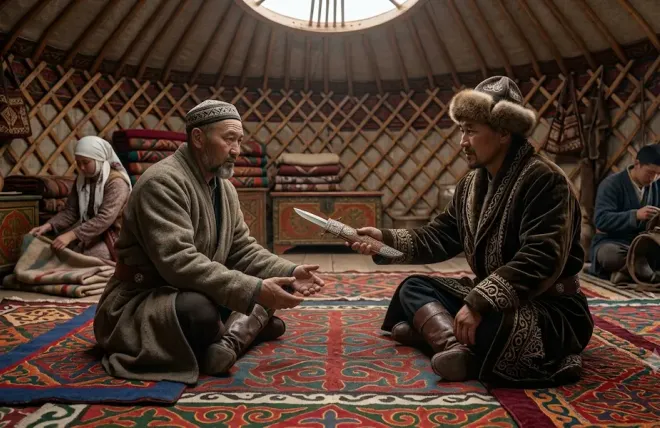
When a heated argument escalated into a physical altercation, any passerby who witnessed the fight was expected to step in as a mediator, shouting "Arasha, Arasha!" (Peace / Separate!). The moment this phrase was uttered, combatants were culturally required to drop their weapons and stop fighting instantly. If anyone ignored the cry of Arasha and continued their assault, they were heavily fined under customary law for defying the community's peace.
At Mayyn Surau: The Generous Loan
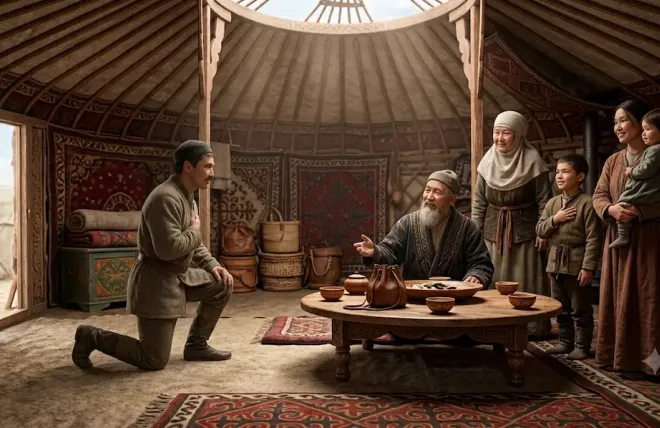
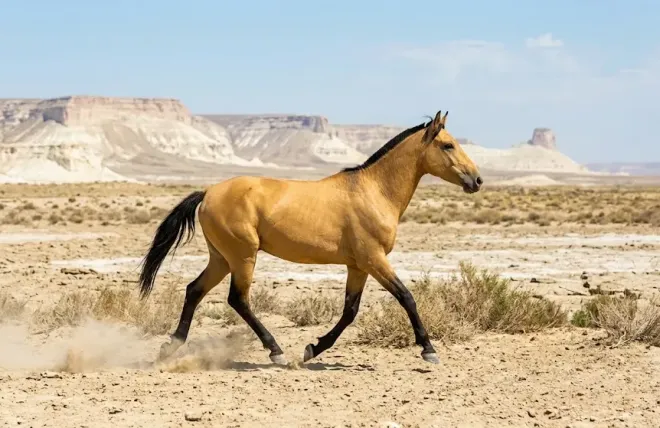
The nomadic code ensured that the vulnerable were never left behind. Families continuously looked after orphans, impoverished households, and widows. If a poor herder lacked a horse to manage their chores or migrate, they could approach a wealthy neighbor and request At Mayyn Surau (literally, "asking for horse-fat"). This was a polite request to borrow a horse for a temporary period. The wealthy neighbor was culturally expected to grant the loan free of charge, reflecting the profound empathy and structural safety nets built into Kazakh society.
Ayirylysar Kozhe: The Farewell Feast
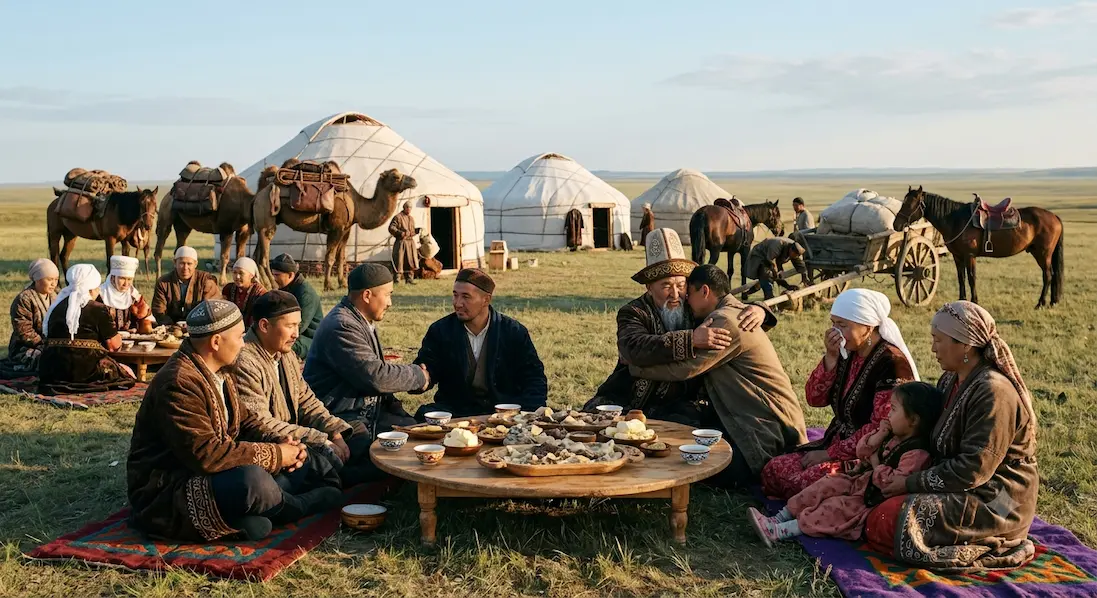
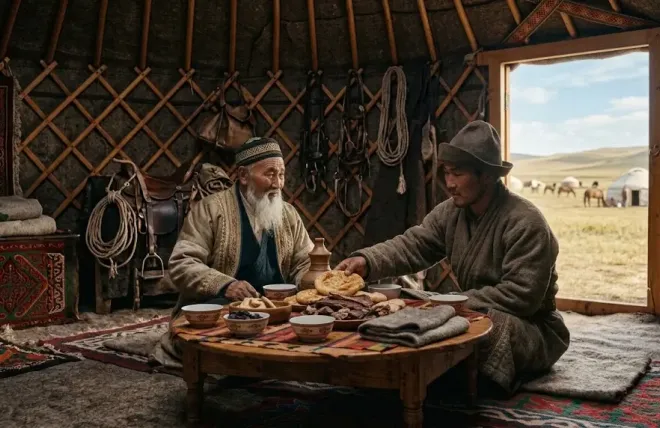
When close, harmonious neighbors prepared to separate for seasonal migrations—either moving to summer pastures (zhailau) or winter camps (kystau)—they gathered for Ayirylysar Kozhe (literally, "The Separation Porridge"). Despite the modest name, this was actually a lavish farewell banquet where a sheep was slaughtered. The feast allowed neighbors to express deep gratitude for their shared safety and mutual aid, parting with emotional solidarity and the hope of reuniting in good health.
Emge Surau: The Medicinal Demand
Emge Surau (asking for medicine) was a unique cultural loophole regarding scarce resources. If a person fell severely ill, traditional healers might prescribe a rare or hard-to-find food item as a vital remedy—such as a specific cut of aged horse meat sausage (kazy) or premium spring butter (sary may) melted in May. By tradition, if someone knocked on a neighbor’s door requesting a specific ingredient under the rule of Emge Surau, the owner was culturally obligated to hand it over immediately. No one in the community would ever deny such a life-saving medical request.
Erulik: The Welcome Wagon
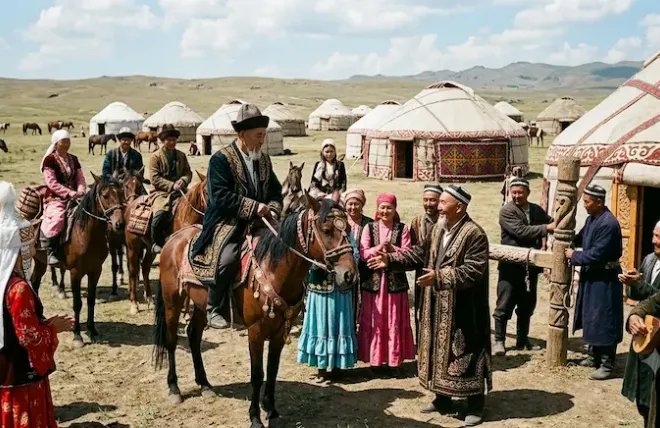
When a new family moved into a neighboring pasture or winter camp, the community immediately hosted a welcoming feast called Erulik. Beyond the celebratory meal, neighbors actively helped the newcomers settle into their new environment by sharing resources like firewood, clean water, and extra labor. This mandatory gesture built immediate friendships, strengthened communal solidarity, and integrated newcomers into the local social fabric.
Mushel: The Twelve-Year Life Cycles
The Kazakh people track human development through a 12-year cyclical system called Mushel, beginning with the completion of the 13th year of life. Each subsequent 12-year milestone marks a major life transition: In ancient times, a 63-year-old elder would say: "I have lived five Mushel cycles and two extra years." Each milestone carries specific spiritual significance: the 1st represents childhood, the 2nd marks youth, the 3rd signals full maturity, and the 4th and 5th embody deep wisdom.
The transition year (moving from the 12th year into the 13th) was historically viewed with caution, as it marks a time of significant psychological and physiological change. To ensure health and longevity, a person entering a new Mushel cycle would give away a piece of their clothing to someone in need and host a charitable meal (Kudayi As) to pray for well-being. Travelers were also advised to avoid long, dangerous journeys during their transition year as a practical safety precaution.
Toi Tarkar: The Closing Ritual
Once a festival concludes and the guests begin to depart, the hosts hold a closing gathering called the Toi Tarkar. The family gathers all the volunteers, cooks, and helpers who worked behind the scenes to express their deep gratitude and serve them a special meal. Attended by the entire village, this tradition reinforces the spirit of cooperation and community unity needed to pull off a major event.
Kol Uzdik: Craft Appreciation Gift
Kol Uzdik (a gift of appreciation for helping with handicrafts) is observed when someone assists with sewing, felt-making, weaving, or other household crafts. Instead of money, the helper receives practical gifts such as needles, thread, or wool, accompanied by blessings wishing the same prosperity for their own household.
Kol Ushin Beru: Spontaneous Assistance
Kol Ushin Beru (offering a helping hand) is a spontaneous act of assistance. If someone sees a neighbor building a wall, stacking hay, or struggling with another task, they are expected to stop and help for a while. Ignoring such a need was traditionally considered a sign of poor character and upbringing.
Nazir: Communal Blessing for Big Tasks
Nazir (a communal meal and prayer before beginning an important task) is held before major undertakings such as plowing fields or building a new home. Family members, relatives, and neighbors gather to share a meal, pray for their ancestors, and ask for success and good fortune.
Ume: Large-Scale Cooperative Labor
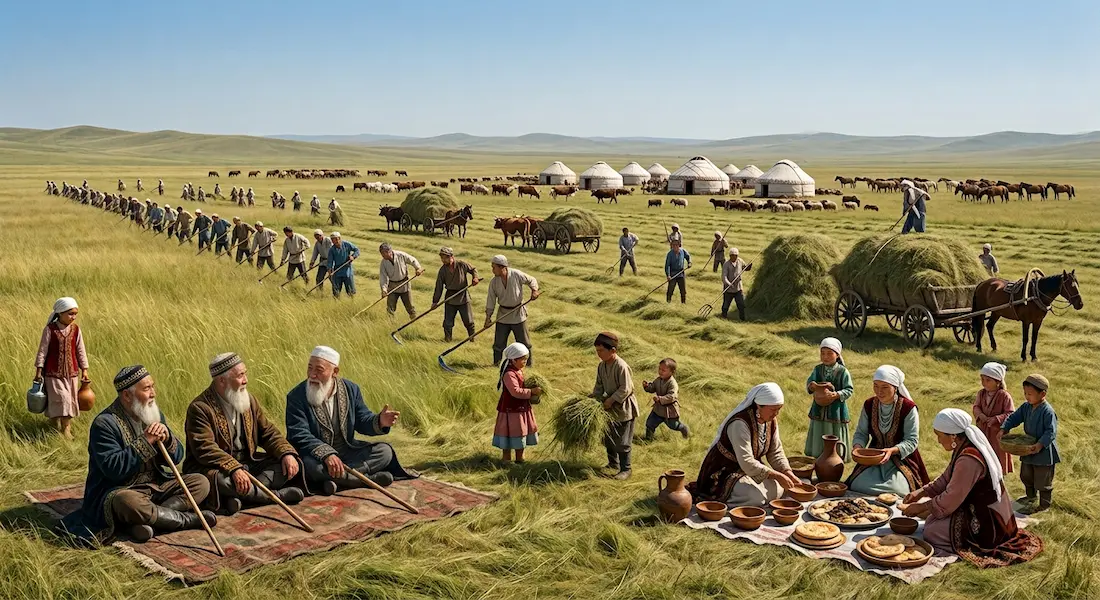
Ume (organized community labor) refers to large-scale cooperative work, such as bringing together dozens of people to mow hayfields or complete other demanding seasonal tasks within a single day.
Lau: Transport Assistance
Lau (providing transport to a traveler) is the custom of lending a horse or cart to someone who needs to travel to another village. Offering such assistance was considered a natural duty within the community.
Koi Basty: The Felt-Making Celebration
Koi Basty (a felt-making custom accompanied by playful requests for refreshments) takes place during the physically demanding process of rolling and pressing felt. As participants pass neighboring houses, they jokingly call out, "The sheep have been pressed!"—a lighthearted invitation for neighbors to come outside and reward the workers with refreshments.
Shashiratky: Breeding Season Ceremony
Shashiratky (the autumn ceremony marking the breeding season) takes place when shepherds introduce rams to the ewes to ensure the growth of the flock. After the work is completed, the owner hosts a feast to thank the shepherds for their dedication and hard work.
Zhylu: Direct Disaster Relief
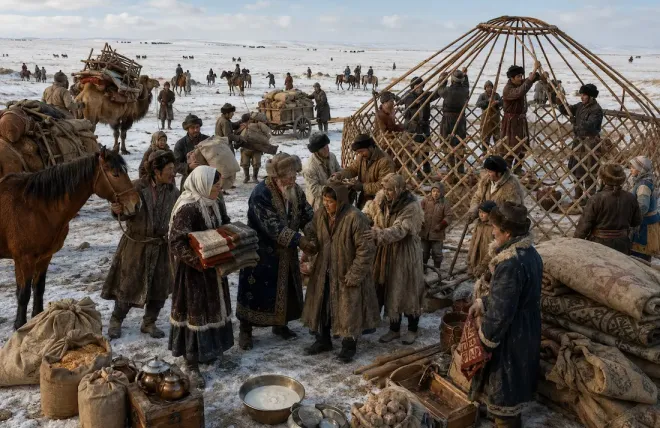
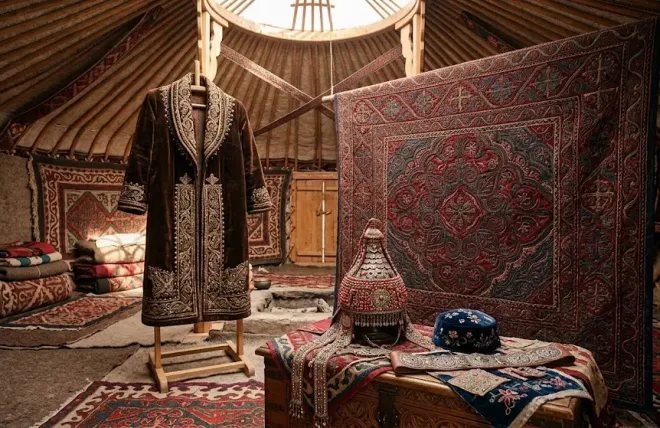
Zhylu is a beautiful system of mandatory community insurance designed to combat natural disasters like winter blizzards, steppe fires, or floods. If a household lost their home or entire herd to a tragedy, the entire region—not just direct relatives—mobilized to help. Neighbors donated livestock, replaced their round felt tents (yurts), provided winter clothing, and supplied food. This rapid-response relief system stands as a testament to the profound empathy of nomadic culture, treating a neighbor's sudden tragedy as a collective community crisis.