Traditional Kazakh Clothing for Men and Women: Styles & History


The Diversity of Traditional Kazakh Clothing
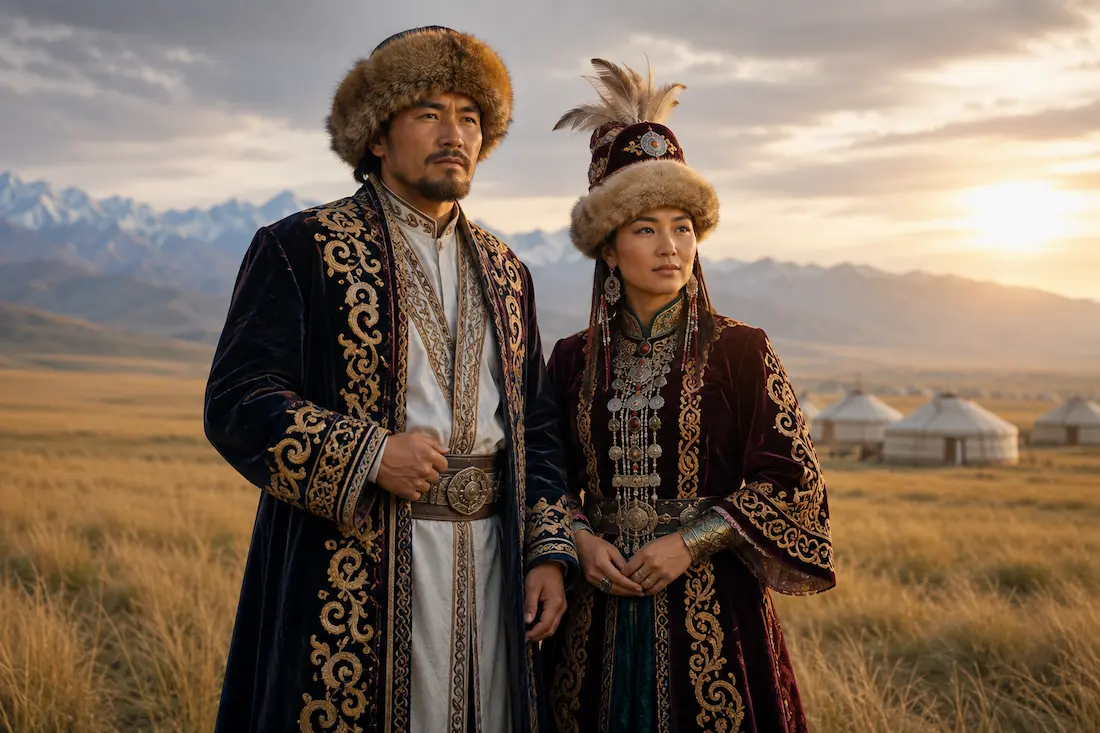
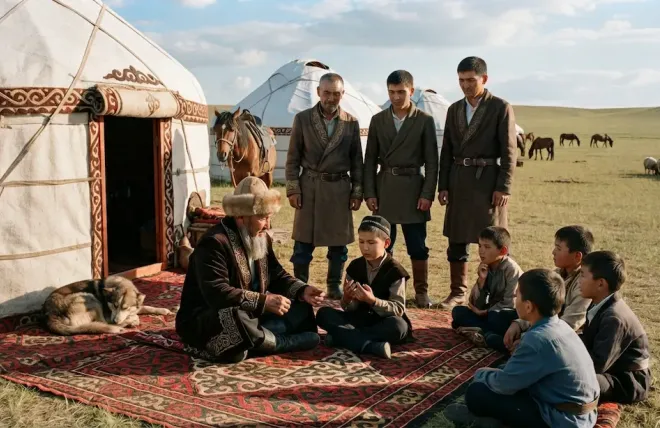
Traditional Kazakh attire is remarkably diverse, with nomenclature and styles often categorized by regional affiliation. These distinctions are frequently drawn between the three traditional tribal unions—the Uly Zhuz (Senior Zhuz), Orta Zhuz (Middle Zhuz), and Kishi Zhuz (Junior Zhuz)—and further subdivided by specific clan names, such as the Argin tymaq or Nayman tymaq (hats associated with the Argin or Nayman clans) and the Kyzay borik or Nogay borik (skullcaps associated with the Kyzay or Nogay clans). Furthermore, distinct styles have evolved based on geography, such as the Konyrat, Zhetisu, or Arka (Northern Steppe) styles. These classifications are based on nuances in garment construction, including the fullness of the cut, practicality, fit, and specific modes of ornamentation.
Regional Variations in Construction
A clear example of this regional variation can be seen in the shapan (traditional long-sleeved robe or coat):
- Senior Zhuz: The shapan of this region typically features striped fabrics, quilted patterns, long hems and sleeves, and an open collar. The influence of neighboring Uzbek, Tajik, and Uyghur cultures—paired with the region's agricultural focus—heavily informed these tailoring styles.
- Middle Zhuz: Influenced by their proximity to urban centers and their interaction with Russian and Tatar populations, the shapan here is generally made from single-sided fabric without quilting. These garments feature wide sleeves, shorter or notched collars, and buttons.
- Junior Zhuz: These shapan are characteristically voluminous with long, wide sleeves. They are often lined with wool or padded with cotton and feature a distinctive fold-over collar.
Despite these regional differences, a unified national style and common terminology persist across all three Zhuz. For instance, the addition of a shabu (a decorative or functional side gusset/slit) is a universal feature of the shapan across all regions. Similarly, the wide armhole construction, known by terms such as zhentup, ozhyndy, or koltyrmash, is standardized. Likewise, all three regions incorporate an au (a gusset in trousers) and a koltyrmash (an underarm gusset) to ensure comfort and mobility. Generally, the most compact and tailored silhouettes are found in the Middle and Senior Zhuz, while the most voluminous and expansive cuts are characteristic of the Junior Zhuz.
Categorization of Attire
Kazakh clothing is traditionally divided into four distinct functional categories:
- Ishtik (Inner wear): Garments worn closest to the body, including the koilek (dress/shirt), dambal (trousers), zheletke (vest), kamzol (sleeveless bodice), and kazekei (a type of short jacket).
- Syrttyk (Outerwear): Coats and heavy garments like the shapan, kupi (a warm, often padded coat), ton (a fur-lined coat), and shidem (a light, durable coat).
- Sulyk (Protective/Weather-resistant gear): Garments for harsh conditions, such as the shekpen (a cloak made of camel wool), kaptal shapan (an outer robe), brezent (canvas coat), kebenek (a felt-like, weather-resistant cloak), and kenep (hemp or canvas clothing).
- Bir kier (Ceremonial/Formal wear): These are the finest garments, meticulously crafted from expensive fabrics and intricately decorated. These were reserved for weddings, celebrations, large gatherings, and travel abroad. This category reflects the proverb, "In a place where you are known, your character is respected; in a place where you are unknown, your coat is respected." Historically, young men would don their most impressive attire when preparing for a contest or heading into battle.
Social Significance and Status
Within Kazakh society, certain groups were expected to maintain a sophisticated appearance in daily life, whether at home or in public. This included young women, young men (bozbala), saldar (trendsetters or dandy-like figures), and artists, musicians, or wrestlers. Young women were notably expected to dress very elegantly until they gave birth to their first child. Furthermore, it was considered a respectful custom of the people for respected elders to consistently wear fine, embroidered, and gold-trimmed clothing, symbolizing their status and wisdom within the community.
Traditional Kazakh Men’s Attire
The most prestigious garments in a man’s wardrobe were the ishik, luxurious fur-lined coats. These were classified by the type of animal fur used, such as:
- bulghyn ishik (sable)
- zhanat ishik (raccoon dog)
- tulki ishik (fox)
- kaskyr ishik (wolf)
- kuzen ishik (mink)
The exterior of these coats was lined with fine, durable textiles including shugha (woolen cloth), mauyt (broadcloth), ush top barkyt (a specific velvet), atlas (satin), kok beren (blue heavy-duty fabric), manat (a fine plush or velvet), kyrmyzy torghyn (crimson silk), and lambek (another high-quality fabric). These coats were often further embellished with intricate multi-colored silk embroidery, strings of sumonshak (beads) and marzhan (coral), and golden or silver zer (metallic thread) trim along the hems and sleeves. Some were finished with ornamental patches of embroidery, piped edges, decorative metallic braid (oka), and plush turnover collars.
Shapan: traditional long-sleeved robe
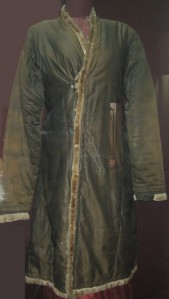
The ton (winter coat) was generally crafted from processed autumn sheepskin. A single coat for an average-sized adult required the skins of 11 to 12 sheep, carefully excluding the groin, small hoof patches, and neck leather, which were unsuitable for tailoring. The wool faced inward, while the leather side was dyed using pigments derived from madder, tree bark, or other natural sources. These coats were stitched using heavy needles, either with a simple press-stitch or more decorative embroidery. Occasionally, a ton was covered with a fabric outer layer; these kaptama ton (covered coats) were often accented with embroidered patterns, collars made of eltiri (lambskin) or sengseng (a specific type of fine lambskin), and fur-trimmed hems.
Zharykak and Tayzhaky
For milder weather, men wore the zharykak or tayzhaky—outerwear fashioned from the hides of foals or colts, worn with the fur facing outward. These skins were soaked, tanned, scraped clean, and dyed to achieve a refined, polished finish. The edges, sleeves, and collars were embellished with embroidery, and the hem, front opening, and fasteners were frequently trimmed with valuable furs. These garments were typically worn as overlayers on top of lighter clothing, such as a beshpent or a padded kupi (warm coat).
Trousers and Belts
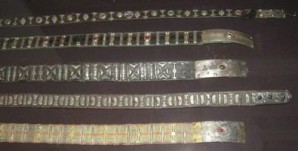
Shalbar (trousers) were tailored from a variety of sturdy fabrics, such as velvet, plush, woolen cloth, or decorative textiles like shoshinshe or shegren, as well as sheep or goatskin. These trousers were characterized by their loose fit, lack of pockets, and a drawstring waist (yshkyr), a design that provided comfort both for horseback riding and for sitting cross-legged. Depending on the preference, the trouser legs were either tucked into the boots or worn over them. Warriors, hunters, and wrestlers often wore their lighter shapan or beshpent tucked into their trousers, an aesthetic referred to as being "trousered." To add elegance, the cuffs of the trousers featured side slits decorated with embroidery. Leather or fur trousers were rarely covered with fabric; instead, they were dyed a single color and accented with embroidery, and sometimes trimmed with valuable furs like beaver or sable.
Traditional Kazakh Women’s Attire
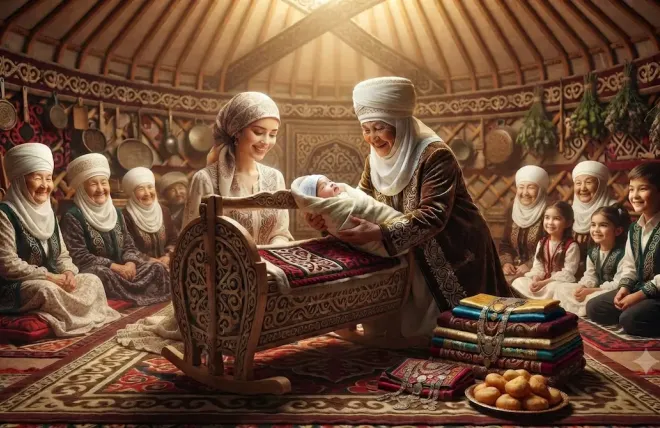
Traditional Kazakh women’s attire varies significantly across regions, with a diverse array of styles and names. Nevertheless, several iconic garments define the wardrobe throughout the country, including the koilek (dress), kimeshek (a hooded headdress for married women), zhaulyk (a headscarf), saukele (an elaborate bridal headdress), zhelek (a bridal veil), takiya (a lightweight skullcap), kamzol (a sleeveless bodice or vest), kazekei (a short jacket), kebis-masi (overshoes worn over soft leather boots), and kokirekshe (a chest-covering breastplate). Based on social custom, women’s clothing is traditionally categorized into four distinct stages of life: the attire of young girls, young married women, middle-aged women, and elderly matriarchs. Each category possesses unique tailoring and ornamentation.
Apparel by Life Stage
Young Girls: These garments are tailored to be fitted and tapered at the bodice, often featuring intricate embroidery on the chest, collar, and cuffs. Dresses typically feature a kos etek (a double-layered, ruffled hem). Girls often adorn themselves with uki (owl feather) embellishments and beads on their headwear, and prefer high-heeled, lightweight footwear. Their clothing is lavishly decorated with gold, silver, and pearls. They frequently wear a kundyz borik (a beaver-fur trimmed hat) or a katypa takiya (a velvet skullcap) and long sholpy (hair ornaments). To maintain a modest silhouette, girls often wear a kokirekshe to tightly support the chest.
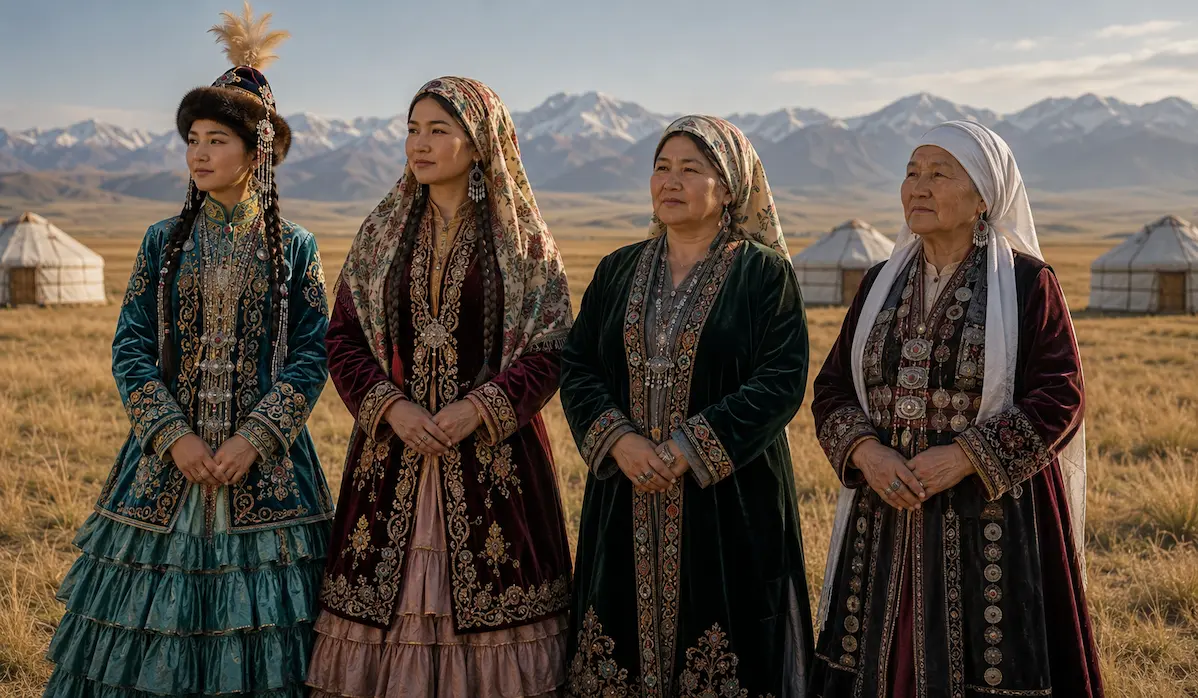
Young Married Women: After giving birth to their first child, women continue to wear elements of girls' attire but cease wearing the borik, takiya, and uki feathers, and they never go bareheaded. As their pregnancy progresses, their garments are tailored to be more voluminous. Their headwear changes to include the sharshy (square scarf), sarala zhaulyk (a patterned headscarf), or torghyn shali (silk shawl), with generally less ornamentation than a young girl's wardrobe.
Middle-Aged Women: At this stage, women adopt a more understated style, known as kubatobel. Their dresses lack the kos etek ruffles and feature a wider, gathered waist and sleeves. They wrap the sharshy headscarf simply, and their collars feature modest embroidery rather than elaborate metallic oka (braid) trim.
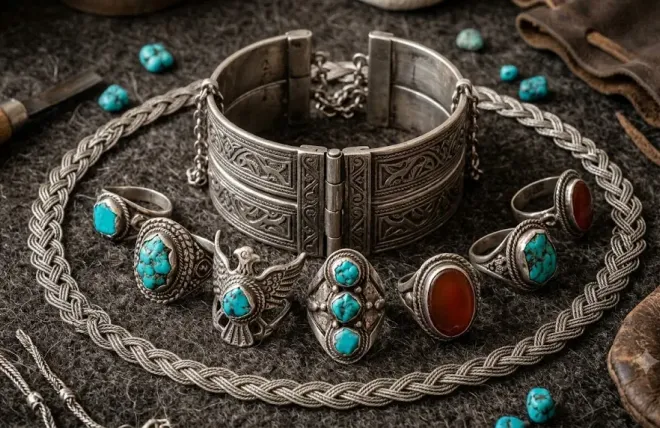
Elderly Matriarchs: The clothing of the elderly is characterized by maximal volume, generous hems, and abundant fasteners. Their primary decorative elements include tana (ornamental plaques), buttons, tis shukysh (decorative toothpicks), kapsyrma (ornamental buckles), and embroidered onir (chest-border decorations). At this age, women no longer wear sholpy or alka (necklaces). However, certain accessories—such as the oka collar trim, kok sauyr kebis (green leather overshoes), embroidered masi (soft leather boots), bracelets, earrings, rings, silver buttons, and coins—are worn by women of all ages.
Essential Garments and Ornamentation
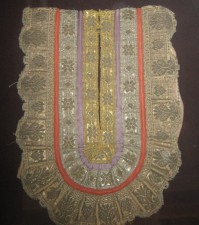
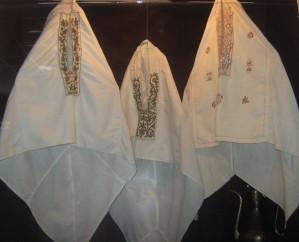
The koilek is the cornerstone of the Kazakh woman's wardrobe, followed by essential headwear like the saukele, borik, takiya, kimeshek-zhaulyk, and the bergek (a protective head covering). Dresses are constructed in two parts—the bodice and the skirt—which are joined at the waist, referred to as the bel or burme. The bodice is fitted, while the skirt is voluminous. The chest opening, which extends down to the waist gathers, is finished with piping and quilting; this opening is called the kakpa. In nursing mothers, this kakpa provides a practical way to breastfeed. The collars are traditionally stiff and stand-up, buttoning at the back or the shoulder. In younger women, these collars are often exquisitely embroidered or finished with delicate hand-stitched pleats, and the chest opening is adorned with a row of decorative buttons.
The most fashionable garment for young women is the kos etek koilek. Traditionally made from high-quality white silk or fine wool, it is often considered a "once-worn" or special-occasion dress, particularly suited for winter. It features a long, wide cut with intricate pleats and ruffles at the cuffs, collar, and waist.