Two-Humped Camel Breeds


Two-Humped Camels
For nomadic pastoralists, the two-humped camel was as valuable as the single-humped Nar (one-humped camel). Camels were essential for transport, milk production, and survival in harsh environments.
The uncastrated male is called a Bura, while the female is an Ingen. Depending on lineage and cross-breeding, two-humped camels were divided into several types.
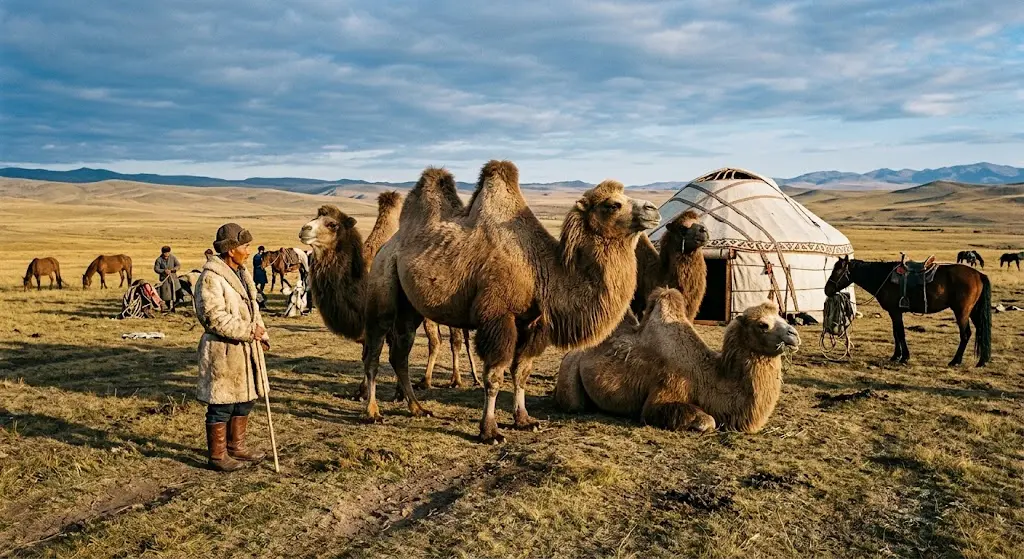
Kos Orkeshti (Two-Humped Camel)
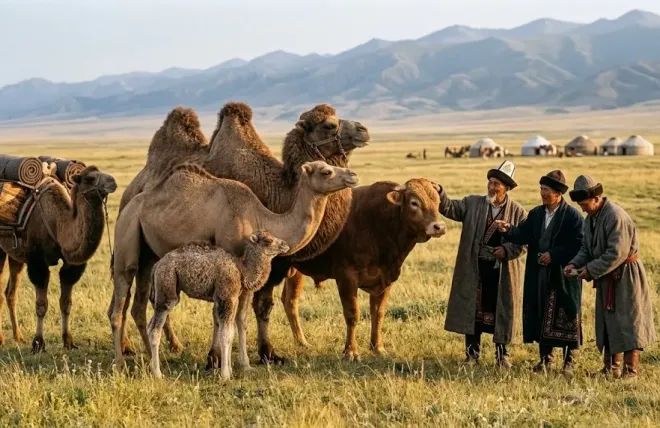
This is the standard Bactrian camel, characterized by two distinct humps with a wide space between them.
Aiyr
An Aiyr is either a purebred Bactrian camel or a cross between a purebred Bactrian and a hybrid.
These camels have well-developed, sturdy humps with a wide gap between them. They have large bellies, thick thighs, and strong legs. They are tall and generally grey, with dense, soft down and a long mane known as Shuda.
Aiyr camels are highly resilient and can withstand extreme temperatures. Purebred Aiyr bulls are calm by nature: they do not roar or spit and are excellent milk producers.
Myrza Kospak
The Myrza Kospak is known as a "noble hybrid," a name reflecting the combination of high-quality lineages.
These camels are massive, powerful, and exceptionally striking in appearance, showing a clear influence of Nar blood. They have dense, curly hair and thick manes. Their humps are closer together than those of the Aiyr, but there is still enough space between them for a person to sit.
Myrza Kospaks are highly valued for their milk, endurance, and calm temperament.
Kyrysty Kospak
The Kyrysty Kospak results from crossing a Lok (a male Nar, or one-humped camel) with a Myrza Kospak.
These camels resemble single-humped animals because their humps form a broad, almost single-looking structure with only a slight indentation at the top. They have heavy bodies and strong, sturdy legs that allow them to move through muddy terrain.
Their milk yield is average, but they are exceptionally resistant to hunger and severe weather conditions. Because the bulls can be aggressive, they are typically fitted with metal muzzles.
Ara Kospak
The Ara Kospak is a hybrid of a Lok and a female Aiyr.
These camels are tall and large-humped, with thick thighs and strong feet that do not easily slip in mud. They are valued for their soft udders and high milk yield.
Ara Kospaks are resistant to extreme climates and flies. However, the bulls are known to be aggressive and therefore require muzzles.
Aiyr Kyrysty Kospak
The Aiyr Kyrysty Kospak is a robust hybrid produced by crossing a purebred Aiyr bull with a Kyrysty Kospak, or vice versa.
These are large, powerful animals with high humps, long manes, and strong legs. They are exceptionally hardy and can withstand a wide range of conditions.
Although the bulls are protective and can be aggressive toward strangers, they are known not to be "roarers" or spitters.
Kospak Nar
The Kospak Nar is the offspring of a female Bir Tuar (an elite Nar lineage) and a purebred Aiyr bull.
Classification of Female Two-Humped Camels
Female two-humped camels, or Ingen, were further classified according to their reproductive status and age.
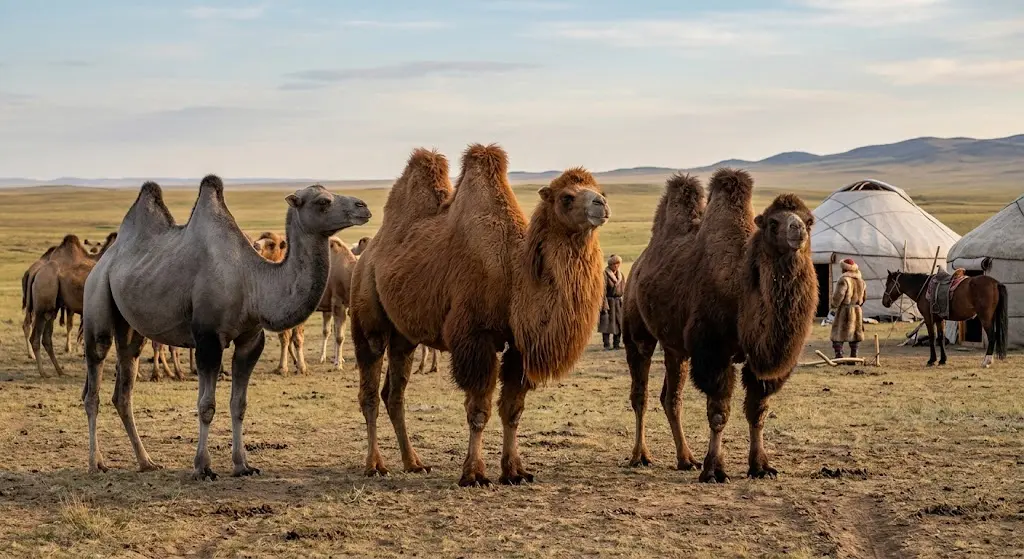
Nursing and Breeding Females
A Buaz Ingen is a pregnant female camel. After mating, the gestation period of a two-humped camel is fourteen months.
A Kenzhe Buaz Ingen is a female that became pregnant after the usual breeding season.
A Kaigan Ingen is a female that has successfully mated with a bull.
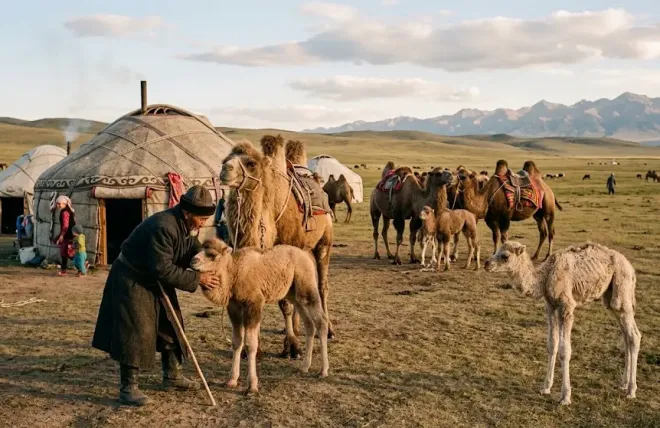
A Botaly Ingen is a female that is currently nursing a calf, known as a Bota. The term can also refer to a female being milked while she is still caring for the previous year's calf, known as a Tailak.
A Sauuly Ingen is a female whose calf has died or been taken by wolves and who is subsequently milked with the help of a decoy.
The term can also refer to a female kept specifically for milk production, particularly for making Shubat (fermented camel milk).
A Suti Shymyr Ingen is a female known for producing especially rich, high-quality, and nutritious milk.
A Tel Ingen is a foster mother — a female whose own calf has died and who is nursing the calf of another camel.
Young and Non-Reproductive Females
Ingen is the general term for a female two-humped camel.
An Ingenshe is a female camel more than three years old. At this age, she was usually first introduced to a bull for mating.
An Ingenshik is a young female camel aged two years and three months.