Charity and Compassion


At Mayyn Surau: The Generous Loan
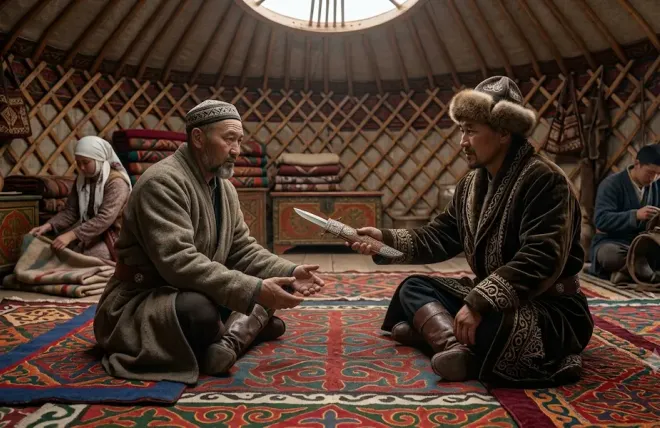
The nomadic code ensured that the vulnerable were never left behind. Families continuously looked after orphans, impoverished households, and widows. If a poor herder lacked a horse to manage their chores or migrate, they could approach a wealthy neighbor and request At Mayyn Surau (literally, "asking for horse-fat"). This was a polite request to borrow a horse for a temporary period. The wealthy neighbor was culturally expected to grant the loan free of charge, reflecting the profound empathy and structural safety nets built into Kazakh society.
Bal Basy: The Soothsayer’s Fee
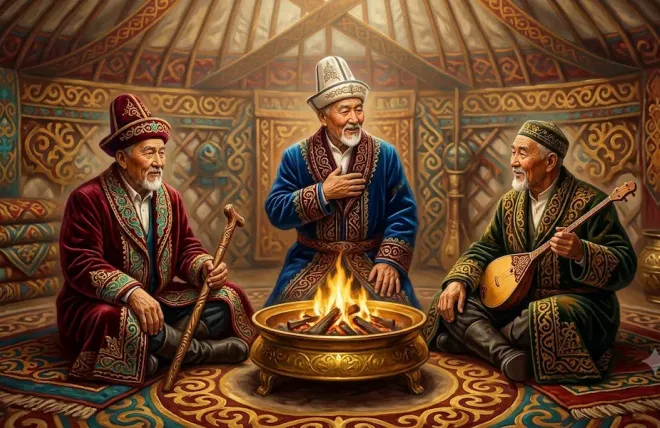
In ancient times, the steppe relied on various spiritual guides, including fortunetellers, coin-casters (kumalakshy), and shoulder-bone readers (zhavarynshy). If a herder lost their livestock or valuables, they would consult a seer to predict where the items were hidden. The voluntary fee paid for this spiritual service is called Bal Basy. Clients paid according to their means. If a seeker was impoverished, the seer would perform the reading for free—doing it "for the sake of the Creator"—and accept a heartfelt blessing in return. If a seer greedily demanded a fixed sum of money or livestock upfront, the community generally ignored them as frauds.
Belkoterer: Comfort Food for the Ailing and Aged
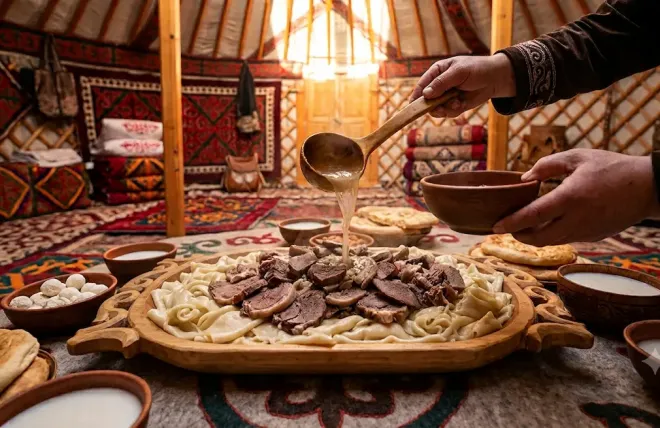
Belkoterer (literally, "spine-supporter") is a touching custom dedicated to restoring the strength of elderly or bedridden community members, as well as those recovering from severe illness. Family, neighbors, and youth prepare and bring easily digestible, highly nutritious delicacies directly to their tents. The menu includes soft horse-meat sausage (kazy), fresh churned butter, sweet zhent (a rich dessert made of crushed grains, honey, and butter), fresh mare’s milk (kymyz), and curd cheese (irimshik). Deeply moved by this care, the elders offer powerful blessings (bata), while the youth witness a living lesson in senior care.
Konil Surau: Compassionate Hospital Visits
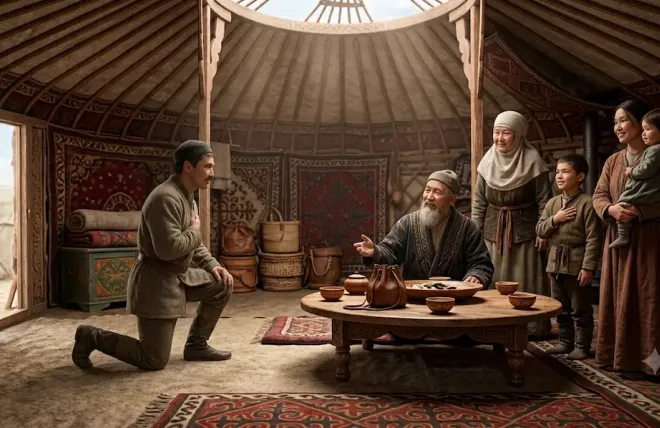
Visiting the sick to check on their emotional well-being (Konil Surau) is a highly respected social duty. Visitors are expected to uplift the patient's spirit, offer helpful advice for recovery, and provide practical help to the household. Steppe protocol dictates that one should never check on a patient late in the afternoon, during sunset, or at night. Furthermore, visitors are forbidden from revealing tragic news, financial hardships, or family deaths to a severely bedridden patient. This practice aligns with the famous teachings of the Prophet Muhammad: "Checking on someone's well-being brings peace to the soul."
Shulen Tartu: The Autumn Welfare Distribution
Shulen Tartu represents a voluntary, compassionate welfare system practiced by wealthy leaders and judges (biys). As the autumn chill approached, affluent herders would systematically organize distributions of livestock, warm clothing, food, and financial help to support less fortunate families in the village. Rather than viewing this as a tool for public praise, wealthy leaders considered it their fundamental civic duty to ensure the entire community survived the upcoming winter safely.
Oli Sybagha: The Widow and Orphan’s Protection Fund
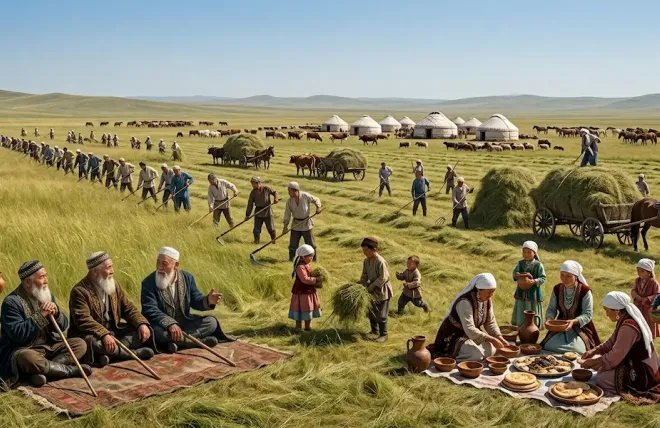
Oli Sybagha (literally, "the share for the deceased") was a brilliant, mandatory welfare system designed to protect vulnerable families who had lost their primary breadwinner. In fishing communities along lakes and rivers, a dedicated portion of every single daily catch was automatically set aside and delivered to the households of widows and orphans. No fisherman would ever dream of withholding this share, as it functioned as a legally binding community fund. This same system applied to agricultural harvests and successful hunting expeditions, ensuring that families without an active provider were always fed and supported by the community.
Zhylu: Direct Disaster Relief
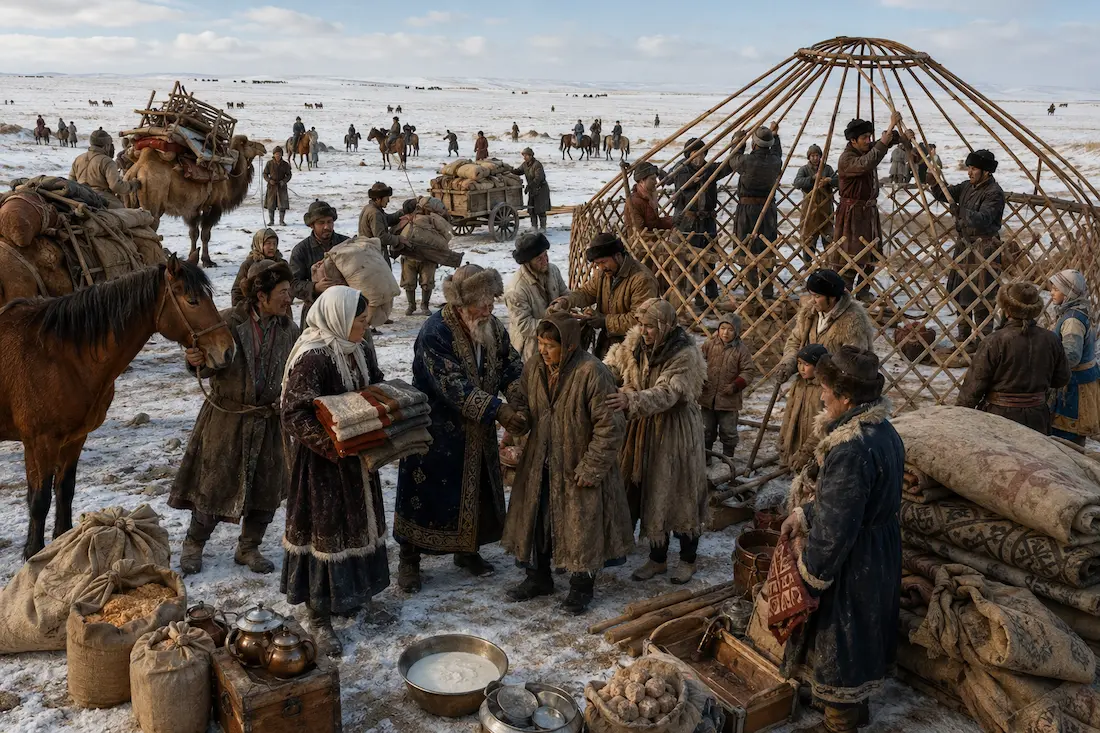
Zhylu is a beautiful system of mandatory community insurance designed to combat natural disasters like winter blizzards, steppe fires, or floods. If a household lost their home or entire herd to a tragedy, the entire region—not just direct relatives—mobilized to help. Neighbors donated livestock, replaced their round felt tents (yurts), provided winter clothing, and supplied food. This rapid-response relief system stands as a testament to the profound empathy of nomadic culture, treating a neighbor's sudden tragedy as a collective community crisis.