Kyz Uzatu: The Kazakh Bride's Farewell Ceremony


Kazakh wedding traditions are deeply rooted in respect, community, and the symbolic transition of a young woman into her new life. Below is a guide to the customs and rites that define the Kyz Uzatu (the bride’s farewell).
Bridal Traditions and Customs
Kalyn Mal (The Bride Price/Dowry)
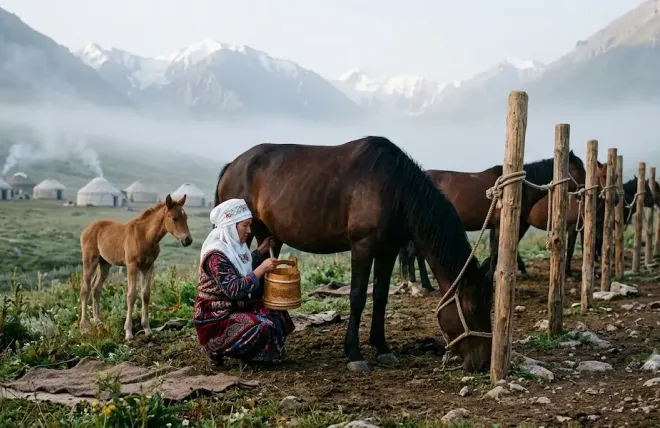
There is a widespread misconception that this tradition represents the literal sale of a bride. In reality, that only occurred in rare instances. On average, the groom's family provided forty head of cattle and four lengths of fabric. However, the bride’s family gained no material profit from this. Instead, these assets were used to establish the newlyweds' life: building a white yurt (aq otau—a traditional portable dwelling) and providing essential items like bedding, utensils, milking cattle, and horses. Combined with the enshi (the bride’s inheritance provided a year later) and gifts like a shubar tai (a piebald colt) and a male goat for future grandchildren, the value returned to the bride often exceeded the initial dowry.
Kyz Tanysu (The Bride’s Farewell Tour)
This custom ensured the bride was fully prepared for marriage. Accompanied by her zhenge (sister-in-law) and a relative, the bride spent at least a month visiting extended family to say goodbye. Hosting families contributed to her future household by gifting items such as alasha and syrmaq (ornate carpets and floor mats), structural parts for her yurt, and clothing. The entire community—including seamstresses, jewelers, and craftsmen—united to prepare her trousseau. Once everything was ready, the groom arrived for his official pre-wedding visit, uryndap kelu. He was permitted to spend time with his bride only with the permission of her zhenge, who acted as the guardian of propriety, bearing moral responsibility for the bride’s purity. During these festivities, the groom stayed in a separate tent with local youth, marking the beginning of lifelong bonds, as the proverb goes: "A good brother-in-law is like a second father."
Kapka Salar (Gifts for the Groom)
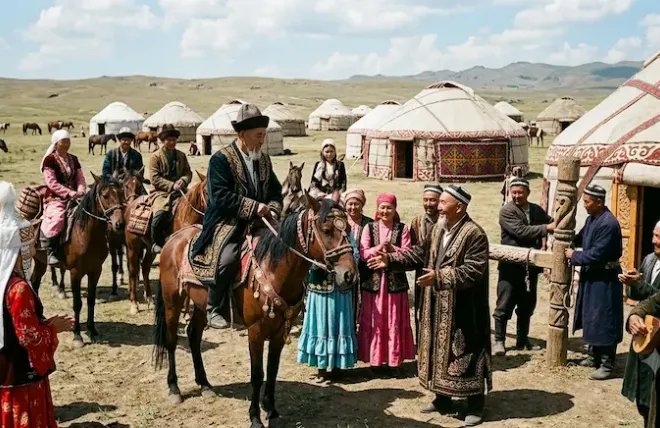
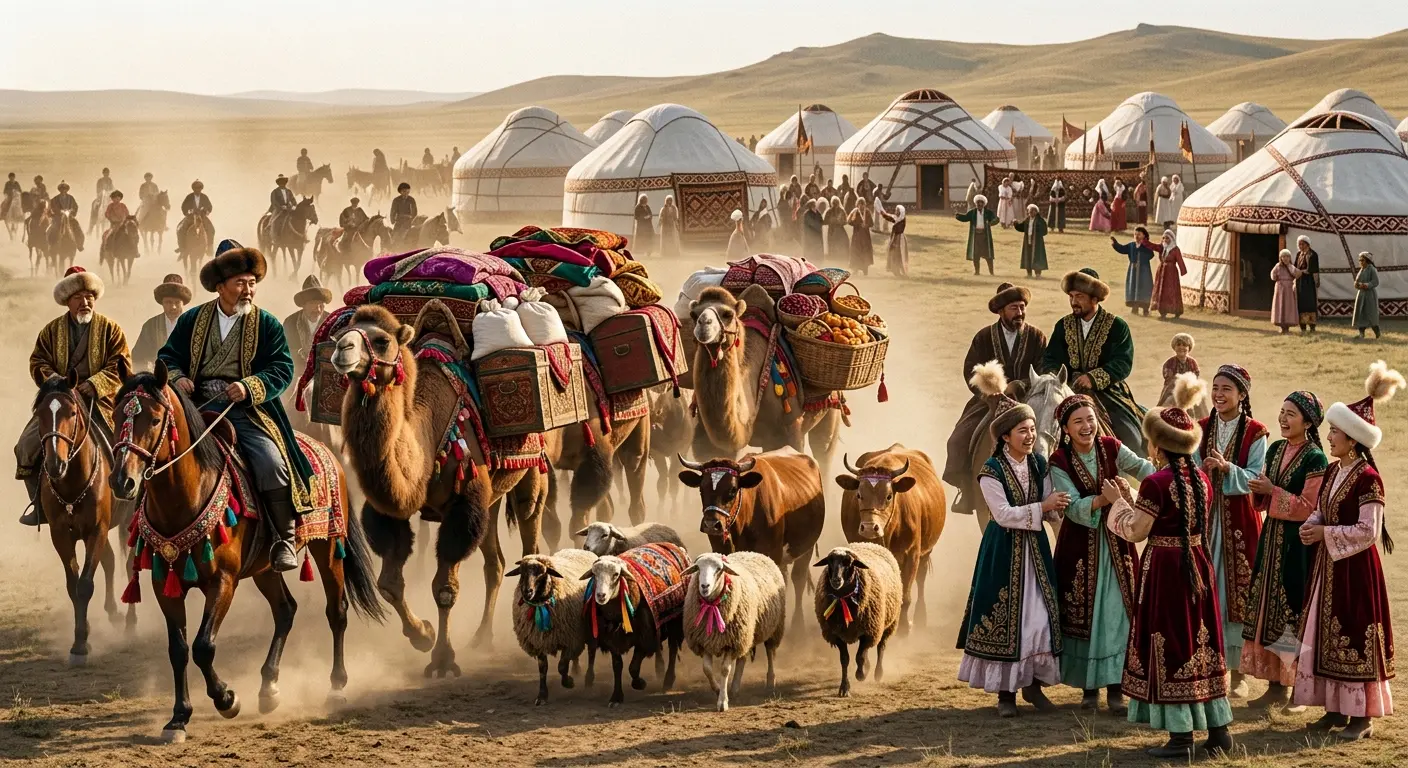
At the appointed hour, the groom and his companions traveled to the bride's village with gifts and livestock for the feast. The bride's father honored the visiting young men by presenting them with kiit (traditional robes). He also gave a special gift directly to the groom, known as qapqa salar. Depending on the father-in-law's social standing, this gift could range from expensive clothing and fine horse tack to prized livestock.
Toi Maly (The Feast Livestock)
This refers to the animals brought by the groom to be slaughtered for the wedding feast. Wealthy matchmakers contributed horses, cows, or sheep, along with fine fabrics, fruits, sweets, and tea. If the offerings fell short, the bride’s sisters-in-law would playfully tease the groom to encourage greater generosity.
Sut Aky (The Mother’s Milk Fee)
During the matchmaking phase, this specific token of gratitude was presented directly to the bride's mother to honor her for nursing and raising her daughter.
Zhigit-Tuie (The Father’s Gift)
While the mother received the sut aqy, the bride's father was presented with the zhigit-tuie—a reward for raising a virtuous daughter. This valuable offering typically consisted of premium clothing, camels, horses, or equestrian gear, in return for which the father offered his formal blessings.
Kopshik Kystyrar (The Cushion Token)
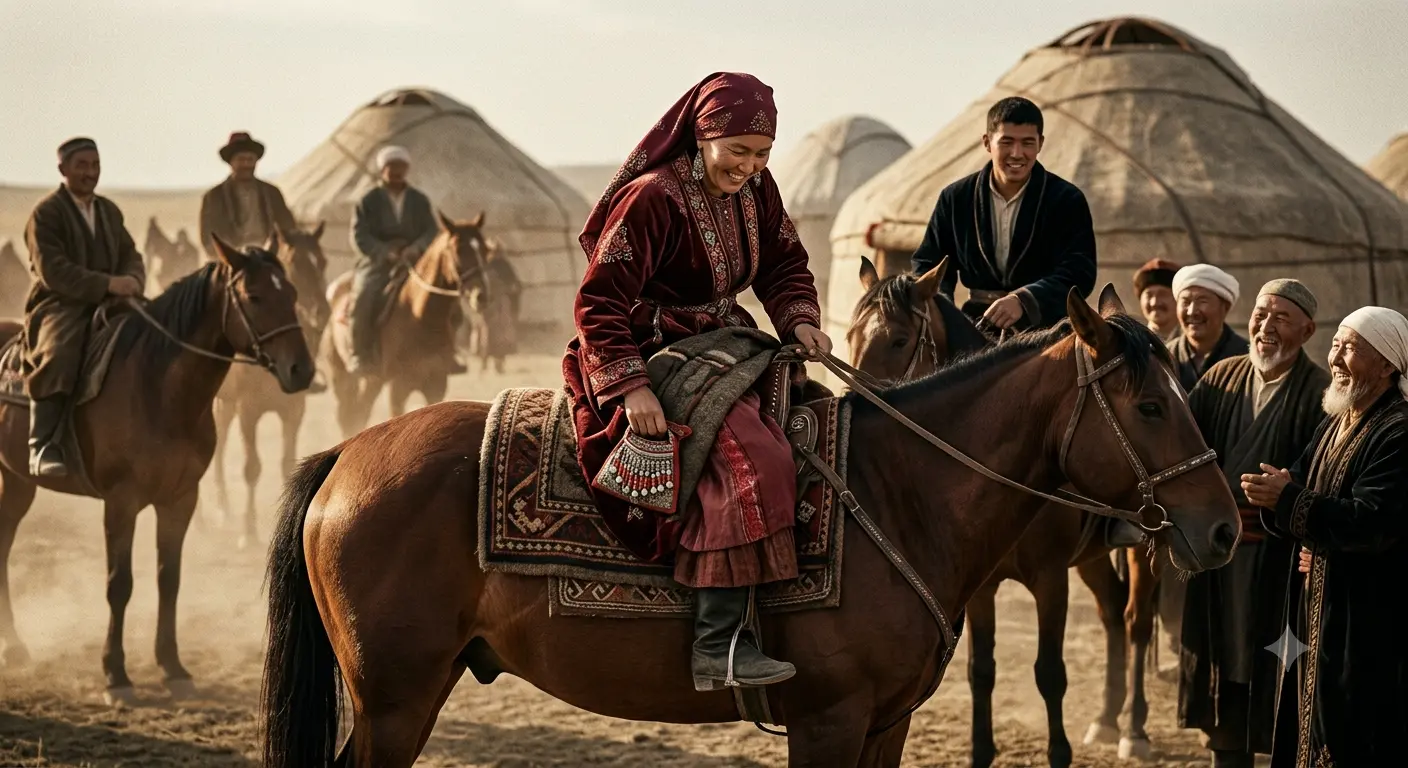
The zhenge (sister-in-law) who escorted the groom into the village would mount his horse and retrieve a hidden token from beneath the saddle blanket. This gift was expected to be of significant value, often enough to purchase fabric for a new dress.
Shashu-Shashu (The Shower of Blessings)
Upon the groom's arrival, a respected elder woman showered the crowd with qurt (dried curd), irimshik (cheese), and sweets from a platter. Onlookers gathered these treats, symbolizing the sharing of joy and good fortune.
Kiyim Ilu (The Cloakroom Custom)
As matchmakers arrived, a designated host attended to them by taking their heavy outer coats. When the guests departed, she helped them dress again, for which she was rewarded with small gifts or money.
Tabaldyryk Kadesi (The Threshold Rite)
Before the matchmakers could enter the host’s yurt, a local woman would playfully block the doorway. She only allowed them to cross the tabaldyryq (threshold) after receiving a symbolic toll.
Sybagha Asu (The Honored Portion)
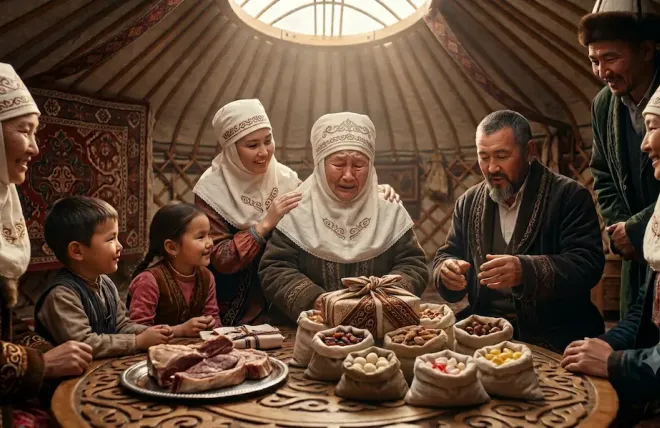
Guests were served cured meat, adhering to the sentiment: "Remember the good of the past, and let it protect us from the old." A specific cut, the zhambash (pelvic bone), was mandatory for the principal matchmaker. Kazakh culinary tradition dictates a strict hierarchy for serving meat, where specific cuts like the head, pelvis, and breastbone belong to specific guests of honor. Saving a dedicated winter portion (sybagha) for matchmakers was an unwritten law.
Malgha Bata Zhasatu (Blessing the Beast)
A live animal was brought before the guests for a formal blessing before slaughter. The guest who blessed the animal offered a second blessing after the meal, placing a monetary token on the platter, which was later shared among the women who served the food.
Kyz Alar (The Feast Platter)
During the wedding feast, a special platter of meat was placed before the groom. In exchange, he tipped the sister-in-law who served it.
Kuiryq-Bauyr Asatu (The Ritual of Liver and Fat)
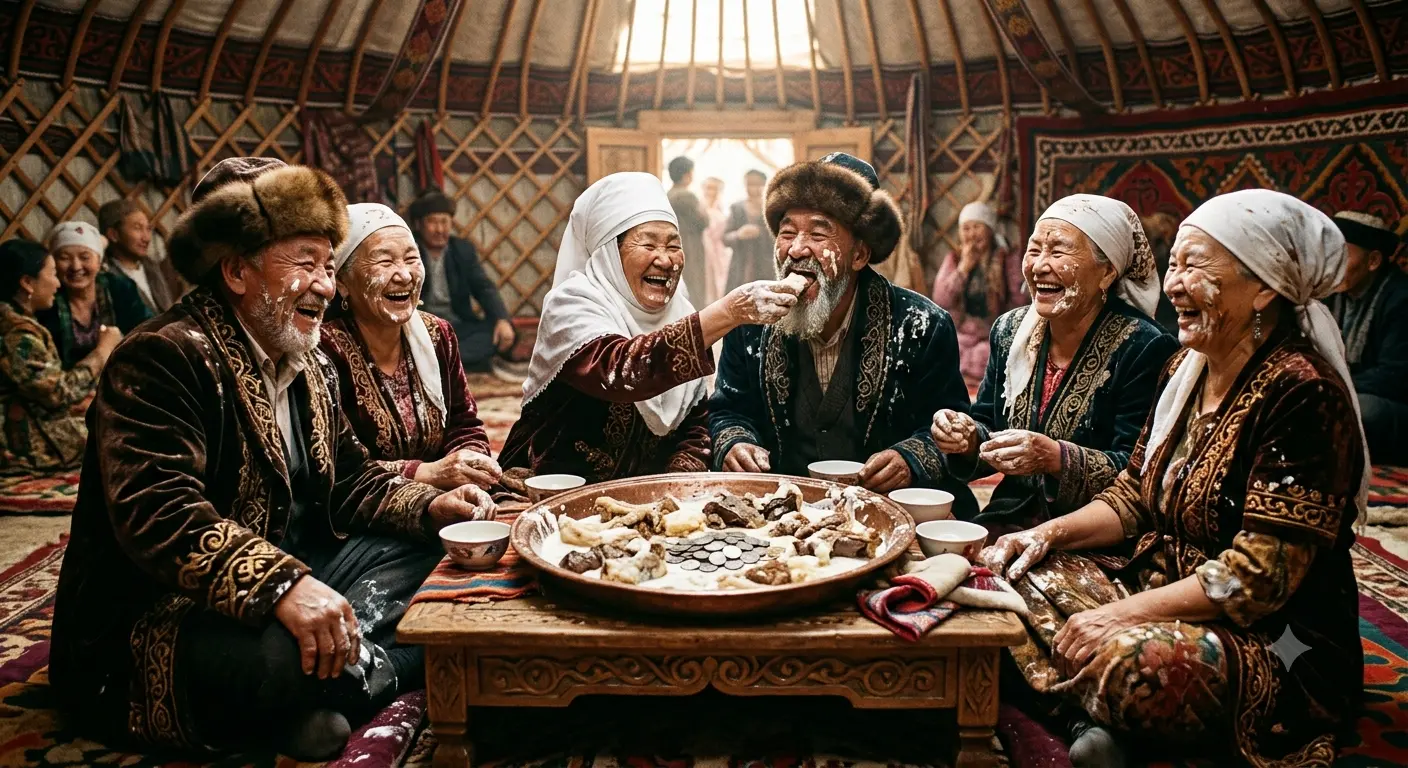
Matchmakers were fed handfuls of sheep's tail fat (kuiryq) and liver (bauyr) topped with yogurt. Any food that could not fit into their mouths was playfully smeared across their faces, and the guests left a symbolic tip for the hosts.
Sugha Toghytu (The Water Dunking)
Following the liver ritual, villagers would playfully chase the matchmakers to dunk them into a nearby river or pond. This custom, common in summer, showcased grandeur and celebrated the color white (the color of water and milk), which Kazakhs revere as a symbol of purity. The next morning, the matchmakers were given fresh kit (robes), signifying that any harsh words spoken during the previous night's revelry were washed away.
Kiyim Tigu (The Stitching Penalty)
Visiting matchmakers were forbidden from sleeping during their first night. If a guest fell asleep, the hosts would playfully stitch their clothes to the floor mats, forcing the sleeper to pay a fine to be freed.
Bosagha Attar (Crossing the Family Threshold)
After the water ritual, the groom was formally invited into the main family yurt to meet the bride's parents. He later returned to his quarters, where a special meal of brisket and asyqty zhilik (shinbone) was prepared for him.
Asykty Zhilik & Tos (The Symbolic Cuts)
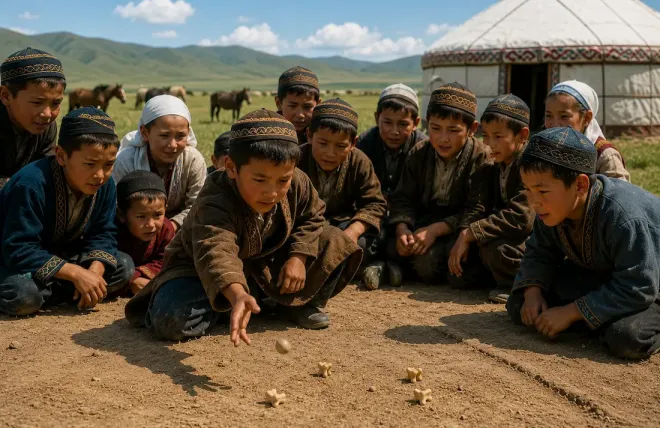
The asyqty zhilik (shinbone) was the groom's prize because it contains the asyq (knucklebone), used in children's games to teach strategy and math; serving it was a wish for many children. The tos (brisket) was given to ensure the couple would always share one heart and one home.
Neke Oku (The Wedding Blessings)
A Muslim cleric (molda) performed this religious rite in front of witnesses. All present tasted sacred wedding water containing salt (invoking divine retribution if vows are broken) and sugar (representing a sweet life). Following the ceremony, the bride’s dignity was verified, after which her parents were congratulated.
Kyz Kashar – Tundik Zhabar (The Secret Tryst)
In this intimate ritual, the sister-in-law prepared the bridal bed and closed the yurt’s tundik (roof flap). The groom performed the shash sypatar (caressing the bride's hair) before the couple was left alone. The sister-in-law remained nearby to ensure the marriage was consummated.
Shatyr Baighazy (The Pavilion Blessing)
The morning after, the couple was invited into an outdoor pavilion, signifying their transition into adulthood. A female matchmaker presented them with a baighazy (blessing gift) to support their future home.
Korzhyn Sogu (Unpacking the Saddlebags)
A large korzhyn (woven saddlebag) was opened; the fine fabric inside went to the woman who unfastened the bag, while the clothing was gifted to the bride's parents.
Moiyn Tastau (The Neck Bone Challenge)
If the bride’s family provided a full yurt, the groom was tasked with picking the neck bone of the slaughtered animal clean and tossing it through the narrow tundik (roof flap). Success signaled that he would cherish his bride.
At Bailar (Tethering the Steed)
Once the yurt was raised, a relative tethered a horse outside, wishing the couple endless hospitality and full guest lists.
Saukele Kigizu (The Crowning of the Bride)
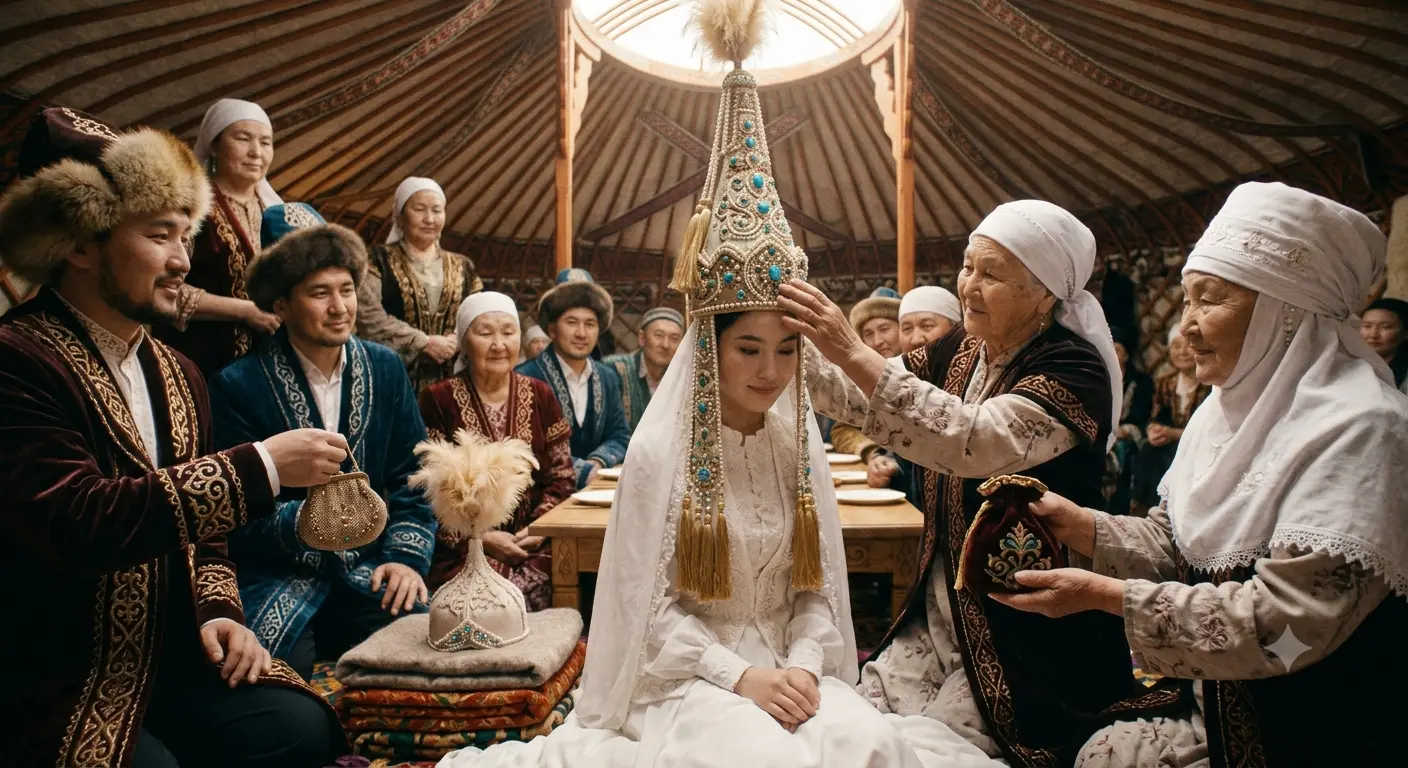
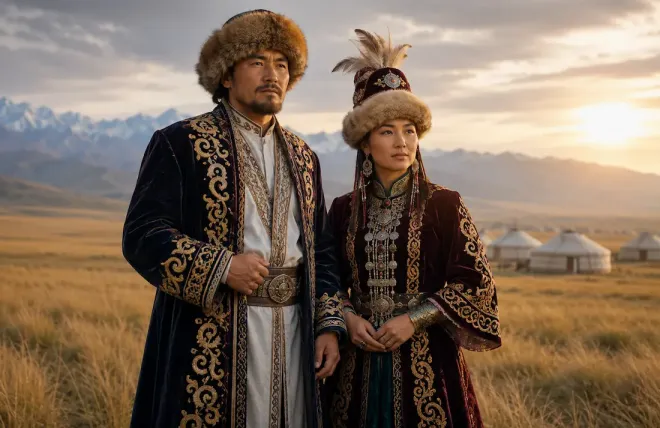
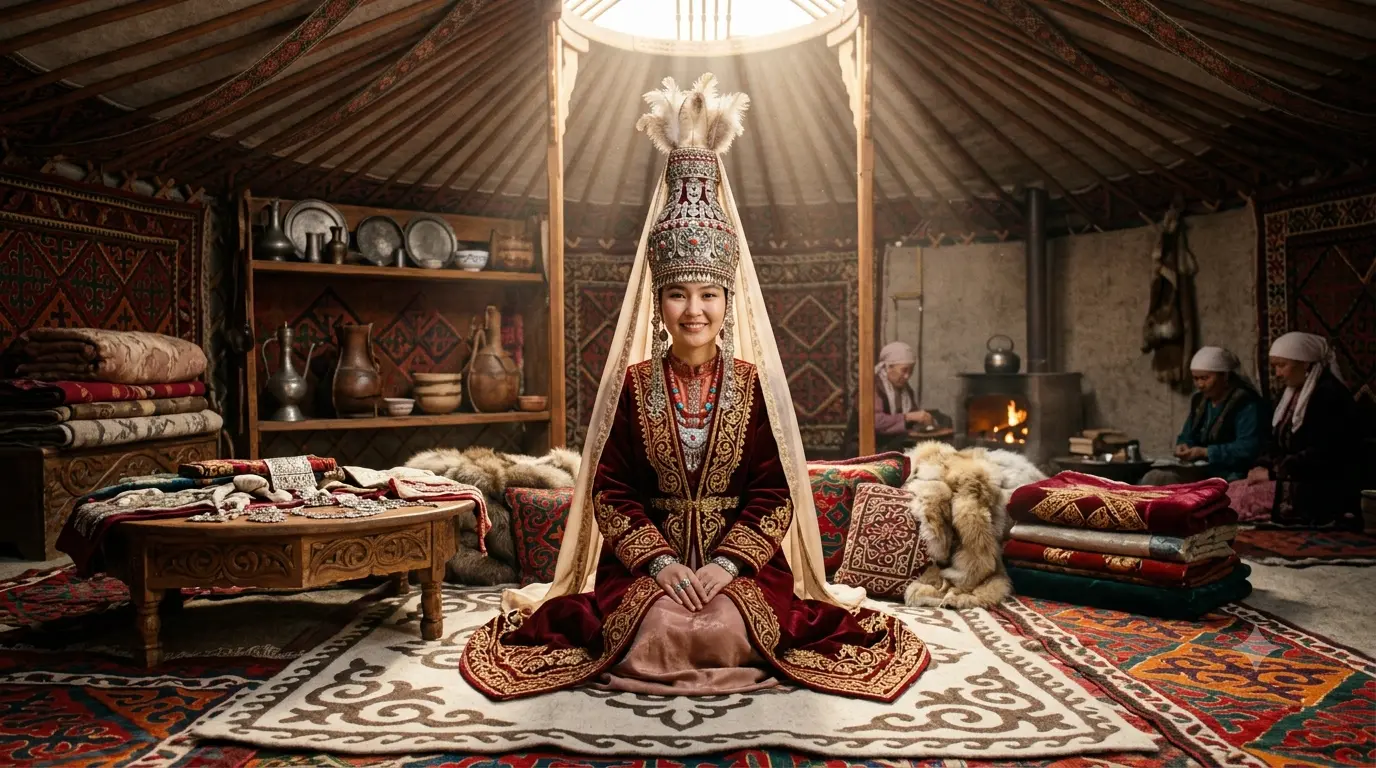
The saukele is a towering, iconic bridal headpiece. The bride’s mother replaced her daughter’s youthful cap with the saukele, an act witnessed by matchmakers who paid a fee to see her. This was the last time the bride would wear a maiden's headgear.
Bosaghagha Ilu (The Coat on the Doorpost)
Before leaving, the groom hung a shapan (cloak) on the doorpost of his father-in-law’s home, a silent vow that he would forever stand by his new family.
Satyn / Au-Zhar (The Parting Dialogue)
Through a stylized, weeping song, the bride bade farewell to her parents and homeland. This custom was particularly emotional as it marked the official departure of the bride from her childhood home.
Synsu (The Bride’s Lament)
The synsu was a melancholy song expressing gratitude to parents for a pampered childhood and mourning the passing of youth.
Jar-Jar (The Wedding Chorus)
This ancient call-and-response song was performed as the bride departed. Young men comforted her by promising a new father figure in her in-laws, while young women lamented the difficulty of leaving one's own family.
Aushadiyar (The Wedding Ballad)
This festive song was reserved exclusively for weddings and farewell ceremonies. Performed with a distinct, beautiful rhythm, it lent an air of solemnity to the event. Though largely forgotten today, the aushadiyar served as a poetic blessing dedicated to the youth, celebrating the values of lineage, pure intentions, and the continuation of the family tree.
Sharghy (The Passing of the Veil)
The bride passed her sharghi (headscarf) to an unmarried friend, symbolizing the passing of the torch so that she might also find happiness.
Zhasau (The Bridal Trousseau)
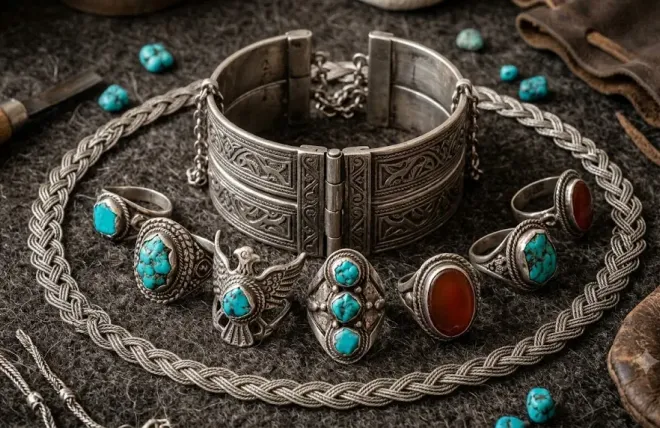
The zhasau included jewelry, carpets, and luxury garments. It represented the immense cultural capital invested in a daughter, and its value often exceeded the dowry from the groom.
Kyz Koshi (The Bridal Caravan)
The qyz koshi (bride's caravan) transported the bride to her new home. As it approached the groom's village, it became the kelinshek koshi (young wife's caravan). Neighbors often blocked the road, demanding a tuiemuryndyq (road toll) before wishing them a safe journey.
Kuyeu Kiyimi (The Groom’s Attire)
The groom wore a traditional hat with uki (owl feathers) and a red cloak, making him instantly recognizable. His behavior was strictly scrutinized; any lapse in etiquette was met with playful teasing or fines from the villagers.