Kazakh Mares: Traditional Classification and Terminology


Kazakh Mare Terminology
Buaz bie (a pregnant mare; literally "mare covered by a stallion"): A mare currently carrying a foal.
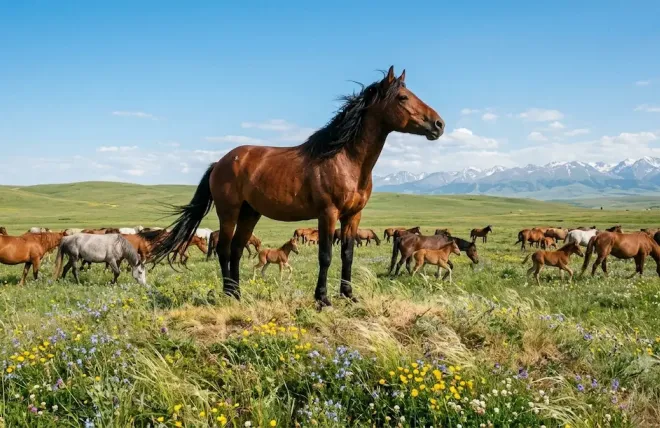
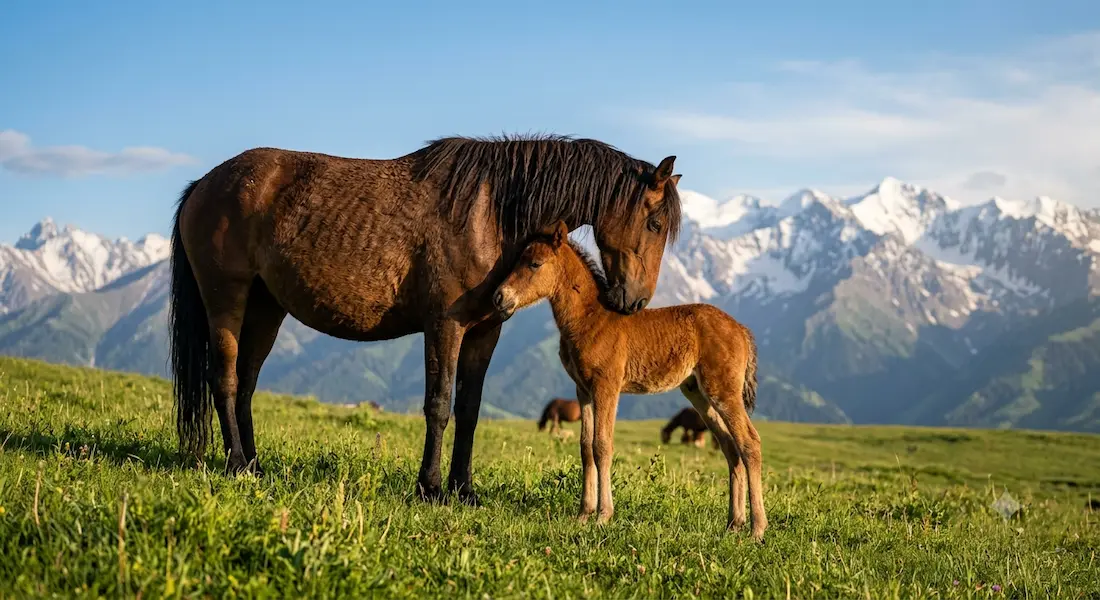
Qulyndy bie (a mare with a foal at foot): A lactating mare accompanied by her nursing foal.
Taily bie / Kysyr bie (a barren mare): A mare that did not conceive or lost her foal during pregnancy. These mares are often milked while rearing a yearling.
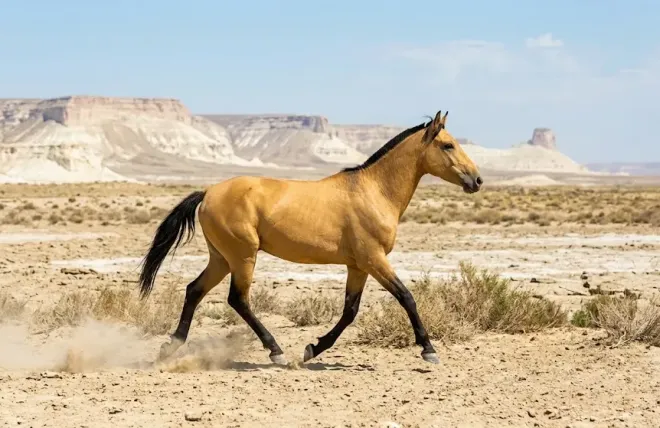
Mesbie (a high-yield dairy mare): A mare with a large, strong frame and a deep barrel that maintains a stable, sturdy physical condition while producing high volumes of milk.
Sauuly bie (a foal-less lactating mare): A mare being milked despite having no surviving foal. This is achieved by using the skin of a deceased foal to trick the mare, or by training her to come for milking upon hearing a bucket or a specific call.
Tel bie (a foster mare): A mare that has adopted another mare’s foal after losing her own.
Saka bie (a mature mare): An experienced mare that has successfully foaled 5–6 times.
Saka kulyk bie (a late-first-time mature mare): A mare that remained barren until 5–6 years of age and then produced her first foal.
Ulken kulyq bie (a large mature first-time mare): A large, mature mare previously used as a riding or pack animal that remained outside of a harem and began foaling later in life.
Kishi kulyk bie (a young first-time mare): A young mare covered as a yearling that produced her first foal as a two-year-old.
Kasabaly bie (a prime-age mare): A mare in her prime, typically 7–8 years old, with a history of regular foaling.
Sharlangan bie (a dry fattened mare): A mare that lost her foal, stopped producing milk, and subsequently gained significant weight.
Asau bie (an unbroken mare): A wild or untamed mare not accustomed to being handled or milked.
Bosalauyk / Jershil bie (an "instinctive" homing mare): A mare that instinctively travels to specific seasonal pastures (jailau) or her birthplace specifically to give birth.
Kundy bie (a "valuable" mare): A hardy, cold-resistant mare with excellent milk production and a proven history of producing strong offspring.
Kutymsyz / Kunsyz bie (a "low-value" mare): A mare with low milk yield and poor resilience to harsh weather and cold.
Kut bie (a "blessed" mare): A highly productive dairy mare that consistently produces healthy, surviving fillies.
Kurtyk bie (a poor-quality mare): The smallest and least productive mare in a herd, known for having weak offspring and inferior genetic traits.
Classification Based on Physical Features
Aina koz bie (a "mirror-eyed" mare): A descriptive term for two distinct eye traits:
- Type 1: A mare with flat eyelids and shiny eyes; these mares often produce tears when exhausted from travel.
- Type 2: A mare with noble, deep-set, hooded eyes; her eyes remain clear even after long, exhausting journeys.
Kara jelin bie (a dark/muscular-uddered mare): A mare with a firm, muscular, "hard-fleshed" udder, typically associated with lower milk yield.
Kupshek sandy bie (a barrel-thighed mare): A mare with rounded, thick, barrel-shaped hindquarters.
Kamys kulak / Kayshy kulak / Siyyr kulak bie (a reed-eared / scissor-eared / cow-eared mare): Descriptive names based on ear shape and set (resembling reeds, crossed scissors, or cow ears, respectively).
Noktaly bie (a haltered mare): A synonym for a mare with a foal at foot; implies the mare is "tied" to her maternal duties.
Kosakty bie (a tethered mare): A term with two distinct meanings:
Meaning 1: A mare whose foal is tethered to her neck in the autumn to facilitate milking.
Meaning 2: A newly acquired mare tethered to another horse to prevent her from escaping back to her original herd.
Er arka bie (a saddle-backed mare): A mare with high withers and a wide, strong croup, making her ideal for comfortable saddling and riding.
Classification Based on Breeding and Foaling Timing
Kulyk bie (a young first-foal mare): A mare that produces her first foal at the age of three (donezhin) or five (besti).
Aighardan shykkan bie (a covered mare): A mare that has successfully mated with a stallion during her estrus cycle.
Erte bie (an early-season mare): A mare that mates early in the season and therefore foals earlier than the rest of the herd.
Kenzhe bie (a late-season mare): A mare that mates late in the season, resulting in her foaling after the other mares in the herd.
Aramza bie (an out-of-season mare): A mare that mates earlier than the natural breeding cycle, leading to problematic foaling during harsh winter months.
Classification Based on Condition and Vitality
Tu bie / Kur bie (a fleshy barren mare): A mare that has either lost her foal, aborted, or never foaled and has not been used for riding. These mares typically become very fat.
Tasyrkagan & Tosyrkagan bie (foot-worn and herd-shy states):
Tasyrkagan: A mare whose hooves have worn thin or become damaged.
Tosyrkagan: A mare that acts "stranger-shy" or alienated when introduced to a new herd, refusing to bond.
"Donen" bie (a low-stamina mature mare): A mare aged 7–8 years that is not resilient to winter, does not hold weight well, and has poor milk production.
Ashan bie (a gaunt/lean mare): A mare that fails to gain proper body condition or weight despite adequate grazing.
Bosan / Bosalan bie (a fragile mare): A mare of poor pedigree that loses weight rapidly, is unsuited for riding, and is difficult to maintain.
Jasymyq bie (a weak/poor-quality mare): A mare of inferior genetic stock that produces little to no milk, cannot maintain physical condition, and lacks cold resistance.
Classification Based on Age and Development
Toktagan / Jasamys bie (a mature / middle-aged mare): A mare that is either pregnant (mated) or past her prime (middle-aged and older).
Kulyn (a foal): A newborn or young offspring. The term "Kulyn-bodied" is a high compliment in Kazakh culture, describing a graceful, elegant young horse. Common descriptors include "onager-bodied," "noble-bodied," or "goose-necked."
Jabaghy (a weanling): A foal in its first autumn (6+ months), named after the thick, matted winter coat (jabaghy) it develops at this age.
Tai bie (a yearling mother mare): A one-year-old mare that has already produced a foal.
Buaz kunajyn baital (a pregnant two-year-old filly): A mare that mated at age one and is pregnant or foaling at age two.
Buaz donezhin bie (a pregnant three-year-old mare): A mare that mated at age two and is pregnant or foaling at age three.
Besti bie (a five-year-old mare): A mare that mated at age four and is foaling at age five.
Kartamys bie (an aging mare): A mare aged 11–14 years.
Kari bie (an old mare): An old mare aged 15–17 years.
Laksa bie (an elderly mare): An elderly mare aged 18–20 years.
Jasagan bie (a very old mare): A very old mare over 20 years old. Exceptional bloodlines can live up to 40 years without significant tooth wear.
Sary karyn bie (a prime-age mare): Literally "yellow-bellied," specifically referring to a mature mare in her prime (8–9 years old).
Kunajyn baital (a two-year-old filly): A filly over two years of age.
Donezhin shyghar / Donezhin baital (a three-year-old filly): A filly approaching three years old or over three years old, respectively.
Milking and Management Terms
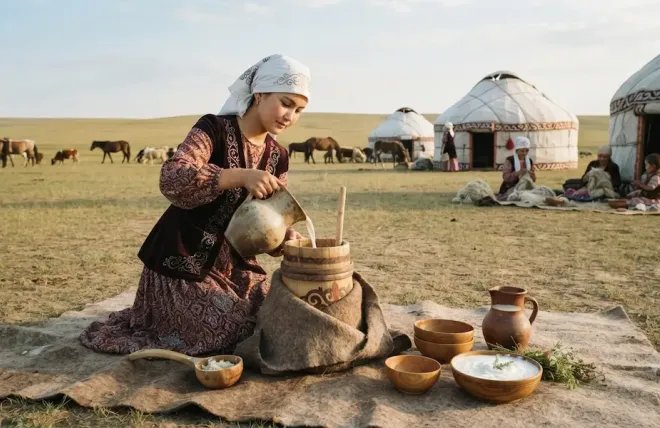
Sauyn (milking): The general act of milking any lactating animal.
Sauym (a milking session): A specific milking period when the mare's udder is full of milk, signaling time for the foal to nurse and for the milker to collect milk.
Bas sauym (the first milking): The very first milking session of the day.
Kenzhe / Songhy sauym (the final milking): The last late-evening milking session before mares are released for the night.
Kojyragan bie (a drying-up mare): A mare in the late stage of lactation that produces very little milk, signaling she is beginning to dry up.
Kosak (autumn foal-tethering): The traditional autumn practice of tethering larger, older foals to their mothers' necks to limit grazing and keep them close for milking.
Iitu (milk let-down stimulation): The act of stimulating the mare's "milk let-down" reflex, traditionally done by allowing the foal to suckle briefly before milking begins.
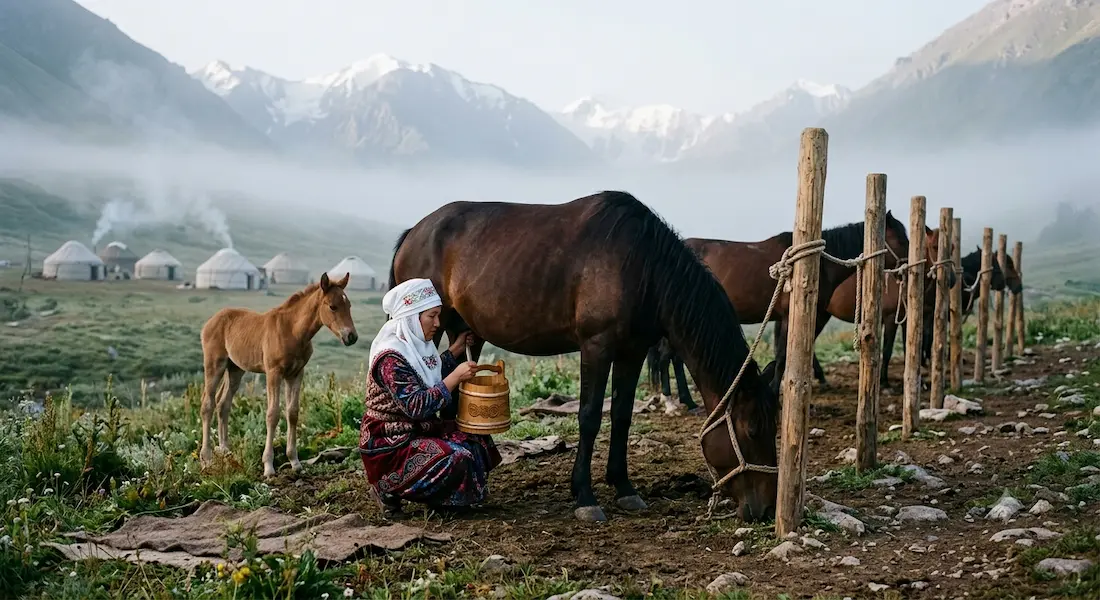
Ak keuil (a cooperative dairy mare): A docile, cooperative mare that lets down her milk readily on her own without needing a foal present.
Jelini dertken (an engorged udder): Painfully swollen udder condition occurring when a mare is not milked on time.
Jebei sauu (a follow-up milking): Milking a mare a second time about 30 minutes after the initial session to extract remaining milk.
Boz emshek (the first autumn milking): The very first milking of the autumn season, characterized by an extremely tight and distended udder.
Udder Anatomy and Teat Morphology
Jelin (the udder): The glandular organ where milk is produced and collected.
Jelin saba (the udder sac): The skin or external casing of the udder. The phrase "jelin sabasyn salypy" (literally: "she has lowered her udder sac") indicates an udder starting to "bag up," showing foaling is imminent.
Tuiin salu (mammary gland development): The initial stage of udder development where glands begin swelling during pregnancy.
Urpi agharu (teat whitening): Whitening of teat tips; a key diagnostic sign that milk composition has changed and foaling will occur shortly.
Classification Based on Teat and Udder Shape
Shipi emshek bie (a small-teated mare): A mare with small, dainty teats.
Tar urpili bie (a narrow-orifice mare): A mare with narrow or tight teat orifices, making milking more difficult.
Ken urpili bie (a wide-orifice mare): A mare with wide teat openings, making her easy to milk.
Tik emshek bie (a straight-teated mare): A mare with teats positioned vertically and straight.
Synar emshek bie (a single-functional-teat mare): An unbalanced mare where only one side of the udder functions properly or provides enough milk.
Buien emshek bie (a thick-based teat mare): A mare with teats that are short but have a thick, fleshy base.
Byrtyk emshek bie (a lumpy-teated mare): A mare with irregular or lumpy teats that are difficult to grip firmly.
Taltak emshek bie (a splayed-teated mare): A mare with teats tilted outward in opposite directions.
Tostaghan jelin bie (a bowl-uddered mare): A mare with a bowl-shaped udder; considered the ideal, standard conformation for maximum milk yield.
Classification by Milk Productivity
Mama bie (a high-yield dairy mare): A highly productive mare whose milk output exceeds what her foal can consume, keeping her udder full for long periods.
Suti kaytkan bie (a declining dairy mare): A mare whose milk yield has significantly decreased due to age, illness, or poor care.
Sualghan bie (a dry mare): A mare that has completely stopped lactating.
Manersiz bie (a low-yield dairy mare): A mare with very poor milk yield.
Aktandyr bie (a non-lactating mare): A mare that produces no milk at all when milked.
Isinshek bie (a responsive-lactating mare): A mare that lets down her milk immediately upon sensing or nuzzling her foal.
Classification by Temperament
Bedireuik bie (a stubborn/slow-letdown mare): A mare that is difficult to milk due to slow milk release, often standing stubbornly and staring at the milker.
Tarpan bie (a wild/unruly mare): A skittish, flighty mare that kicks, bites, and resists handling due to lack of taming.
Zhebir bie (a greedy/indiscriminate mare): A mare that greedily eats or chews anything in her path.
Bezer bie (an aggressive/antisocial mare): An aggressive mare that bites and kicks any human or animal approaching her or her foal.
Zhanasqysh bie (an affectionate mare): An affectionate mare that constantly nuzzles or seeks to nurse her foal at the tethering line.
Classification by Mane and Tail Characteristics
Maida zhaldy bie (a fine-maned mare): A mare with a thin, silky mane (poetically called "silk-maned").
Kerege zhaldy bie (a lattice-maned mare): A mare with an upright, thick, uniform mane resembling the lattice wall (kerege) of a yurt.
Tokpak zhaldy bie (a thick-maned mare): A mare or stallion with an exceptionally dense, matted, thick mane.
Shubalan kuiryqty bie (a long-tailed mare): A mare with a long, thick, and flowing tail.
Soyau kuiryqty bie (a sparse-tailed mare): A mare whose tail hair has thinned out, leaving a sparse appearance.
Kelte kuiryqty bie (a short-tailed mare): A mare with a short or stunted tail.
Sympys / Kylysh kuiryqty bie (a sword-tailed mare): A mare with a thin, straight, sparse tail consisting of few hairs.
Classification of Non-Foaling Mares (Boidaq)
Kysyraq / Boidaq (a non-lactating herd): A collective term for all mares, fillies, and yearlings not currently nursing foals, kept in a separate herd.
Bordaky bie (a feedlot/fattening mare): A mare kept out of the main herd and hand-fed to build fat and muscle.
Kysyr bie (a barren mare): A mare that did not mate or lost her foal during pregnancy.
Tok bie (a well-conditioned mare): A well-fed mare in excellent physical condition and body flesh.
Tunghan bie (an over-fat barren mare): A barren mare that has become excessively fat.
Bedeu bie (a permanently infertile mare): A mare incapable of reproducing.
Tumsa kulyk (a maiden mare): A young mare that has not foaled by age 3 or 4 despite being mated.
Kyzyl mai (an exhausted/overworked mare): A mare overworked while fat and turned out without cooling down, leading to coat loss and exhaustion.
Bugezhik (a timid/clumsy mare): A timid, ground-shy mare that walks clumsily and lacks stamina.
Koben bie (a recovering mare): A mare recovering from overwork or winter harshness that is beginning to regain weight on spring pastures.
Ak zhilik bie (a well-nourished filly-mare): A mare well-nourished during foalhood because her mother was not milked.
Kara kemik bie (a neglected/heavily-milked foal mare): A mare that grew up undersized because her mother was heavily milked during her foalhood.
Kaghylzhyn bie (a continually worked mare): A mare kept in continuous labor and never allowed to fully gain weight.
Koltuma bie (a hand-raised mare): A mare kept individually by a single owner rather than in a large herd.
Tolghan bie (a prime-condition mare): A full-bodied mare in peak physical health and condition.
Shynyltyr bie (a hard-keeper mare): A mare that fails to gain weight or flourish regardless of feed quality or care.
Shatys bie (a crossbred mare): A common mare improved by crossbreeding with a superior stallion.
Nakuc / Kutamsyz bie (an inferior-quality mare): A low-grade mare with poor pedigree, low milk yield, sluggish temperament, and poor responsiveness to cues.
Classification by Breed and Build
Sungakty bie (a tall/well-built mare): A tall, large, well-proportioned mare of strong pedigree.
Kazanat bie (a noble war-horse mare): A tall, noble mare with strong limbs, durable hooves, high milk yield, and exceptional riding stamina.
Karabyaiyr bie (a heavy-set work mare): A common, heavy-set mare with a large barrel, thick legs, and flat hooves; slow-moving and less suited for high-speed riding.
Arghymak bie (a refined/noble mare): A refined, elegant mare (often Akhal-Teke lineage) with slender limbs, a fine mane, and a swan-like neck.
Zhalbyr bie (a shaggy-coated mare): A mare with long, shaggy hair and a thick mane and tail extending close to the ground.
Bukish bie (a roach-backed mare): A mare with a humped spine where the hindquarters stand higher than the withers.
Tobyshak bie (a hybrid draft-war mare): A crossbred horse resulting from a Kazanat and a Karabyaiyr.
Physical Characteristics and Temperament
Zhurdek bie (a fast riding mare): A spirited, fast riding mare.
Kuyma tuyak bie (a dense-hoofed mare): A mare with exceptionally hard, durable hooves that move quietly without loud clicking.
Kazan / Kaz taban bie (a flat-hoofed mare): A mare with wide, flat hooves that make a loud clattering sound on hard ground.
Otkir kozdi bie (a sharp-eyed mare): A mare with noble, hooded eyes that withstand extreme heat and cold.
Boken sandy bie (an antelope-thighed mare): A mare with tight, compact, well-muscled hindquarters like an antelope.
Serke sandy bie (a lean-thighed mare): A mare lacking muscle mass in her hind legs.
Shalkes minezdi bie (a temperamental/bucking mare): A skittish, unpredictable mare that is difficult to handle and prone to explosive bucking.
Young Fillies (Filly Stages)
Urghashy tai (a female yearling): A one-year-old female horse.
Urghashy tel tai (a foster female yearling): A one-year-old filly nursed by two different mares.
Urghashy kenzhe tai (a late-born female yearling): A filly born late in the previous season (after May).
Terms Related to Foaling
Tolghaq (labor pains): The stage of labor where a mare becomes restless, paces, stops eating, and repeatedly lies down and stands up in discomfort.
Tumba (fetal movement): Visible movement of the foal inside the womb observed near the mare’s flank prior to birth.
Kaghanaq (amniotic fluid): Clear fluid within the membrane that precedes the foal during birth.
Sharana (vernix coating): The yellowish-white, slippery substance coating a newborn foal's body.
Akton (amniotic sac): The thin, whitish membrane enclosing the newborn foal at birth.
Shu (placenta/afterbirth): The placental sac expelled by the mare shortly after giving birth.