Honor and Dignity


Amanat: The Sacred Trust
An Amanat is any valuable object, word, or duty entrusted to another person for safekeeping. In steppe culture, protecting this trust was the ultimate measure of a person’s integrity. The popular warning, "Never betray an Amanat," emphasizes absolute loyalty to the person who placed their faith in you. Beyond personal items, an Amanat also functioned as a binding verbal treaty between different clans and tribes. During periods of intense intertribal warfare, families would even exchange children to be raised by opposing sides as a living Amanat—a supreme guarantee of peace, unity, and future reconciliation.
Ant: The Sacred Oath
An Ant is a solemn vow of honesty and fidelity taken only under exceptional circumstances. If a person was accused of a crime, someone of impeccable reputation might step in to save them by swearing an oath that the offense would never happen again. Breaking an Ant was considered a spiritual catastrophe; anyone who violated their vow was branded Ant Atkan (accurately translated as "cursed by their own oath") and permanently shunned by society.
At Mingizu, Shapan Zhabu: The Highest Honor
Presenting a guest with a fine riding horse and draping a luxurious embroidered robe (shapan) over their shoulders represents the pinnacle of Kazakh respect. Historically reserved for esteemed diplomats, legendary bards (akyns), heroic warriors (batyrs), and community leaders, this prestigious custom remains highly active today when honoring dignitaries, athletes, and respected elders.
Auizbastryk: Hush Money for the Ego
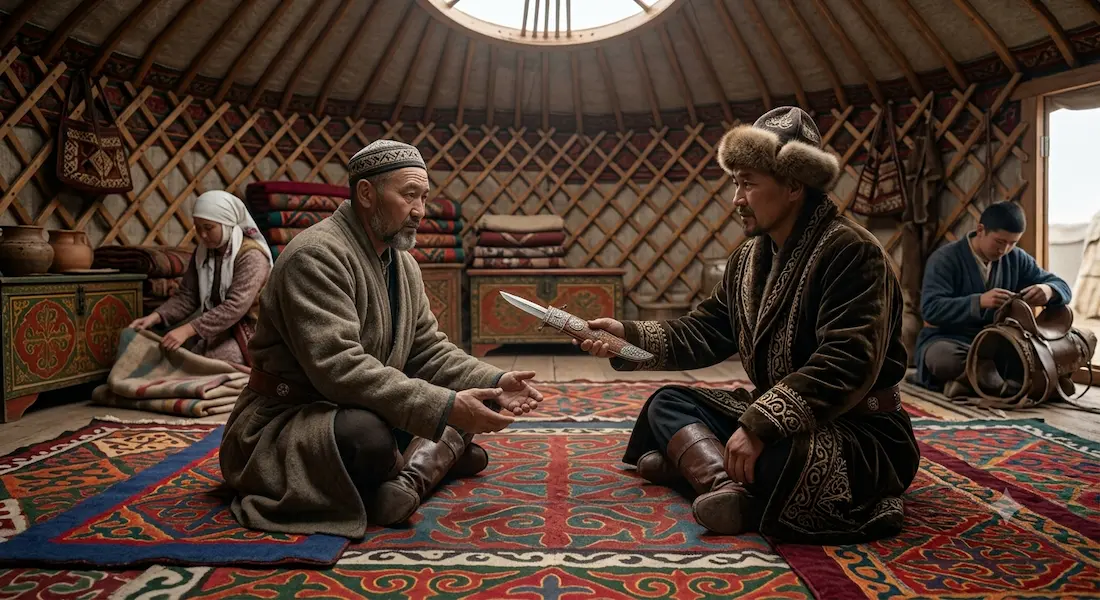
In the close-knit communities of the steppe, embarrassing gossip, satirical poems, or foolish behavior could ruin a reputation overnight. To stop a damaging story from spreading, the compromised individual would offer an Auizbastryk (literally, "mouth-presser") to the witness. This valuable gift—often a piece of fine jewelry, a precious textile, or a valuable tool—functioned as a binding agreement. Once the gift was accepted, the recipient was honor-bound never to repeat the story, treating the arrangement with the weight of a sacred oath.
Ot Basyn Sabau: The Ritual of Ash-Scattering
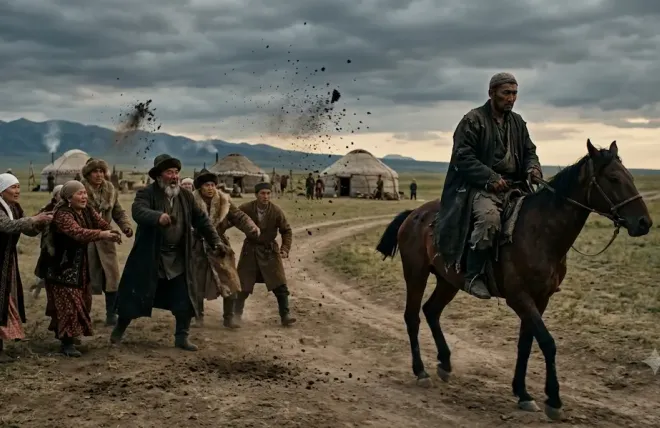
The aggrieved person would sneak over to the offender's tent and strike the outer frame of their hearth, scattering the fireplace ashes all around the perimeter of the yurt. Successfully completing this act provided a sense of emotional justice and satisfaction for the wronged individual, serving as a public protest against unfair treatment.
Betke Tukiru: Spitting in the Face
When a vulnerable or physically powerless individual was profoundly wronged, humiliated, or pushed to their absolute limit by someone stronger, they resorted to Betke Tukiru (spitting in the offender's face). Without using weapons or fists, this raw act communicated absolute disgust and social condemnation. For the recipient, carrying the stain of being publicly spat upon was an unbearable psychological blow that ruined their honor and standing in the community.
Khan Sarkyty: The Coronation Feast
Khan Sarkyty (The King's Share) is a unique political ritual practiced during the election of a new leader. Once a leader was chosen and took their place on the white felt throne, their personal livestock herds were symbolically distributed among the gathered clans. The political philosophy behind this custom was simple: a true leader should focus entirely on the welfare of the nation rather than amassing personal wealth. Those who could not attend the formal election were invited to a celebratory banquet, ensuring everyone shared in the festive occasion.