Kazakh Journey Traditions


Travel was an important part of traditional Kazakh life. People moved across vast steppe territories for trade, seasonal activities, education, military service, medical treatment, and family matters. Because journeys could be long and unpredictable, Kazakh culture developed a number of customs connected with departure, safe travel, returning home, and maintaining ties with the community.
Auyz Tiyu: Tasting Before a Journey
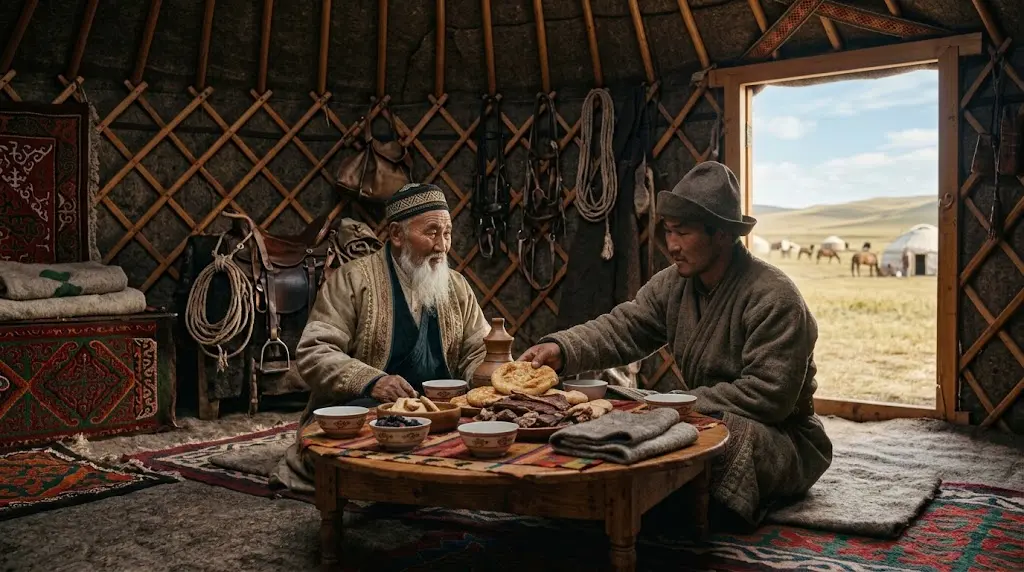
Before setting out on a long or important journey, a traveler could visit a respected elder and receive their blessing. One custom associated with such departures was Auyz Tiyu, literally “tasting with the mouth.”
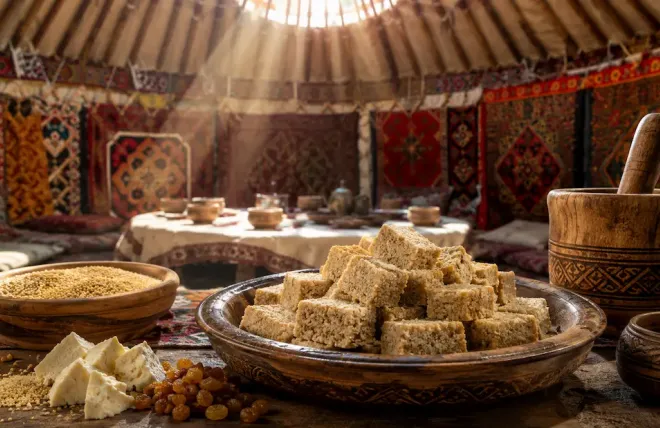
The traveler was expected to taste some food or drink at the elder’s table before leaving. Bread, salt, or another food could be offered, and refusing to taste it was traditionally considered inappropriate. The custom was also practiced more broadly when a person entered a home while the hosts were eating: the visitor was expected to share the meal rather than refuse it.
Before a distant journey, however, Auyz Tiyu carried a particular meaning. Tasting food from the elder’s table connected the traveler with the household and with the good wishes of those remaining behind. It could also accompany a blessing for a safe and successful journey.
For people accustomed to crossing large distances on horseback, such customs gave departure a social and emotional meaning. A journey was not simply a person leaving home; it was an event in which family, elders, and the wider community could take part.
Bazarlyk: Gifts from the Journey
A traveler returning from a long trip, a trading journey, or a distant place was not expected to come home empty-handed. They brought Bazarlyk—small gifts or treats for relatives, friends, neighbors, children, and other people close to them.
The gifts did not have to be expensive. What mattered was the thought behind them. A traveler might bring back an unfamiliar object, a local product, food, or another small item that was unusual in their home community.
In traditional Kazakh society, Bazarlyk was more than a souvenir. Bringing something back for others was regarded as a sign of affection and respect. It maintained social connections and showed that a traveler had remembered the people at home while away.
The custom also reflected the importance of sharing. A journey created an opportunity to bring something from the outside world back into the community.
Salem Beru: Respectful Greetings
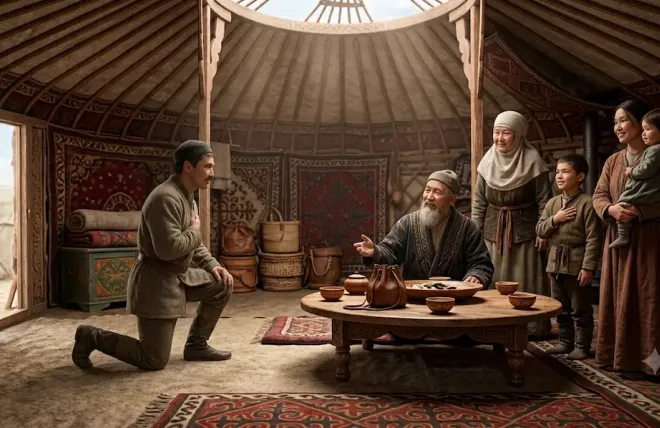
Formal greetings were an important part of traditional Kazakh etiquette. Salem Beru means offering a greeting, while the related custom of bowing to elders expressed respect and courtesy.
When a traveler arrived after a long journey, paying respects to respected elders and community leaders could be an important part of the welcome. Greetings were not merely a matter of saying hello; they helped maintain the social order of the community and demonstrated respect for age and status.
The Bride’s Greeting
One particularly well-known form of this custom is associated with a young daughter-in-law, or kelin.
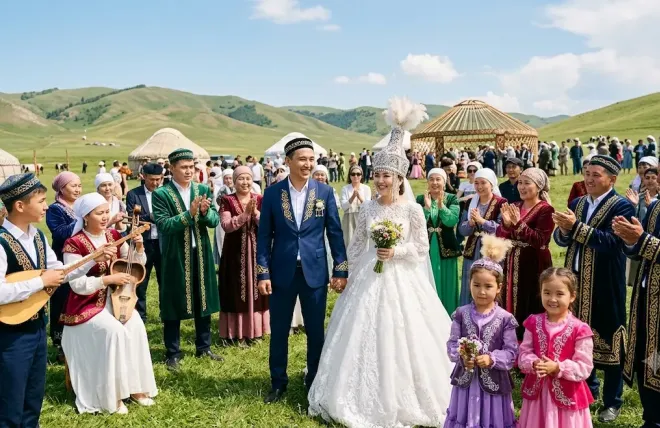
After entering her husband’s family, a kelin traditionally greeted older members of her husband’s family with a graceful bow. This practice is known as Salem Salu and begins in connection with the Betashar ceremony, when the bride is formally introduced to members of her new family.
Depending on the region and family tradition, the gesture may involve bending slightly at the waist or lowering the knees while bowing the head. The gesture expresses respect rather than submission and traditionally accompanies the good wishes or blessing of the elder receiving the greeting.
The custom could be performed when the kelin met her husband’s parents, older relatives, and other respected elders. In some regions, it was also associated with serving or collecting dishes at large family gatherings.
Regional Differences
The practice of Salem Salu has not been identical throughout Kazakhstan. Its form and frequency have varied by region and family. Some communities have preserved the custom more actively than others.
This regional diversity is important when discussing Kazakh traditions: a practice described as traditional should not automatically be presented as a rule followed by every Kazakh family in every historical period.
Tugan Zherge Aunatu: Returning to Native Soil
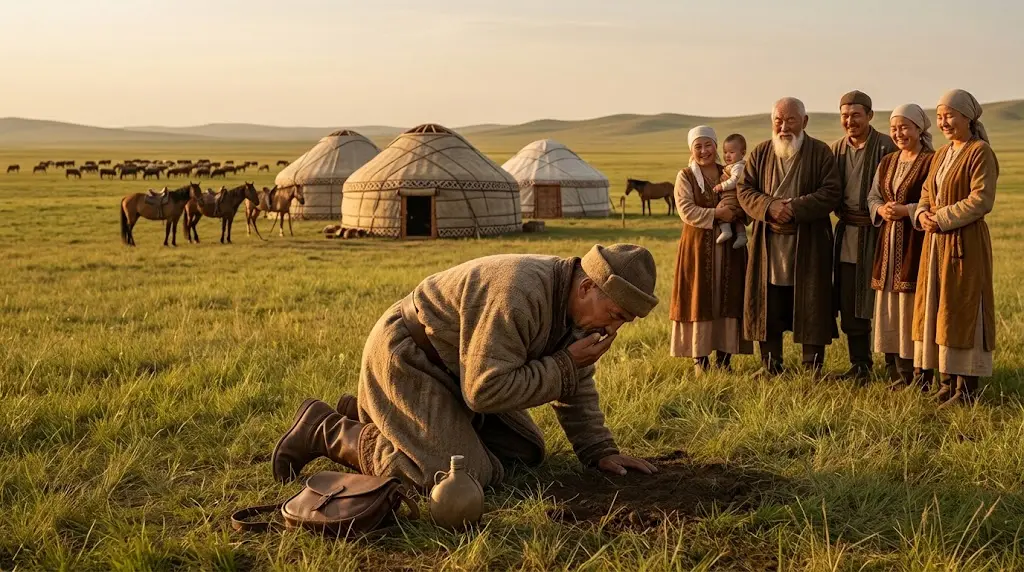
Among the most symbolic customs connected with returning home is Tugan Zherge Aunatu, the practice of rolling on one's native soil.
When a person had spent many years away from their homeland and finally returned, they could lie down and roll on the soil of their native land. The gesture expressed longing for home and a deep emotional attachment to one's birthplace.
The custom also carried an educational meaning. Traditional explanations emphasize the idea that a person should remember where they were born and where their roots lie. In this sense, the native land was not simply a geographical place but part of a person's identity and ancestry.
For a society in which people could spend long periods traveling across the steppe, returning home had powerful emotional significance. Tugan Zherge Aunatu gave that feeling a physical expression: the traveler literally came back into contact with the soil of their homeland.
Zhol Ayak: A Feast Before Departure
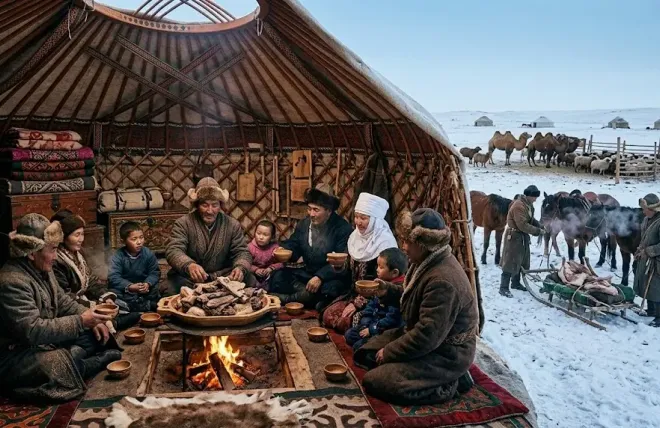
Before a long journey, a traveler and their family could hold Zhol Ayak, a traditional farewell gathering connected with the road.
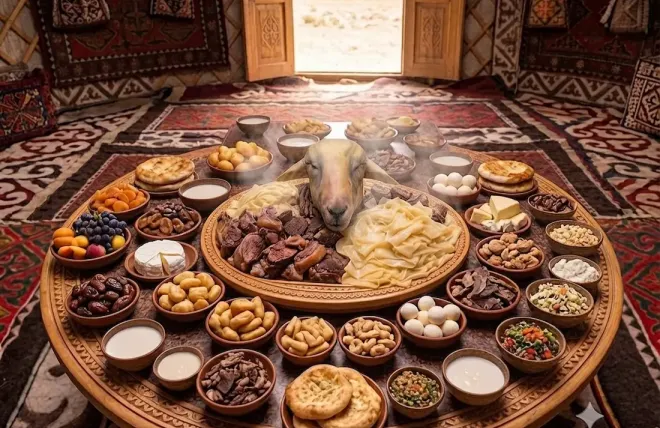
The traveler’s family might slaughter a sheep and invite relatives, neighbors, friends, and respected elders to share a meal. The gathering gave the community an opportunity to see the traveler off and express their hopes for a safe and successful journey.
The guests offered bata, a blessing expressing good wishes for the traveler. They might wish the person a safe road, successful completion of the journey, and a peaceful return.
The custom was particularly meaningful when someone was leaving for a distant or difficult journey. In traditional steppe society, where travel could involve considerable distances and uncertainty, the support of relatives and neighbors provided both practical and emotional reassurance.
Zhol Ayak therefore brought together several important elements of Kazakh culture: hospitality, communal support, respect for elders, food shared at the dastarkhan (traditional table setting), and the power of a blessing.
Travel as a Community Experience
These customs show that travel in traditional Kazakh society was rarely viewed as a purely individual experience. A journey connected the traveler with family, elders, neighbors, and the wider community.
Auyz Tiyu marked the beginning of the journey through food and good wishes. Bazarlyk maintained relationships after the traveler returned. Salem Beru reinforced respect and social ties, while Tugan Zherge Aunatu expressed the emotional bond between a person and their homeland. Zhol Ayak brought the community together to wish a traveler a safe road and successful return.
Together, these traditions reveal an important feature of traditional Kazakh culture: even when a person traveled far across the steppe, their journey remained closely connected to the people, customs, and homeland they left behind.