Livestock and Household Traditions


Aq Alyp Shyghu: Welcoming with the “White”
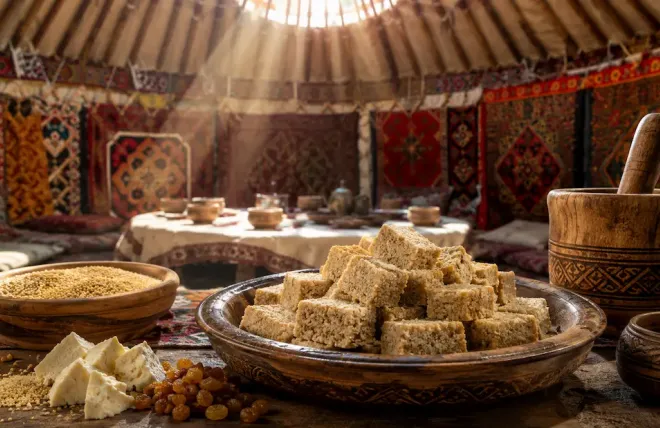
Kazakhs traditionally use aq (literally, “white”) as a collective term for dairy foods and drinks, including milk, mare’s milk, qymyz (fermented mare’s milk), shubat (fermented camel’s milk), and ayran (a fermented yogurt drink). In Kazakh culture, white is associated with purity, sincerity, good intentions, and blessing.
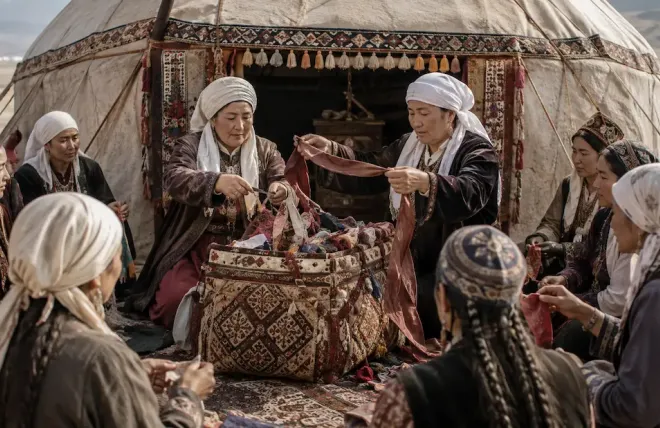
When new neighbors moved into a nearby pasture or village, established families would come out to greet them, carrying bowls of dairy products. This gesture expressed the wish for an open, sincere relationship with the newcomers.
The initial greeting was followed by Erulik, a traditional welcome feast for new neighbors. It gave the newcomers an opportunity to meet the people around them and become part of the local community. Failing to offer an Erulik was considered a serious breach of hospitality and neighborly etiquette.
Aqtiq: Ritual Compensation
Aqtiq is described in traditional usage as a specific form of compensation connected with services that were not commercial in nature but supported everyday pastoral life.
For example, when a herder brought a mare to mate with a neighbor’s valuable male animal, the owner could compensate the owner of the male animal with an Aqtiq.
Some sources also associate the word with other forms of payment, including illicit payments such as those connected with bribery or betrayal. Such uses carried a strongly negative social meaning. However, the exact historical range of these meanings requires careful source verification, so this aspect should not be treated as a universally established definition without a specific primary or authoritative source.
Ayirylysar Kozhe: The Farewell Feast
When close and harmonious neighbors prepared to separate for seasonal migration, they gathered for Ayirylysar Kozhe (literally, “farewell porridge” or “farewell meal”). This could happen when families moved to summer pastures, zhaylau, or winter camps, qystau.
Despite its modest name, the meal was not necessarily modest. A respected dish or meat portion was served, and the gathering gave neighbors an opportunity to express gratitude for the time they had spent together.
The tradition reflected the importance of mutual support in nomadic life. Neighbors who shared pastures and helped one another through the seasons did not simply part without ceremony. They said farewell with good wishes and the hope of meeting again in good health.
En: The Livestock Ownership Mark
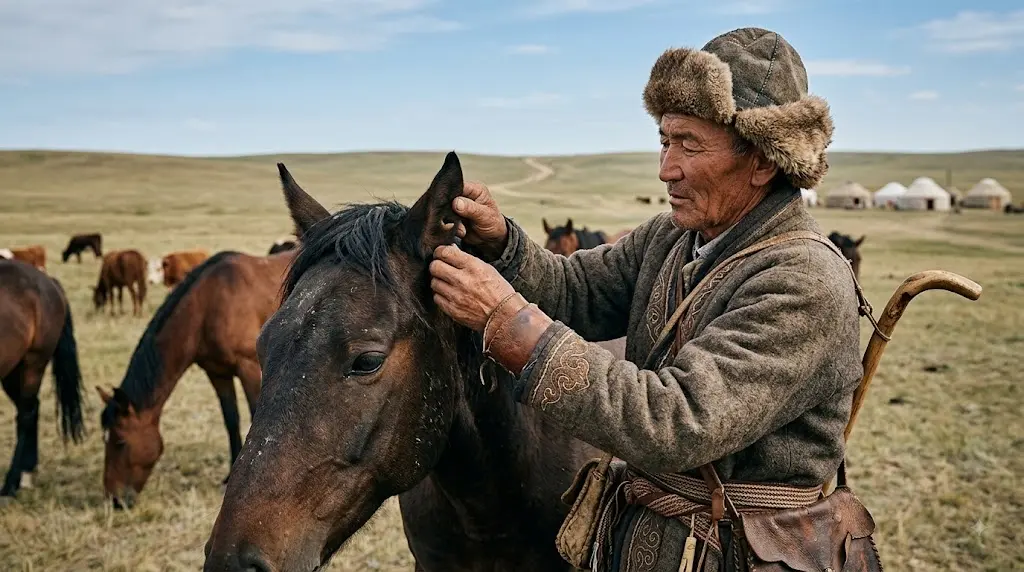
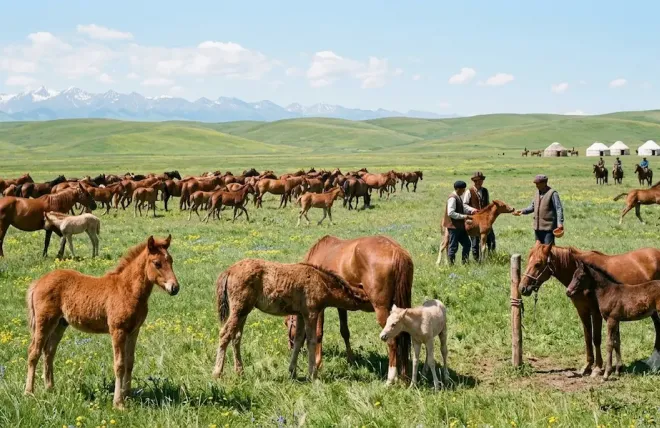
Because livestock was the foundation of the nomadic economy, identifying ownership was essential. En was a distinctive ownership mark made on an animal, most commonly by cutting or notching the ear. Different families, villages, and clans could have their own recognizable marks.
There were numerous forms of en, including different types of notches, cuts, and shapes made along the edge or tip of the ear. Larger cattle could also be identified with a tanba (a branding mark). These permanent marks helped people recognize animals that had become separated from their herds and distinguish one owner’s livestock from another’s.
In historical sources, the term en could also have other meanings, including marks associated with enslaved or captured people. The livestock-ownership meaning, however, was an important part of traditional pastoral practice.
Ot Basyn Sabaw: The Ritual of Ash-Scattering
Ot Basyn Sabau was a traditional form of public protest and symbolic retaliation. When a person felt seriously wronged and had no effective way to obtain justice, they could go to the offender’s home and strike the yurt or hearth area with a stick, scattering the ashes around it.
The act symbolized the depth of the grievance and publicly demonstrated that the wronged person considered the treatment unjust. It provided a culturally recognized form of emotional protest in situations where direct retaliation might not have been possible.
Qap Qaghar: Clearing Out the Winter Stores
As winter gave way to spring, the family’s supply of preserved winter meat, known as soghym, gradually ran out. When only the final portions remained, families held Qap Qaghar, literally referring to the act of shaking out or emptying the storage sack.
The remaining meat was cooked and shared with neighbors. The custom was also known as Et Qaytar (“returning the meat”). It marked the end of the winter meat supply and the arrival of a new season.
For nomadic families, this was more than simply the last winter meal. It was a small communal celebration: the difficult winter had been endured, the stored provisions had lasted, and spring brought the prospect of fresh dairy products and a new cycle of pastoral life.
Soghym Basy: The Winter Gathering
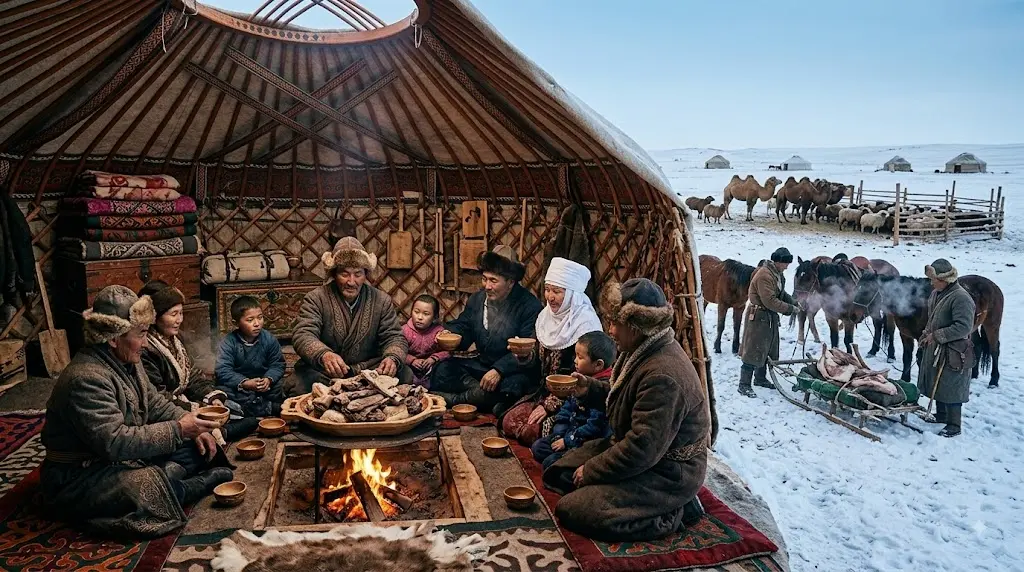
As winter approached, Kazakh families prepared soghym — livestock slaughtered and preserved as a major supply of meat for the cold season. Families with greater resources could prepare more than one animal, depending on the size of the household and the number of people they expected to host.
The beginning of soghym was marked by Soghym Basy, a gathering associated with the preparation and sharing of the first meat from the winter slaughter. Relatives, neighbors, friends, and respected members of the community could be invited to share the meal.
The gathering was not simply about food. Winter was the most demanding season for pastoral communities, and preserved meat was an essential part of household survival. Sharing it with others reinforced hospitality, mutual support, and social bonds.
A Soghym Basy gathering could therefore become an important occasion for conversation, storytelling, and community life during the cold months. Guests traditionally expressed good wishes for the household, hoping that the winter provisions would be abundant and that the family would pass through the season safely and prosperously.