Justice and Social Order


At Kuyrygyn Kesu: The Ultimate Severing of Ties
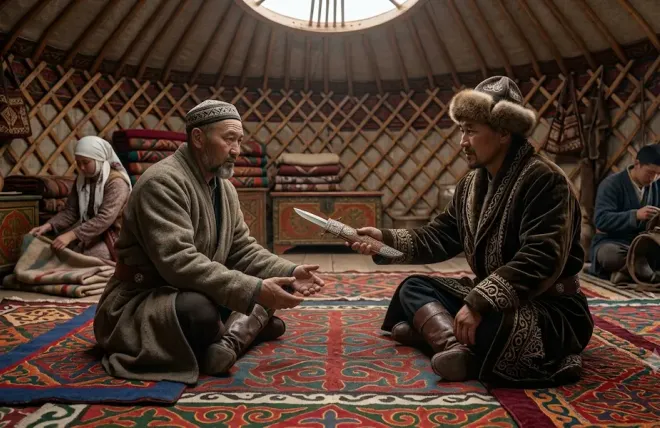
When a conflict between individuals or clans reached an absolute point of no return, a person would perform the dramatic ritual of At kuyrygyn kesu (cutting the horse's tail). The individual would cleanly slice off the tail of their personal riding horse, lift both hands to rest flat on top of their head, and ride away from their homeland forever. This striking posture was the ultimate declaration of permanent exile. It signaled that the individual was dead to their clan and would never return. Because this act symbolized total ruin, Kazakhs strictly warn their children today: "Never mimic putting your hands on your head; do not invite tragedy."
Topyrak Shashu: The Banishing Ritual
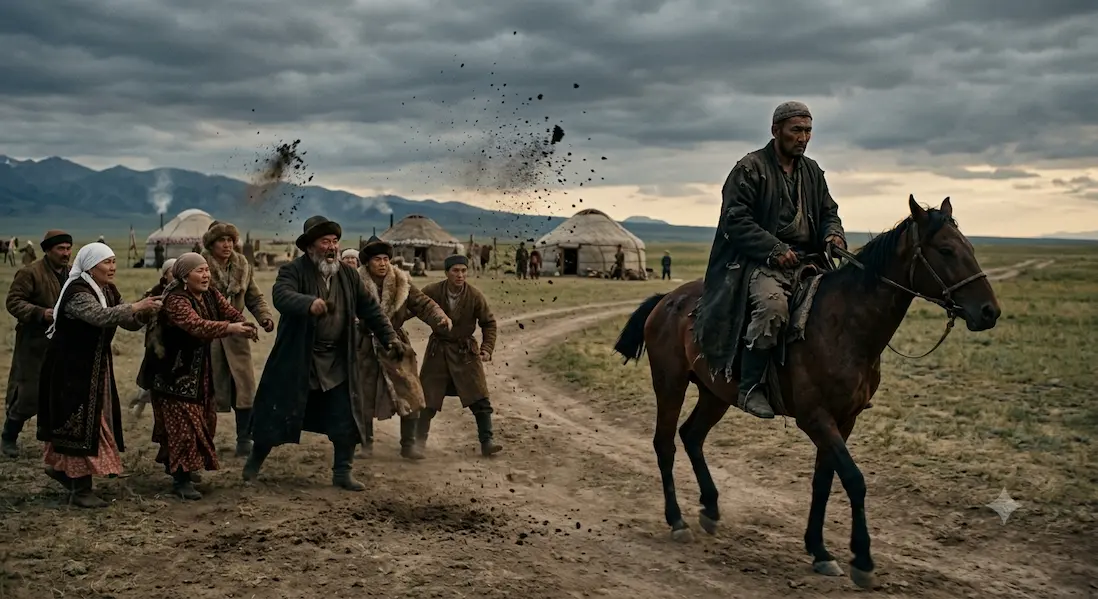
For catastrophic crimes like treason, theft, or actions that brought deep shame upon the community, a criminal faced the ultimate sentence of banishment. The village leaders would sever the tail of the offender's horse and cast them out of the territory. As the criminal rode away, the villagers would throw handfuls of dirt after them (Topyrak Shashu), shouting, "Begone, and never let your face be seen here again!" This severe social curse effectively erased the individual's name from the clan's memory, treating them as if they no longer existed.
Teris Bata: The Reversed Curse
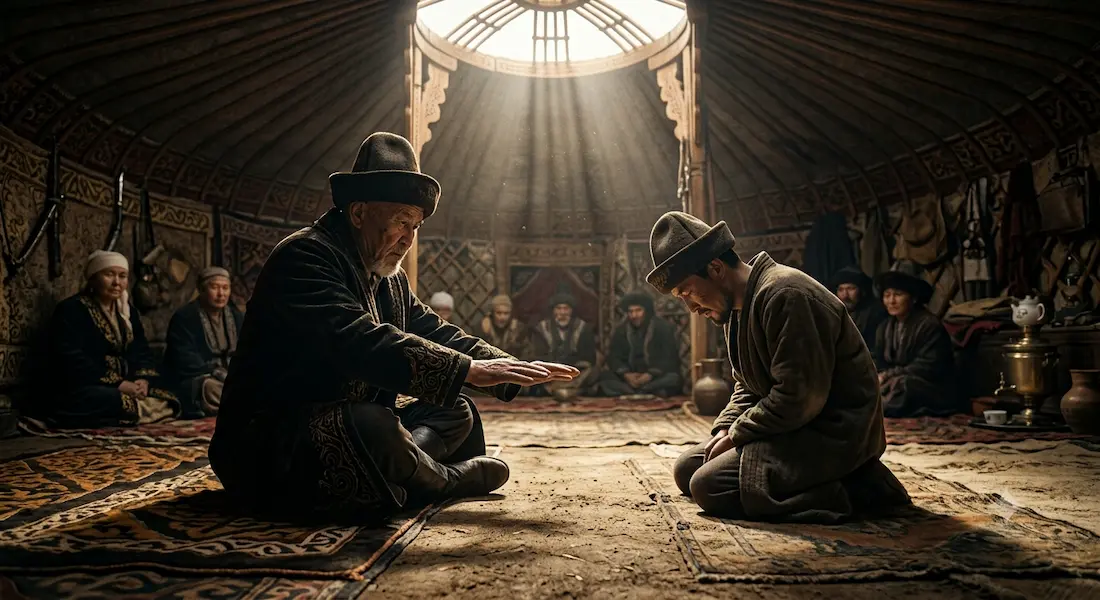
Though it contains the word for blessing, a Teris Bata is actually the most severe social and spiritual punishment a parent could inflict. If a son committed an unforgivable act, consistently defied his family, or brought immense shame upon his ancestors, his father would perform this ritual. The father turned his hands completely backward—with the backs of his palms facing upward—and delivered a powerful curse, completely disowning his child. A famous example occurs in the epic folk tragedy Kyz Zhibek, where the patriarch Bazarbay delivers a Teris Bata to his son Tolegen for disobeying his wishes to pursue Zhibek. Society completely turned its back on anyone who carried the heavy mark of a father's reversed blessing.
Emshegin Kokke Sauu: The Mother’s Ultimate Curse
When a son brought ultimate disgrace upon his family through severe crimes, physical violence against elders, or absolute rebellion, a mother would perform her most devastating spiritual rejection. She would expose her breasts to the open sky and metaphorically "milk them into the heavens" (Emshegin kokke sauu). This agonizing gesture accompanied the delivery of a Teris Bata (a reversed maternal curse). In Kazakh metaphysics, this is considered the heaviest, most terrifying curse a human can receive; it can never be undone, taken back, or spiritually mitigated, marking the individual as an eternal outcast.
Dure: Public Flogging
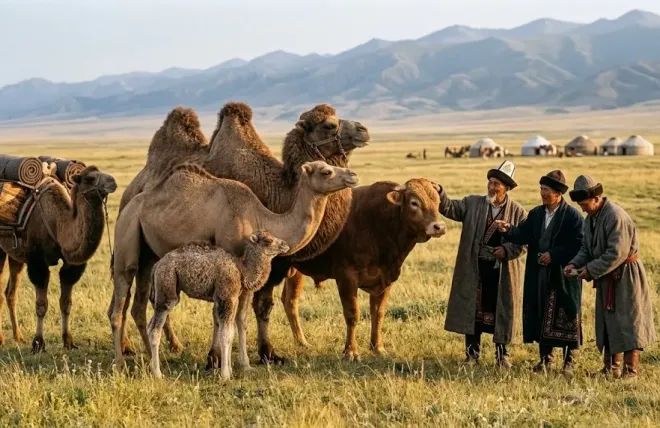
The Dure was a severe, humiliating corporal punishment used for catastrophic crimes against the community, such as treason, betraying one's homeland, or chronic livestock theft. The executioner used a heavy leather riding whip (kamshy). Depending on the severity of the crime, the offender was sentenced to 25, 50, 75, or 100 lashes administered directly to the back. This punishment was carried out in front of the entire gathered community to maximize its educational impact, ensuring that anyone watching would think twice before violating steppe laws. If a criminal succumbed to their injuries during a legally sanctioned Dure, the executioner and the judges were entirely exempt from paying blood money (kun).
Esekke Teris Mingizu: The Procession of Shame
For serious moral offenses, adultery, or scandalous public behavior, the customary law of the plains imposed a deeply humiliating public sentence. The criminal was mounted completely backward on a black donkey or a black cow, with their legs securely tied underneath the animal's belly. A piece of shabby, decaying black felt was draped over their neck like a cape. The executioner then led the animal door-to-door through the entire village. Every resident who walked out was expected to spit in the offender's face. This visceral public shaming served as a terrifying deterrent for local youth, reinforcing the moral boundaries of the community.
Betke Tukiru: Spitting in the Face
When a vulnerable or physically powerless individual was profoundly wronged, humiliated, or pushed to their absolute limit by someone stronger, they resorted to Betke Tukiru (spitting in the offender's face). Without using weapons or fists, this raw act communicated absolute disgust and social condemnation. For the recipient, carrying the stain of being publicly spat upon was an unbearable psychological blow that ruined their honor and standing in the community.
Ot Basyn Sabau: The Ritual of Ash-Scattering and Public Hearth Protest
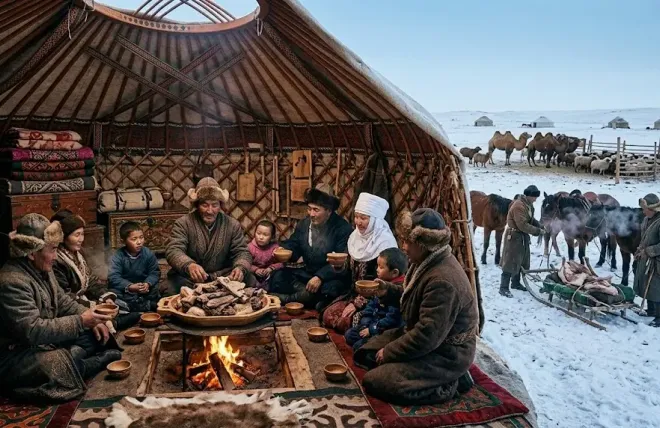
The aggrieved person would sneak over to the offender's tent and strike the outer frame of their hearth, scattering the fireplace ashes all around the perimeter of the yurt. Successfully completing this act provided a sense of emotional justice and satisfaction for the wronged individual, serving as a public protest against unfair treatment.
Khan Talau: The Sovereign Impeachment
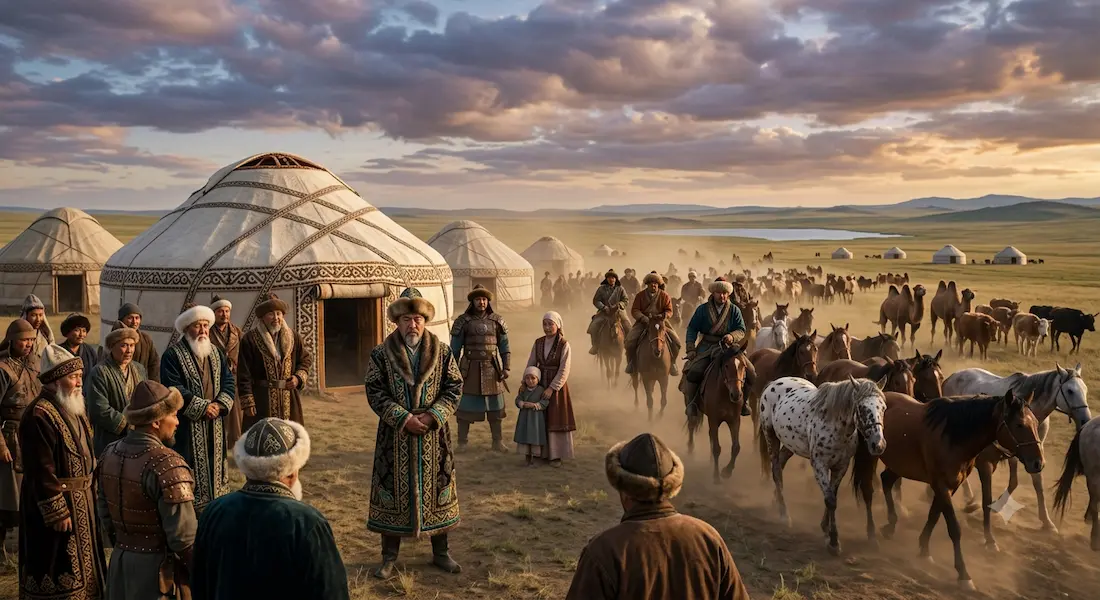
If a ruler or local administrator completely lost the confidence of their people by acting cruelly, breaking customary laws, or ignoring justice, the community exercised a powerful form of peaceful protest called Khan Talau (The Sovereign Reclaiming). After issuing multiple formal warnings, the community would assemble to strip the unjust ruler of their administrative authority and reclaim the public assets and livestock under their control. This was not viewed as lawless raiding, but rather as a structured, constitutional tool used by the community to hold leaders accountable and restore justice.
Shan Basty: The Greeting Fine for Travelers
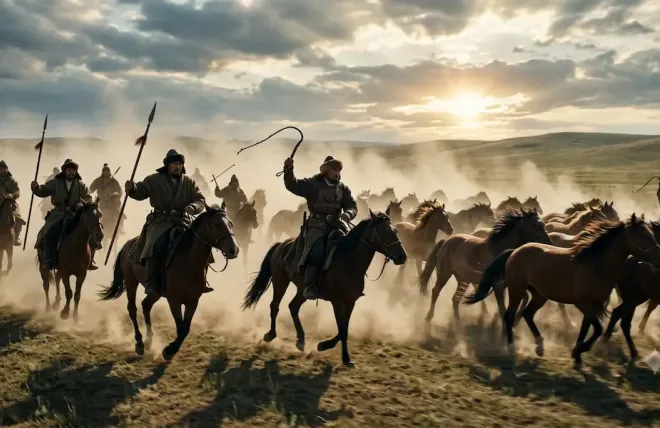
In the old days of the steppe, passing near a village without stopping to greet the local elders was considered a serious breach of etiquette. If a traveler rode past the tents without pulling over, the village youth would intercept them and bring them before the elders under the custom of Shan Basty (literally, "settling the road dust"). The elders would question the traveler and issue a minor warning or fine for ignoring basic courtesy, reminding them of the importance of neighborly respect.