How Kazakh Nomads Classify Male Horses


Horse breeders divide ungelded (unbroken) male horses into two main categories: stallions (aighyr) and bachelor/gelded horses (sayag).
Stallion (Aighyr) Terms
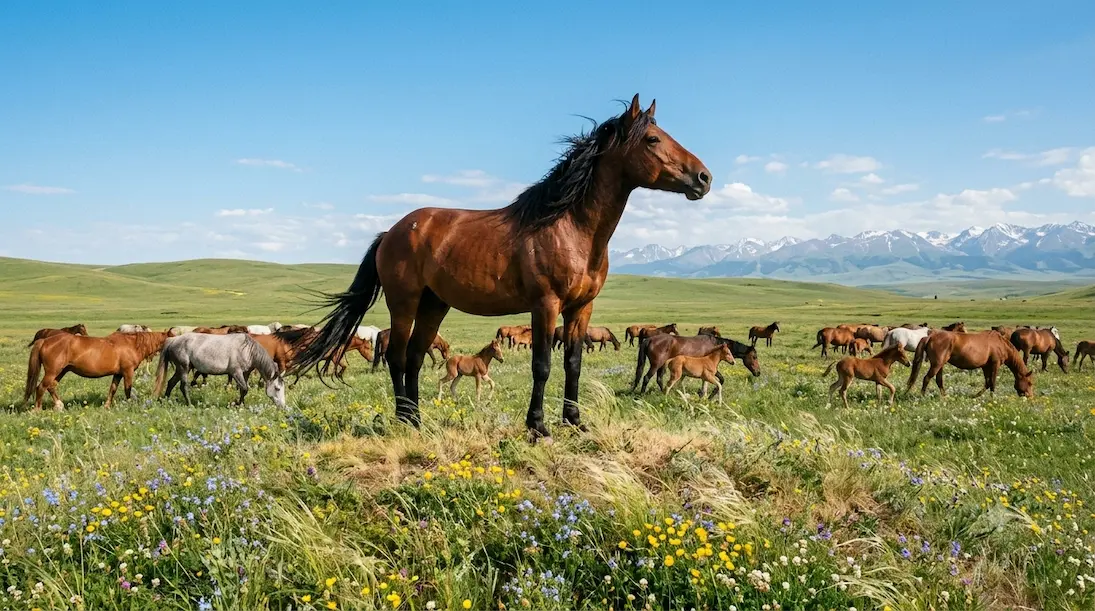
Stallion names are divided into several specific categories based on age, temperament, physical traits, and role in the herd:
- Aighyr — A sexually mature male horse. Named according to temperament and coat color, a stallion typically manages a harem of 10 to 30 mares.
- Zhasamaly — A stallion over three to four years of age.
- Zhelkuyk aighyr — A stallion in the spring that is well-fed on fresh grass and actively tending to his herd.
- Saurik aighyr — A stallion aged three to four years that has not been gelded but has not yet been put in charge of a herd.
- Qur aighyr — A stallion that has never been bridled or roped and has become very fat.
- Buzghysh aighyr — An aggressive stallion that forces his way into other herds; he pins his ears back, lowers his head, and chases mares aggressively, often causing them to lose their foals.
- Shaqar aighyr — A dominant stallion that is unsatisfied with his own mares and habitually steals mares from other stallions’ herds.
- Synar en aighyr — A stallion born with only one testicle.
- Shartyq aighyr — A stallion that has been only partially gelded (one testicle remains).
- Azban aighyr — A horse gelded late in life (at the age of six). Despite the procedure, he retains stallion-like behaviors, constantly pursuing and annoying mares, though he is unable to breed them successfully.
Bachelor (Sayag) and Gelding Terms
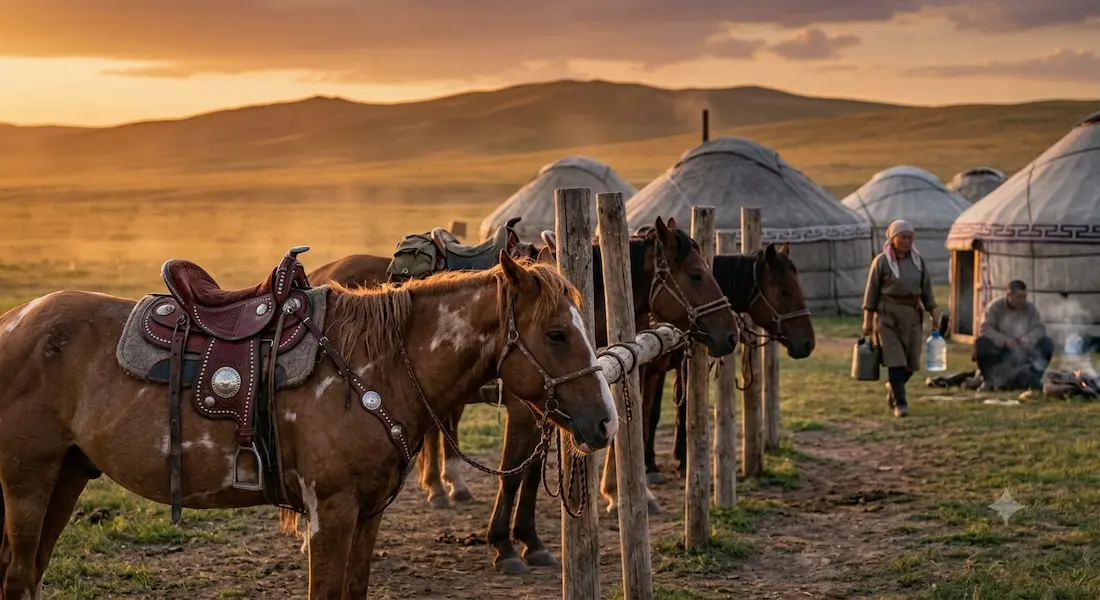
This category includes gelded horses, young bachelor males, and horses defined by their nursing history or physical conformation:
- Sayag (or Boidaq zhylqylar) — Gelded yearlings, two-year-olds, and five-year-olds kept in a separate group. The term sayag is also sometimes used to describe a mare that strays from the herd.
- At — A general term for a gelded male horse.
- Pishpe — A gelded horse.
- Erkek kenzhe tai — A late-born male foal that has not yet reached one year of age.
- Erkek tel tai — A one-year-old male that suckled from both its own mother and a foster mare.
- Arda emgen — A horse that suckled from its mother until the yearling or two-year-old stage, remaining exceptionally strong.
- Qysyr emgen — A foal of a mare that lost her own foal, continuing to nurse from its mother into its second year.
- Saqa at — A mature gelded horse between 11 and 12 years of age.
- Toqtasqan at — A fully matured gelded horse aged 12 to 13 years.
- Shi arqa at — A riding horse whose back has developed "hard ridges" (knots) from long-term use of an ill-fitting saddle.
- Myqyrat — A short, sturdy horse lacking prominent withers.
- Shobyr — A slow, sturdy horse highly capable of heavy labor and pack work.
- Tughyr — The highest quality type of shobyr—an exceptionally strong, reliable riding horse.
- Mes at (or Mastek) — A thick-bodied, pot-bellied, strong-legged, and powerful horse.
Terms for Work Status and Gelding Methods
Special terms describing a horse's interaction with humans, work history, or the specific castration method used:
- Qur at — A gelding that has never been bridled or roped and has become very fat.
- Seter at — A horse that lived its entire life from foalhood to death without ever being saddled, bridled, or worked by humans.
- Yghyrat — A horse so overworked and "saddle-shy" that it flees at the mere sound of a bridle, avoiding human habitations and grazing in isolation.
- Pishtiru (or Kestiru) — The standard process of gelding: quickly removing the testicles of yearlings or older horses with a sharp knife.
- Uyz aghyzdyru — A traditional method of "gelding" by draining the sperm from the testicles without removing them surgically.