Respect for Elders

Adep: The Art of Modesty
Adep represents the total philosophy of modesty, politeness, and social decorum. It dictates how youth interact with elders, how men behave around women, and how a daughter-in-law demonstrates quiet dignity within her new family. Exhibiting Adep in public spaces, community gatherings, or sacred spaces brings immense honor and respect to an individual's entire bloodline.
At Tergeu: The Etiquette of Respectful Names
To instill modesty and respect for elders, young brides entering their husband's village practiced At Tergeu (avoiding direct names). It was considered highly disrespectful and improper for a daughter-in-law to call her husband’s relatives by their birth names. Instead, she invented affectionate, honorable titles for everyone:
Father-in-law
Traditional Birth Name Replaced By: Ata or Biy
Meaning / Tone: Grandfather / Judge Father
Mother-in-law
Traditional Birth Name Replaced By: Apa
Meaning / Tone: Mother
Older Brother-in-law
Traditional Birth Name Replaced By: Aga or Myrza Kaynaga
Meaning / Tone: Respected Brother / Generous Lord
Husband's Sister
Traditional Birth Name Replaced By: Kayninsilim
Meaning / Tone: My Cherished Little Sister
Elder Brother's Wife
Traditional Birth Name Replaced By: Zhengeshe
Meaning / Tone: Respected Sister-in-Law
This linguistic politeness preserved harmonious boundaries within large extended households. While fading in urban centers, it remains a beautiful mark of traditional upbringing.
At Mingizu (Gifting a riding horse), Shapan Zhabu (Draping a shapan): The Highest Honor
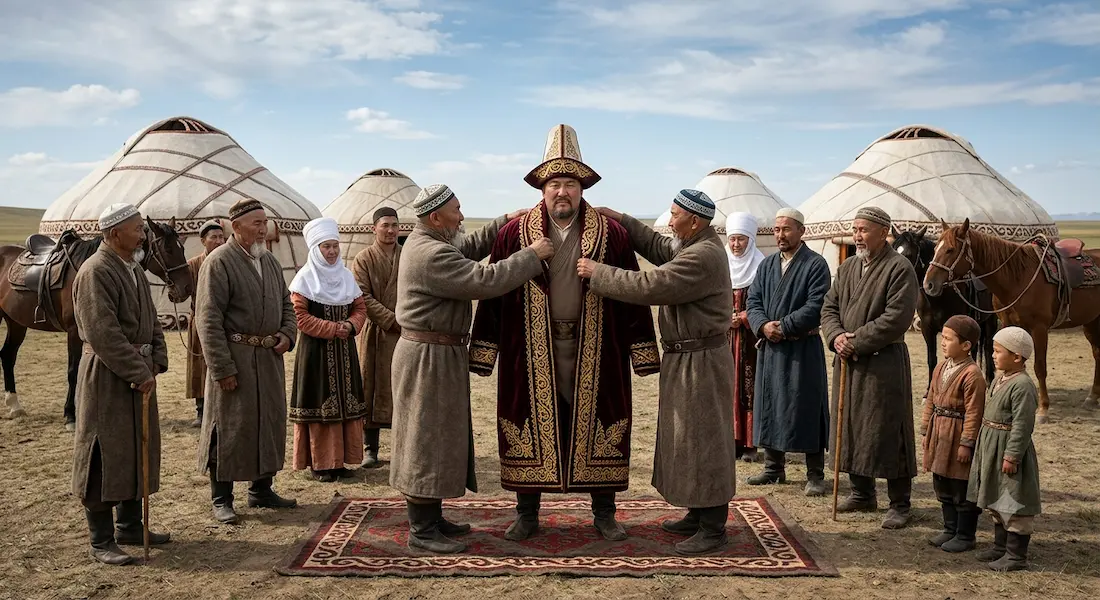
Presenting a guest with a fine riding horse and draping a luxurious embroidered robe (shapan) over their shoulders represents the pinnacle of Kazakh respect. Historically reserved for esteemed diplomats, legendary bards (akyns), heroic warriors (batyrs), and community leaders, this prestigious custom remains highly active today when honoring dignitaries, athletes, and respected elders.
Auiz Tiyu: Tasting the Threshold
Before embarking on a significant journey—whether traveling for medical treatment, heading off to college, or leaving for military service—a young person was expected to visit the home of a respected community elder to pay their respects. Custom strictly forbade the visitor from leaving without taking a bite of food or a sip of tea (auiz tiyu). This simple act of tasting bread or salt at the elder's table bound the traveler to the community’s protective energy and served as a formal permission to depart.
Bata: The Power of the Spoken Blessing
A Bata is a highly valued verbal blessing, a poetic prayer delivered by an elder to invoke divine protection, prosperity, and guidance. The recipient cups their hands together in front of their chest, absorbing the words before wiping their hands over their face to seal the blessing.
Step 1: Elder Recites Blessing
Step 2: Recipient Cups Hands
Step 3: Wipe Face to Seal (Bata)
The types of blessings vary by occasion:
The Travel Blessing: Given to individuals setting off on long journeys, dangerous military campaigns, or academic pursuits. Historic examples include the legendary blessings given by the blind seer Sokyr Abyz to great commanders like Zhanibek and Kabanbay Batyr.
The Table Blessing (Dastarkan Bata): Recited at the conclusion of every meal to thank the hosts and pray that their hearth remains wealthy.
The Lunar Blessing: A beautiful, ancient prayer recited upon catching the first glimpse of a new crescent moon in the night sky:
"I see the moon, whole and clear, May ancient peace abide right here. Forgive our past within the old, And bless the new with wealth untold."
Nomadic elders were expert astronomers; by studying the alignment of the new moon and stars during these blessings, they accurately predicted upcoming weather patterns and pasture conditions.
Baylau and Bautagar: The Hunter's Protocol
Steppe hunting was governed by strict etiquette designed to foster respect and prevent greed. Upon returning from a successful hunt, a tracker does not keep their first catch. Instead, they proudly present the pelt of the captured fox, wolf, or corsac fox to a respected village elder. This acts as an expression of generosity and deference to old age.
Bautagar (The Counter-Gift): The elder receiving the pelt is culturally obligated to immediately give the hunter a reciprocal token, such as a piece of silver, cash, or a useful tool. This return gift is called a Bautagar. If the recipient fails to provide a Bautagar, the hunter is under no obligation to ever offer them game again. According to old nomadic superstitions, failing to return the gesture would cause the elder to lose their own livestock to bad luck.
Belkoterer: Comfort Food for the Ailing and Aged
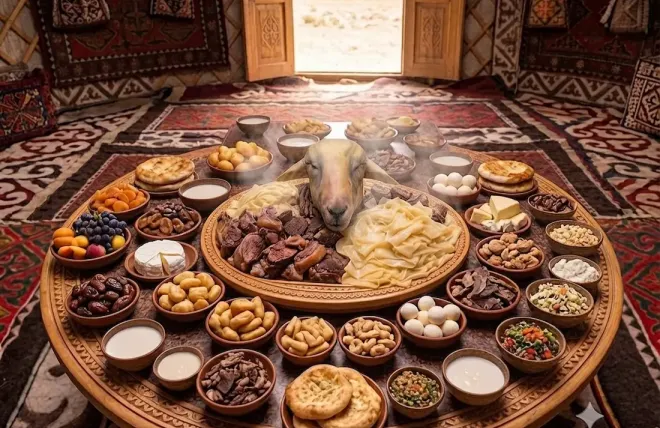
Belkoterer (literally, "spine-supporter") is a touching custom dedicated to restoring the strength of elderly or bedridden community members, as well as those recovering from severe illness. Family, neighbors, and youth prepare and bring easily digestible, highly nutritious delicacies directly to their tents. The menu includes soft horse-meat sausage (kazy), fresh churned butter, sweet zhent (a rich dessert made of crushed grains, honey, and butter), fresh mare’s milk (kymyz), and curd cheese (irimshik). Deeply moved by this care, the elders offer powerful blessings (bata), while the youth witness a living lesson in senior care.
Sybagha: The Rightful Gastronomic Share
When meat is prepared, specific prime cuts are strictly reserved for honored guests, elders, and in-laws under the rule of Sybagha. Elders and senior in-laws receive the most prestigious cuts, including the head (bas), rump (zhaya), pelvis (zhambas), and choice loin vertebrae. Daughters-in-law, daughters, and sons-in-law are each designated their own specific symbolic cuts. Crucially, any traveling stranger or unexpected guest who arrives at the tent is legally entitled to their own full Sybagha. If a host fails to provide this, the traveler has the right to voice their grievance publicly, bringing social disgrace upon the unhospitable household.
Salem Beru: The Etiquette of Respectful Greetings
Offering a formal greeting (Salem Beru) is a vital pillar of steppe manners. When a traveler arrives from a long journey, or when locals meet, they must immediately pay their respects to the village elders and honored leaders. This custom manifests in several traditional ways:
The Travelers: Travelers arriving from distant lands must immediately visit the tents of local elders to offer formal greetings.
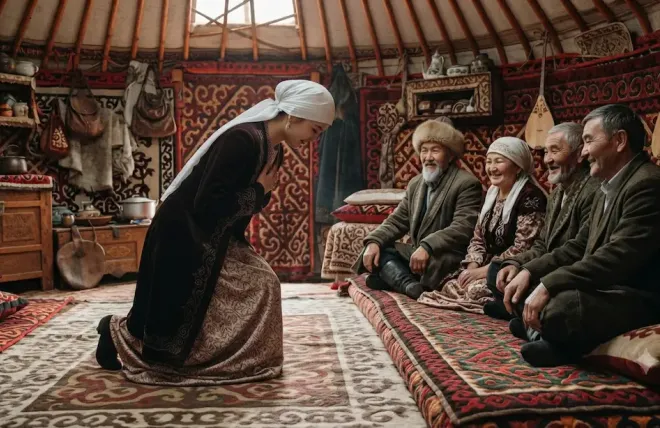
The Bride's Curtsy: A daughter-in-law greets her husband's parents and senior relatives by performing a graceful, deep curtsy (iyilip salem etu) while gently bowing her head, demonstrating deep respect.
The Back-Greeting: If a person suffered from a severely stiff or injured neck and could not bend their head forward, they would turn around and bow slightly from the back when greeting a leader. While unusual, this practical accommodation often brought a wave of good-natured laughter to the assembly.
Tize Bugu: The Courtesy of Bending the Knee
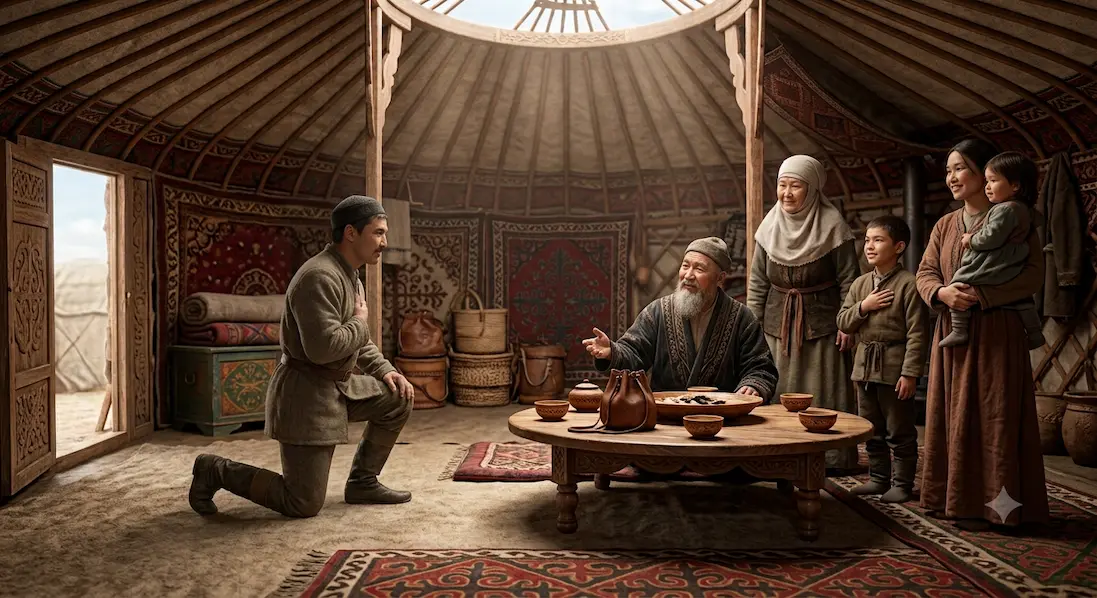
When entering a neighbor's yurt, even for a brief moment, a visitor is culturally required to bend their knee and sit down (Tize Bugu), if only for a minute. This simple gesture demonstrates respect for the home and the host. Delivering a message while standing up is viewed as abrupt and rude. If a visitor forgets this etiquette, the host might playfully chide them, saying: "Why won't you bend your knee? Are you wishing for our cows to give birth while standing up?" This lighthearted reminder stems from an old nomadic omen that if a human refuses to sit, the household's livestock will struggle during labor.
Tyiyim: Nomadic Taboos and Daily Prohibitions
Kazakh culture includes a variety of practical and symbolic daily prohibitions (Tyiyim) designed to maintain order, safety, and respect:
- The Threshold: Never step directly on a yurt's wooden threshold (tabaldyryk), as it symbolizes the boundary of the home's security.
- The Doorposts: Never lean heavily against the doorposts (bosaga), which is historically associated with grief or mourning.
- Sharp Gifts: Avoid giving knives or dogs as direct gifts to close friends without a symbolic exchange of a small coin; otherwise, it is believed the relationship might turn sour.
- Whistling Indoors: Whistling inside a home is strictly forbidden, as it is traditionally believed to sweep away the household's wealth and good fortune.
- Respect for Age: Never cross the physical path of an elder; always pause and allow them to pass first out of respect.