Wrestling and Strength Competitions


Kures (Wrestling)
Kures (Wrestling) is one of the oldest traditional sports of the Kazakh people. The term Kazakhsha Kures literally means "Kazakh-style wrestling," distinguishing it from other wrestling traditions of the Turkic world. This martial art evolved alongside the nomadic civilization of the Great Steppe and has been practiced for centuries as both a sport and a means of developing strength, courage, endurance, and self-discipline.
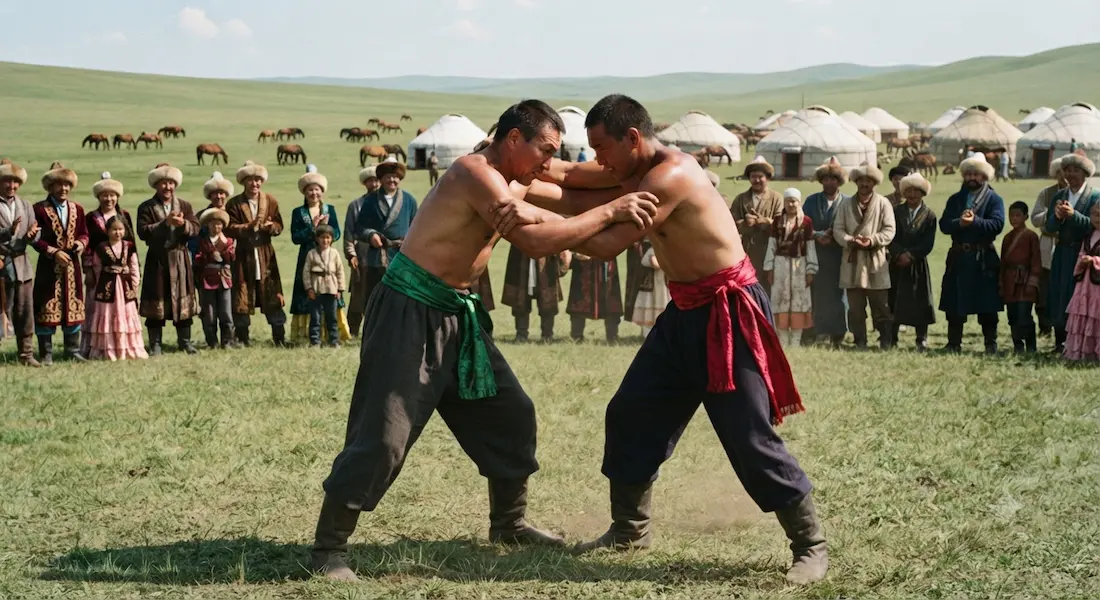
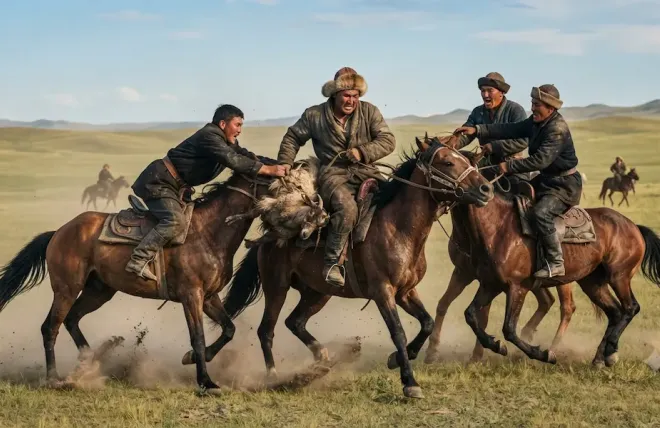
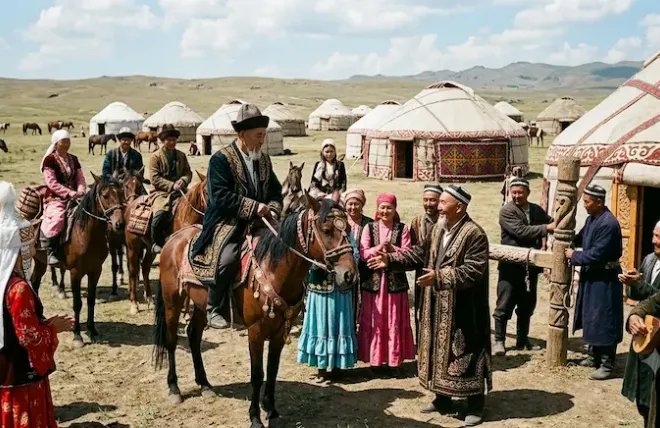
For the nomadic Kazakhs, wrestling was far more than entertainment. It played an important role in preparing young men for the challenges of life on the steppe, where physical strength, agility, resilience, and quick decision-making were essential qualities for both herders and warriors. Wrestling competitions were traditionally held during major public celebrations, including weddings, seasonal festivals, memorial feasts (as), and other important community gatherings. These events attracted large crowds, and the strongest wrestlers earned great respect and admiration throughout the community.
The sport serves as a demanding test of both physical ability and mental fortitude. Kazakhs have long encouraged young people with the proverb, "Strength knows no father." Rather than promoting arrogance or pride, the saying teaches that every wrestler who enters the arena must face any opponent bravely, regardless of age, status, or reputation. A true wrestler is expected to compete with complete dedication, determination, and respect for both the sport and the opponent.
In a traditional bout, the wrestlers begin standing and attempt to throw each other to the ground using grips on the jacket, belt, arms, or upper body. The objective is to execute a clean throw that lands the opponent on his back, resulting in immediate victory. Success depends not only on physical power but also on balance, speed, tactical thinking, and mastery of throwing techniques. Since the wrestlers remain standing throughout the match, the contests are fast-paced, dynamic, and exciting for spectators.
Outstanding wrestlers were traditionally known as baluan (champions renowned for their strength and skill). The greatest baluans earned fame far beyond their own villages, and their victories brought honor to their families and clans. Winners of major competitions were often rewarded with valuable prizes such as horses, camels, fine clothing, or other gifts presented by wealthy patrons and respected elders.
One of the most celebrated baluans in Kazakh history was Kazhymukan Munaitpasov (1871–1948).
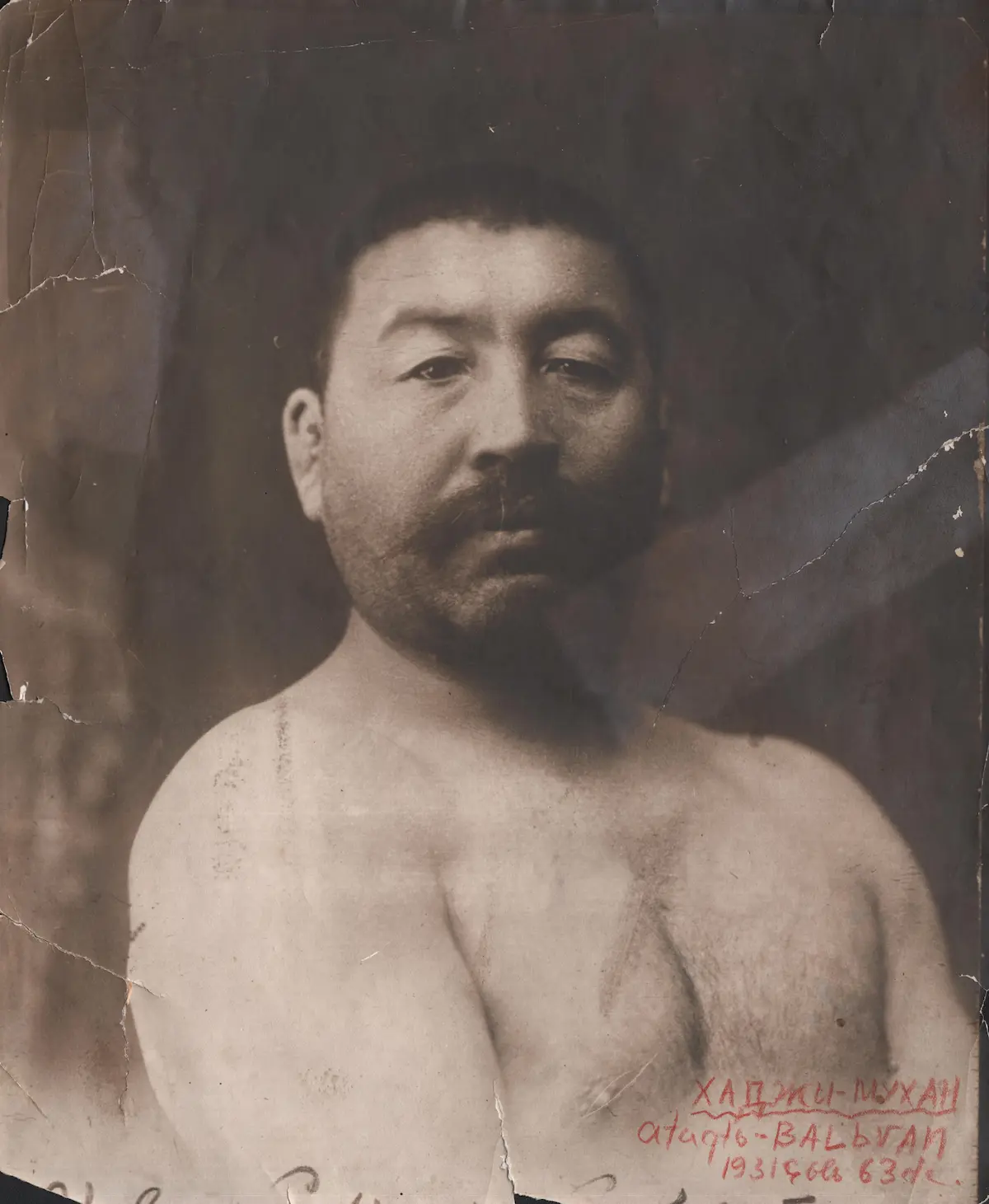
Widely regarded as the first Kazakh athlete to achieve international fame, he competed successfully in Greco-Roman and freestyle wrestling, winning numerous championships throughout Europe, Russia, the Middle East, and Asia. Renowned for his extraordinary strength and remarkable endurance, Kazhymukan became a symbol of the courage and resilience of the Kazakh people. Although he gained worldwide recognition in international wrestling, he always remained proud of his Kazakh heritage and the traditional wrestling culture that shaped his character. Today, he is remembered as a national hero, and monuments, museums, streets, and sports schools across Kazakhstan bear his name.
Today, Kures remains one of Kazakhstan's most cherished national sports. Modern competitions follow standardized rules and are held at regional, national, and international levels, including world championships that attract athletes from many countries. Despite its modernization, the sport has preserved the spirit of the ancient nomadic steppe, continuing to celebrate courage, honor, perseverance, physical strength, self-discipline, and respect for one's opponent.
Moyyn Arqan
This ancient folk game provides a dramatic, head-to-head test of raw physical strength. Often held during weddings or summer festivities, the match typically takes place on a grassy field. A long rope is tied into a closed loop, and a central boundary line is marked on the ground to serve as a reference point. Equal distances are measured from this middle marker to designate where the participants should stand. Anyone willing to compete may enter the ring, and organizers carefully assess their builds to ensure that adversaries are evenly matched.
The moderator places the loop around the neck of each contestant, running the two strands underneath their armpits, while the participants plant their feet firmly on the earth. When the starting signal sounds, both individuals must pull in opposite directions. Once all preparations are finished, the referee grants permission for the exertion to begin. The competitors then strain to drag their rival backward. The athlete who successfully pulls his opponent across the central boundary line is declared the winner.