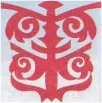
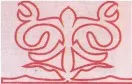
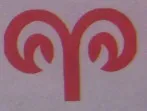
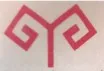
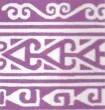
Узор под Категории.jpg

Since time immemorial, the art of ornamentation has served as the foundational aesthetic for every form of traditional craftsmanship in the Kazakh steppe. The terms oyu (to carve or cut) and ornek (pattern) are deeply intertwined in meaning. Oyu encompasses the act of incising, cutting away, or interlocking materials to create a cohesive design, as well as embossing surfaces with relief work. Meanwhile, ornek functions as an umbrella term for artistic expressions—including engravings, impressions, pyrography (wood burning), and painted decorations—that embellish an object. Consequently, these words are frequently coupled as oyu-ornek to describe the complete decorative system.

Historically, Kazakh motifs can be categorized into three primary thematic groups based on their content:

Pastoral and Hunting Life: Designs reflecting the animals and hunting heritage essential to steppe existence.

Geography and Migration: Patterns illustrating landscapes, rivers, and the rhythmic cycle of nomadic movement.

Domestic Objects: Stylized representations of everyday items encountered within the household.

As masters honed their craft, they began to memorize intricate designs and innovate by introducing original variations. The community referred to these highly skilled individuals as oyushy (ornament-makers). Every region and clan boasted renowned masters whose signature patterns became benchmarks of excellence. They disseminated their exquisite designs throughout their own tribes and neighboring populations. This artistic exchange led to the emergence of distinct regional styles, such as the "Argyn" or "Kerey" patterns, as well as broader aesthetic traditions associated with the Senior, Middle, and Junior Zhuz (hordes or tribal confederations).

Below are the most prevalent motifs widely recognized and frequently employed by traditional artisans across the land.

Types of Kazakh Ornamental Motifs

Müyiz (Horn) 
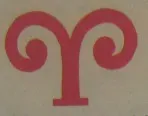
muiz_6_11zon.webpThe most ancient motif in the Kazakh decorative repertoire, derived from the shape of an animal horn. It ranges from delicate, small versions used in wood and bone carving to large, bold variations for felt mats (syrmaq - felt rugs with sewn patterns, tekemet - felt rugs with pressed patterns), carpets, and architecture. Specific styles include the "moon horn," "double horn," "single horn," "broken horn," "forty-horn," and "ibex horn."

Qosmuyiz (Double Horn)

kosmuiz_15_11zon.webpRepresenting the dual horns of sheep, goats, or cattle, this motif is sometimes known as the "rhythm" or "hook" pattern. It is commonly featured on the saukele (traditional tall bridal headdress), the crown or brim of the ayyr qalpaq (pointed felt hat), the front of vests, and boot shafts.


Arqar-muyiz (Argali Horn)

arkarmuiz_18_11zon.webpThis pattern depicts the spiral horns of the arqar (wild mountain sheep/argali). It closely resembles the qoshqarmuyiz but is more tightly coiled and features complex branching, frequently appearing on carpets, tuskiiz (wall-hanging felt carpets), embroidery, and garments.


Qoshqarmuyiz (Ram Horn)

koshkarmuizi_4_11zon.webpOne of the most recognizable motifs, capturing the curling horns of a ram. It is a staple on felt goods, leatherwork, and jewelry. On felt, this design is often created through quraq (the art of appliqué or patchwork).


Qyryqmuyiz (Forty Horn)

kyrykmuiz_5_11zon.webpA complex pattern of multiple intertwined, branching horns, often inscribed within circles or squares. It is widely used in architectural ornamentation, tuskiiz, and various woolen textiles.


Synyqmuyiz (Broken Horn)

synykmuiz_29_11zon.webpShaped like four inward-turning right angles, this motif resembles a fractured animal horn. It is primarily used to decorate carpets, reed mats, and various pouches.


Orkesh (Camel Hump)

orkesh_21_11zon.webpDepicting the two humps of a Bactrian camel, this element is common in syrmaq and tekemet compositions. In Kazakh art, the pairing of horns, humps, or teats symbolizes unity, prosperity, and fertility.


Shyny-gul (Glass Flower)

shynygul_23_11zon.webpA floral motif resembling a blooming plant. It consists of leaves attached to the ends of two curved horns, repeating in a stepped, rhythmic sequence.


Gul (Flower)

gul_2_11zon.webpThis term covers all botanical motifs, ranging from simple three-leaf patterns to intricate twelve-leaf arrangements found on collars, pockets, and garment hems.


Shytyrman (Labyrinth)

shytyrman_25_11zon.webpA sophisticated pattern blending multi-leaf plants, branching horns, and geometric shapes. These intricate lines create a narrative effect, evoking images of lush summer pastures, forests, or the vast steppe.


Tuyetaban (Camel Footprint)

tujetaban_8_11zon.webpA complex design mimicking the tracks left by a camel, often featuring two S-shaped lines that curve into semi-ovals. Some variations with jagged edges are locally referred to as tabaq (plate) patterns.


Syngar-okesh (Single Hump/Horn)

shynygul_23_11zon.webp An elegant curve resembling the toe of a traditional boot. Derived from the qoshqarmüyiz element, it can be repeated infinitely to create a flowing design.


Baldaq (Crutch)

baldak_5_11zon.webpShaped like the handle of a falconer's crutch (the support worn on the wrist), this motif forms complex, circular interconnected patterns used in felt decoration and wood carving.


Qarmaq (Fishhook)

karmak_11_11zon.webpNamed for its resemblance to a fishing hook, this multi-branched design is sometimes called the "anchor" symbol.


Taraq (Comb)

tarak_31_11zon.webpImitating a household hair comb, this pattern consists of parallel, thick, textured bands. It is frequently woven into alasha (woven rugs) and basqur (decorative woven cords/friezes).


Qosalqa (Necklace)

kosalka_3_11zon.webpResembling strings of beads, this is a widespread motif. When arranged, it forms a cohesive, unified composition, commonly found in jewelry like necklaces, earrings, and rings.


Su Ornegi (Water Pattern)

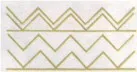
su_ornegi_27_11zon.webpA geometric "running" border using zigzag lines between two parallel bars to create alternating shapes, also known as the "five-finger" or "five-flower" motif.


Alasha / Alamysh (Striped Pattern)

alasha_2_11zon.webpComposed of vibrant, parallel colored bands. These can be solid or interspersed with geometric figures or running horn motifs, often seen in reed weaving and braided cords.


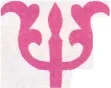
Ayyr (Pitchfork)

ajyr_1_11zon.webpNamed after the traditional farming tool, this motif features a pronged shape and is sometimes called the "split hoof."


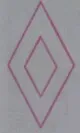
Botakoz (Camel Calf Eye)

botakoz_1_11zon.webpA geometric rhombus shaped like the eye of a camel calf. It is used as a central focal point or a repeating decorative border for items like headscarves.


Qangqa (Skeleton)

kanka_10_11zon.webpAn abstract pattern resembling the bleached bones of an animal, used as a structural design in woven textiles, belts, and ribbons.


Omyrtqa (Vertebra)

omyrtka_7_11zon.webpMimicking the spinal column, this motif is common in embroidery, reed weaving, and carvings. It is prized for its flexibility.


Zhilinshik (Lower Leg Bone)

zhilinshik_35_11zon.webpDerived from an animal's lower limb bone, this jointed pattern consists of two parallel lines, used to decorate felt, fabric casings, and woven trim.


Tis (Tooth)

tis_32_11zon.webpA checkerboard-style motif resembling animal teeth, often seen in embroidery using alternating light and dark squares, sometimes called "dog tooth."


Tangdai (Palate)

A diagontandaj_30_11zon.webpal, textured motif mirroring the ridges of an animal's palate. It is a traditional border decoration for wood, bone, and horn items, as well as garment collars.


Borikoz (Wolf Eye)

borikoz_6_11zon.webpRepresents the eye of a wolf, often incorporating elements of the wolf's head or ears.


Itquyryq (Dog Tail)

itkujryk_9_11zon.webpMimicking a curled dog tail, this is a popular embellishment for the surfaces of wooden objects, such as yurt doors or bed frames.


Tulkibas (Fox Head)

tulkibas_34_11zon.webpComposed of oval and pear-shaped forms representing the head of a fox or cat, commonly used for decorative bone inlays on wood or reed screens.


Zhylan (Snake)

zhylan_36_11zon.webpA motif resembling a snake's skull. It is frequently sewn onto children’s taqiya (small, lightweight skullcaps) as a protective amulet.


Qusqanat (Bird Wing)

kuskanat_20_11zon.webpDepicting a bird in flight with wings spread, often incorporating horn motifs or geometric checkers.


Qusmoyyn (Bird Neck)

kusiojyn_17_11zon.webpDerived from the graceful curve of a bird's neck, crafted using horn-like arcs, rhombuses, and refined lines.


Qustumsyq (Bird Beak)

stmsy_26_11zon.webpInspired by the shape of a bird's beak. In ring design, this served as a token of connection between relatives; receiving a ring wrapped in a headscarf from a married daughter confirmed her happiness in her new home.


Qaztaban (Goose Foot)

kaztaban_12_11zon.webp

A complex S-shaped element resembling a goose's webbed foot, famously used in the gravestone carvings of the Mangystau region.


Shetoyu (Border/Endless Pattern)

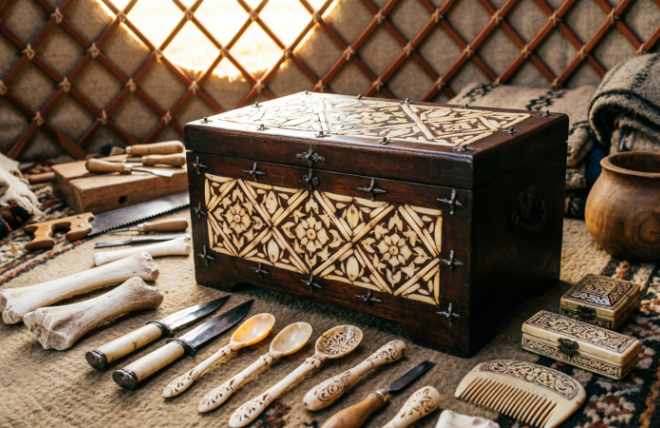
shetoyu_22_11zon.webpA design element that repeats infinitely along an edge, serving as the standard trim for doorways, felt mats, wooden chests, and ceramics.


Irek/ Ireksu (Zigzag/Flowing Water)

irek_7_11zon.webp

irek_ireksu (1).webp

Formed by broken or curved lines running parallel to one another. When combined, these lines create squares, "watch-strap," or "staircase" effects. It is a quintessential border design for jackets, vests, robes, and jewelry.


Qos Donggelek (Double Circle)

kosdongelek_14_11zon.webpResembling tribal brand marks (tamga), these circles are primarily used to decorate felt textiles.


Tumarsha (Amulet)

tumarsha_9_11zon.webpA triangular motif resembling the shape of a protective amulet. Triangles and floral amulets were worn by people and livestock alike to repel negative energy.


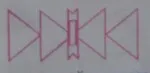
Qostumarsha (Double Amulet)

kostumarsha_16_11zon.webpTwo triangles joined at the apex to form a larger geometric shape, used purely for aesthetic purposes.


Baganörnek (Pillar Motif)

baganornek_4_11zon.webpInspired by the central supporting post of the yurt. This motif serves as the central anchor for a composition, with secondary patterns radiating outward.


Colors and Pigments in Traditional Crafts

Artisans in traditional Kazakh society meticulously crafted their own dyes by blending organic and mineral components. Historically, they utilized naturally occurring earth pigments—such as white, yellow, blue, black, and various ochre clays—directly for staining wood, leather, and rawhide. Animal by-products like blood, as well as liver pigments, also served as vital coloring agents.

Nature provided a vast pantry of ready-to-use dyes; the juices of wild berries and fruits, including burdock buds, bird cherries, hawthorn, currants, wild strawberries, and rosehips, were frequently harvested. Master craftsmen mastered the technique of boiling diverse plant materials, including bark, roots, and stems. For instance, the barks of willow, poplar, pine, oak, apple, pomegranate, grape, and apricot trees were boiled to extract an array of shades ranging from vibrant crimson and sunny yellow to deep chestnut and rich maroon. Lichens gathered from rocks or the ground, alongside the roots of specific plants like tomarboyau (madder/Rubia tinctorum) and tobylgy (meadowsweet/Spiraea), were also essential in producing durable colorants.

Technically, these raw materials were typically gathered during autumn, then crushed using hand mills or mortars before being boiled. As the mixture reduced, the sediment was strained out, and the remaining liquid continued to simmer until it reached the desired consistency; in some instances, it was thickened further into a concentrated powder. To fix the color and enhance its intensity, masters added additives such as alum, ammonium chloride, copper sulfate, salt, or pine resin.

Additionally, substances like soot, smoke-stains, charcoal, and the burnt pits of apricots or walnuts, as well as carbonized wheat and barley, were utilized as pigments. By combining these varied ingredients, artists generated a sophisticated spectrum of hues. To ensure the dyes were colorfast and deeply absorbed into the materials, practitioners mixed them with extracts from bitter, medicinal herbs—such as wormwood, saltwort, and desert sage—or occasionally added fermented whey or oils.
Узор под Категории.jpg

Explore articles