Kazakh Calendar and Seasonal Traditions


Ay Sanau: Counting the Lunar Months
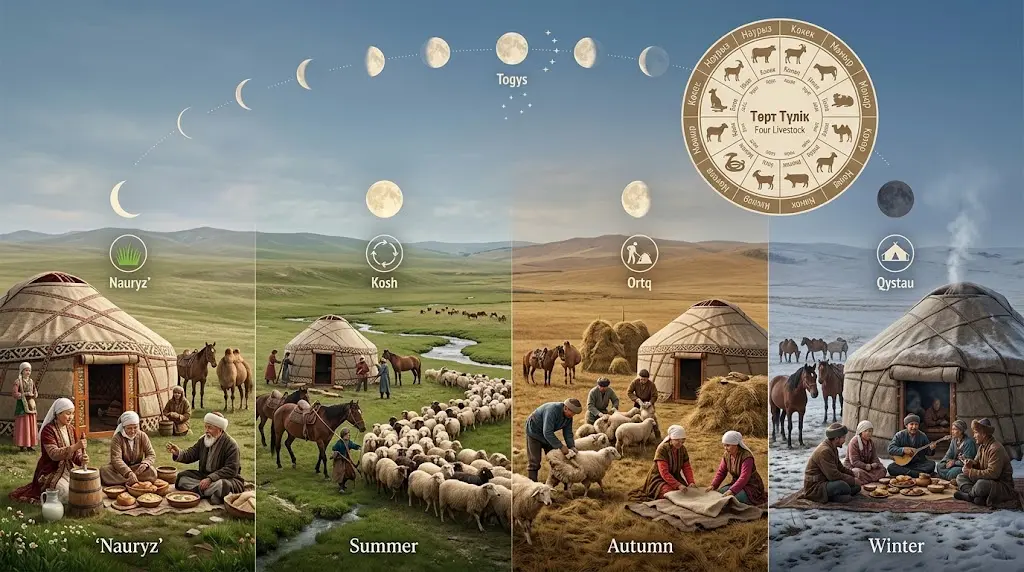
Traditional Kazakh timekeeping included Ay Sanau (counting the months by the Moon), a system based on the observation of lunar cycles. A year was divided into 12 months, and knowledge of these cycles was important for planning seasonal activities, livestock management, household work, and other aspects of nomadic life.
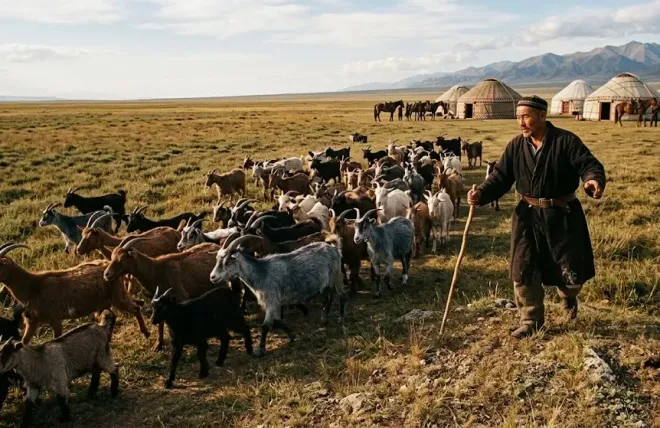
Nomadic communities also paid close attention to periods of changing and unpredictable weather. Such transitions were associated with amal, a traditional way of understanding recurring weather changes. Particularly during the harsh winter months, sudden shifts in temperature, snow, wind, and other conditions could have a direct impact on livestock and human survival.
The traditional calendar was closely connected with the natural cycle of the year. Nauryz, the spring festival associated with the spring equinox, marked the renewal of nature and the beginning of a new annual cycle in Kazakh tradition.
Kun Sanau: The Seven-Day Week
Kazakh traditional timekeeping also followed a seven-day cycle. The days of the week are:
- Duysenbi — Monday
- Seysenbi — Tuesday
- Sarsenbi — Wednesday
- Beysenbi — Thursday
- Zhuma — Friday
- Senbi — Saturday
- Zheksenbi — Sunday
Among these days, Sarsenbi (Wednesday) was traditionally regarded in some contexts as a particularly auspicious day. People might choose it for important activities, dress carefully, and pay special attention to customs associated with good fortune and respect for ancestors.
Friday, Zhuma, also held particular significance because of the influence of Islam on Kazakh culture. Prayer, remembrance of ancestors, and religious observances formed an important part of traditional community life.
Nauryz: The Celebration of a New Day
The name Nauryz comes from the Persian term meaning “New Day.” In Kazakh culture, Nauryz is associated with the spring equinox, the renewal of nature, and the beginning of a new year.
The holiday traditionally marks the moment when winter gives way to spring. The balance of day and night at the equinox made the occasion a powerful symbol of renewal, harmony, and a fresh beginning.
Nauryz has also been known as Ulystyn Uly Kuni (the Great Day of the Nation), emphasizing its importance as a communal celebration.
For nomadic communities, the arrival of spring had a very practical significance. The end of the harsh winter meant access to fresh pasture, the return of livestock to seasonal grazing grounds, and renewed hopes for prosperity in the coming year.
Nauryz Kozhe: A Symbol of Abundance
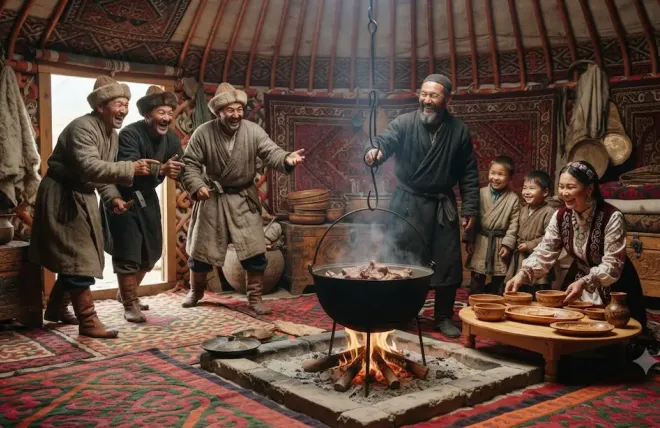
One of the most important foods associated with Nauryz is Nauryz Kozhe, a traditional festive soup prepared to welcome the new year.
The dish is traditionally made with seven ingredients or flavors, reflecting the special significance of the number seven in Kazakh culture. However, there is no single universal recipe. The ingredients vary from region to region and from one household to another.
Common components include:
- meat, often preserved meat from the winter supply;
- water or broth;
- salt;
- grains such as millet, wheat, rice, or barley;
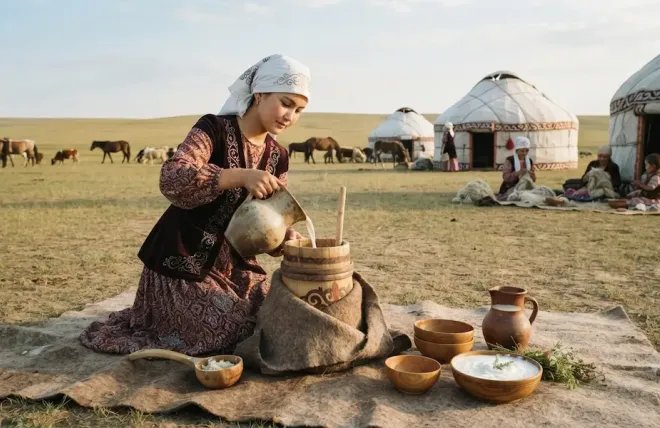
- dairy products such as milk, fermented milk, or kurt (dried salted cheese).
The important principle is not a fixed recipe but the symbolic combination of foods associated with abundance, nourishment, health, and prosperity.
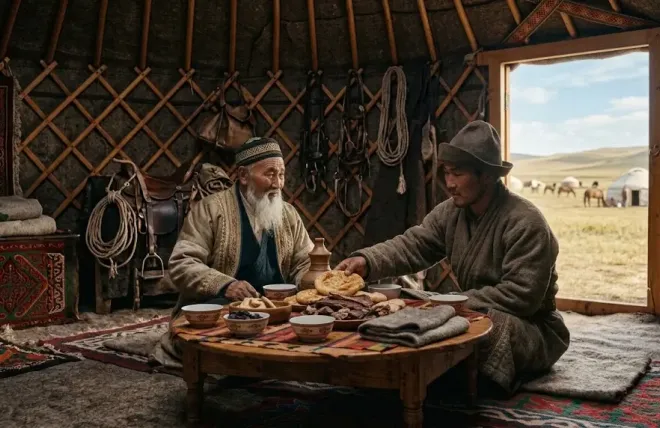
Sharing Nauryz Kozhe with relatives, neighbors, and guests expresses hospitality and goodwill. The practice also reflects the communal nature of traditional Kazakh life: entering a new season with a full table was a way of wishing prosperity and well-being for the entire community.
Bata: Spring Blessings and Good Wishes
The arrival of Nauryz was accompanied by bata (a traditional blessing or good-wish speech), often delivered by elders.
These blessings expressed hopes for health, prosperity, peaceful lives, and thriving livestock in the coming year. Such wishes were especially meaningful in a nomadic society, where the well-being of people and animals was closely connected to weather, pasture conditions, and the success of the seasonal cycle.
Traditional Nauryz greetings included wishes for abundance, peace, health, and prosperity, reflecting the central values of the celebration.
Zhyl Kayiru: Calculating the Animal Year
The traditional system of calculating years was known as Zhyl Kayiru (counting or determining the year within the cycle). It was based on the 12-year animal cycle known as Mushel.
The system could be used to determine the animal associated with a person's year of birth and to calculate significant life stages known as Mushel Zhyl.
The first Mushel occurs at age 13, followed by 25, 37, 49, 61, 73, 85, and 97. Each subsequent Mushel is 12 years after the previous one.
Traditional calculations used division by 12. When determining the animal year from a year number, the remainder corresponds to a position in the 12-year cycle. This provided a practical way of keeping track of years and age before modern calendars and written records became widely used.
Zhyl Sanau: The 12-Year Animal Cycle
The traditional Zhyl Sanau (year counting) system follows a repeating 12-year cycle in which every year is associated with an animal.
The sequence begins with the Mouse:
- Tyshkan — Mouse
- Siyir — Cow
- Barys — Leopard
- Koyan — Rabbit
- Ulu — Snail
- Zhylan — Snake
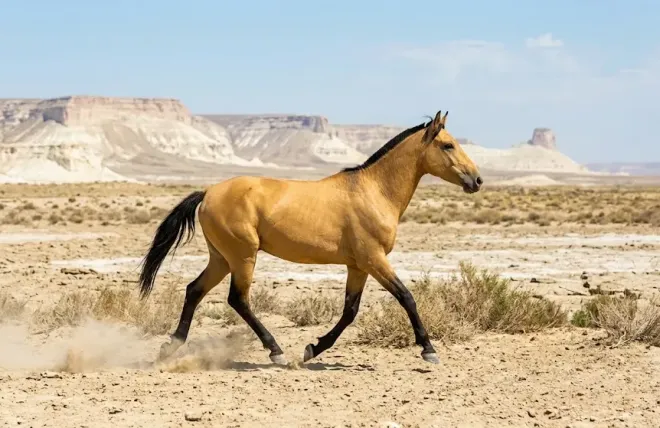
- Zhylky — Horse
- Koy — Sheep
- Meshin — Monkey
- Tauyk — Chicken
- It — Dog
- Doniz — Wild Boar
This 12-year cycle has deep roots in the broader Turkic cultural world. In Kazakh tradition, the system was known as Mushel and was used for both calendar calculations and the reckoning of important stages of human life.
Traditional beliefs also associated particular qualities and expectations with different animal years. Some years were remembered as favorable and prosperous, while others became associated with hardship.
The Koyan (Rabbit) years were particularly significant in Kazakh historical memory because several severe Zhut (winter livestock disasters) occurred during years traditionally identified with the Rabbit. A Zhut could develop when deep snow, freezing rain, ice, severe cold, or other difficult conditions prevented livestock from reaching pasture.
Historical disasters were remembered under names such as Ak Koyan (White Rabbit), Takyr Koyan (Barren Rabbit), and Zhalpak Koyan (Widespread Rabbit). These names reflect the scale and character of particular ecological disasters rather than a belief that every Rabbit year was inevitably disastrous. In fact, severe Zhut also occurred in years associated with other animals.
For nomadic communities whose livelihood depended heavily on livestock, such disasters could lead to the loss of animals, food shortages, and displacement. As a result, certain years became deeply embedded in collective historical memory.
Kuzem Shai: A Gathering After Sheep Shearing
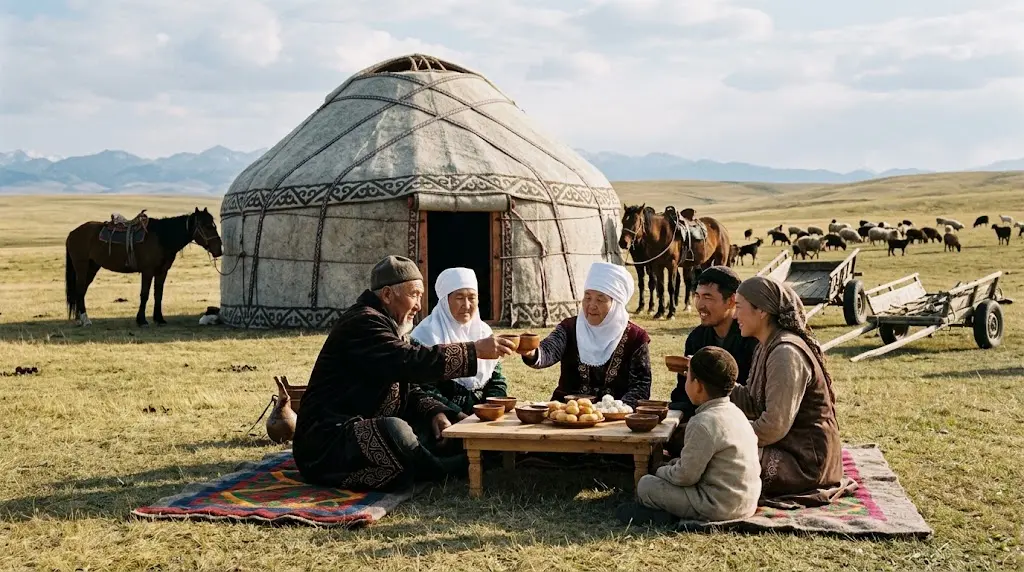
Kuzem Shai is a traditional gathering associated with the completion of the annual sheep-shearing season, known as kyrtyk.
After the work was finished, neighbors could come together for tea, conversation, songs, and games. The gathering turned the completion of a demanding seasonal task into a social occasion.
Such customs were important in nomadic communities because seasonal work depended on cooperation. Shared celebrations helped strengthen relationships between neighboring households and reinforce the sense of community.
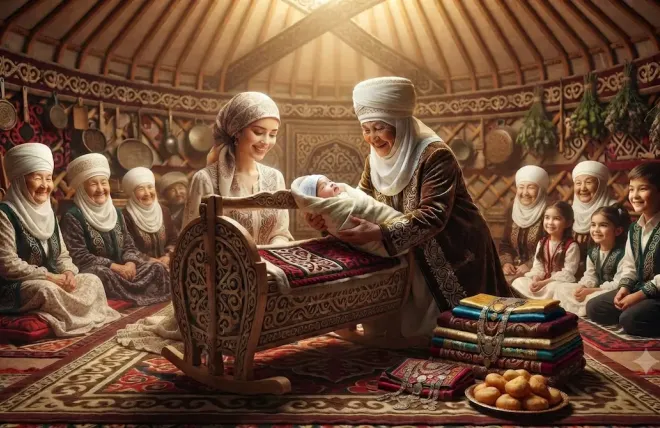
Kogen Toi: Celebrating Newborn Livestock
Kogen Toi is associated with the spring birth of young livestock, when animals were born and the pastures began turning green.
Families and neighbors gathered to celebrate the arrival of the new generation of animals, exchange bata (blessings), and express wishes for healthy livestock, abundance, and prosperity.
For pastoral communities, the birth of young animals was far more than a seasonal event. The growth of a herd directly affected a family's food supply, wealth, mobility, and prospects for the coming year.
Saban Toi: The Harvest Festival
Saban Toi is a harvest celebration associated with the successful gathering of grain.
Although Kazakh society was historically strongly associated with pastoral nomadism, agriculture also formed an important part of life in many regions. Where grain was cultivated, the harvest was a major seasonal event.
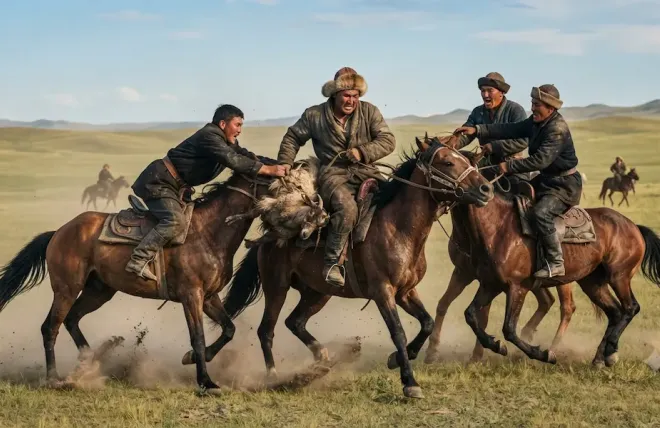
Communities could celebrate with wrestling competitions, music, poetry, games, and communal festivities. The harvest was also connected with keusen, a custom of sharing part of the harvest with neighbors or people in need.
This practice reflected a broader principle of traditional Kazakh society: prosperity was not viewed only as individual wealth, but also as something that could be shared with the wider community.
Together, these calendar systems and seasonal customs reveal how closely traditional Kazakh life was connected to the rhythms of nature. The movement of the Moon, the changing seasons, the birth of livestock, the harvest, and the arrival of spring were not separate events. They formed an interconnected system of timekeeping, survival, community life, and cultural memory.