Religious and Spiritual Beliefs


Ant: The Sacred Oath
An Ant is a solemn vow of honesty and fidelity taken only under exceptional circumstances. If a person was accused of a crime, someone of impeccable reputation might step in to save them by swearing an oath that the offense would never happen again. Breaking an Ant was considered a spiritual catastrophe; anyone who violated their vow was branded Ant Atqan ("cursed by their own oath") and permanently shunned by society.
Bata: The Power of the Spoken Blessing
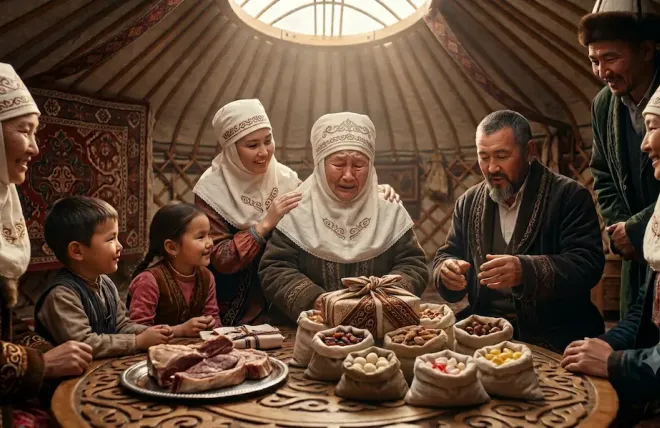
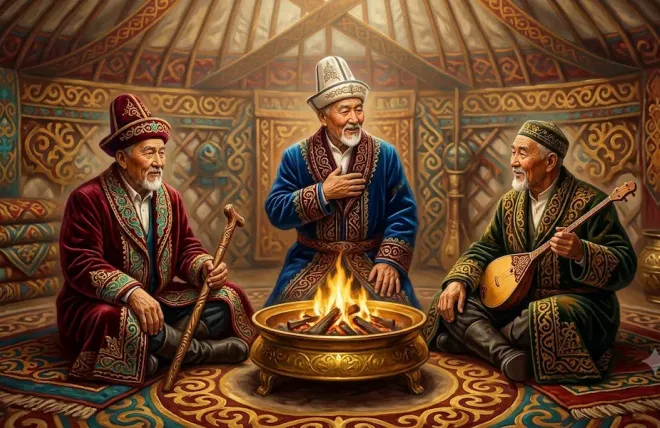
A Bata is a highly valued verbal blessing—a poetic prayer delivered by an elder to invoke divine protection, prosperity, and guidance. To receive a Bata, the recipient cups their hands together in front of their chest to absorb the words, and then wipes their hands over their face (Omin) to seal the blessing.
Traditional blessings vary by occasion:
- Travel Blessing (Zhol Bata): Given to individuals setting off on long journeys, dangerous military campaigns, or educational pursuits. Historic examples include the legendary blessings given by the blind seer Soqyr Abyz to great commanders like Zhanibek and Qabanbay Batyr.
- Table Blessing (Dastarqan Bata): Recited at the conclusion of every meal to thank the hosts and pray that their hearth remains prosperous.
- Lunar Blessing (Ay Bata): An ancient prayer recited upon catching the first glimpse of a new crescent moon in the night sky:
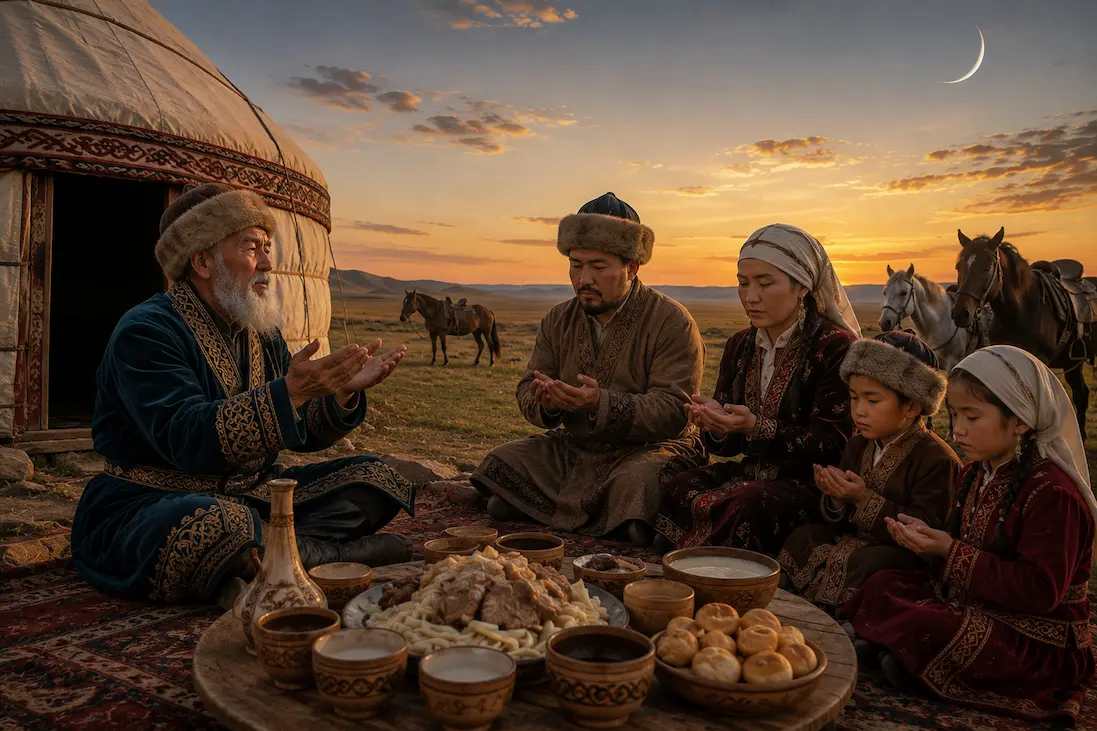
"I see the moon, whole and clear,
May ancient peace abide right here.
Forgive our past within the old,
And bless the new with wealth untold."
Nomadic elders were expert astronomers; by studying the alignment of the new moon and stars during these blessings, they accurately predicted upcoming weather patterns and pasture conditions.
Moynyna Burshaq Salu: The Prayer for Children
When a married couple faced difficulties conceiving a child, they performed a touching, humble ritual of faith called Moynyna Burshaq Salu. The husband and wife would place a soft woven cord (Burshaq) around their necks as a symbol of deep humility and submission before the Creator. Standing together in sincere prayer, they bowed to request the blessing of a child, using the cord to demonstrate their readiness to nurture new life.
Mushel: The Twelve-Year Life Cycles
The Kazakh people track human development through a 12-year cyclical system called Mushel, beginning with the completion of the 13th year of life (Mushel Zhas). Each subsequent 12-year milestone marks a major life transition:
- 1st Mushel (Age 13): Transition from childhood to youth.
- 2nd Mushel (Age 25): Entry into adulthood and responsibility.
- 3rd Mushel (Age 37): Reaching full maturity and life stability.
- 4th & 5th Mushels (Ages 49 & 61): Entering wisdom and elderhood.
Historically, a 63-year-old elder (reaching Payghambar Zhasy, the age of the Prophet) would explain that they had lived through five full Mushel cycles (61 years) plus two additional years.
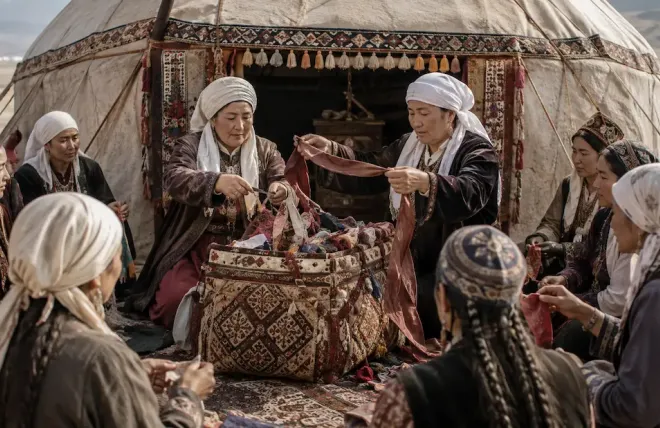
The transition year into a new Mushel was historically viewed with caution, as it marks a time of significant physiological and life changes. To ensure health and longevity during this period, a person would give away a piece of their clothing to someone in need and host a charitable gathering (Qudayi As) to pray for well-being.
Otpen Alastau: Purification by Fire
Fire has long served as a powerful symbol of spiritual purification and protection (Otpen Alastau).
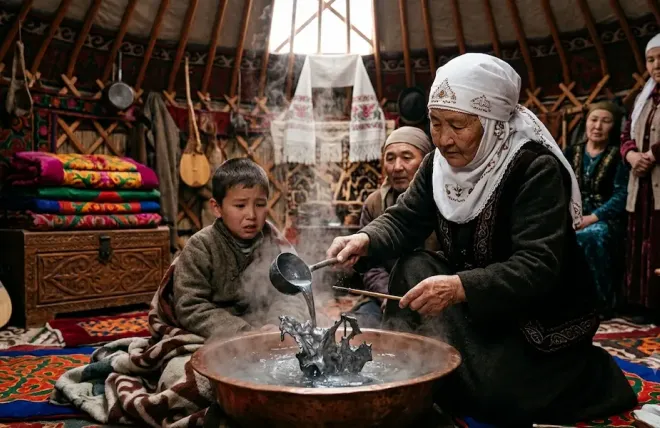
- Cradle Blessing: When a newborn baby is placed into their cradle (Besik) for the first time, elders wave a small branch of burning wild juniper (Arsha) around the wooden frame to clear the space of negative energy.
- Home Blessing: Similarly, when a family moves into a new home, elders perform a fire-purification ritual to welcome positive energy and bless the household.