Mourning, Burial, and Memorial Traditions


Kazakh culture features a profound and highly structured tapestry of rituals dedicated to the end of life, the honoring of ancestors, and the comfort of the grieving. These include:
Health and the Approach of Death in the Steppe
In ancient times, the diseases plaguing nomadic Kazakhs were few. Ailments like throat cancer, advanced tuberculosis, and certain chronic infections were incurable back then, but serious illnesses rarely reached these free spirits of the vast steppes and pristine lakes. Their active lifestyle, natural dairy-and-meat diet, and unpolluted air served as natural medicine. Had it not been for centuries of defensive warfare and historical hardships, the Kazakh population would have grown exponentially. Modern ailments like stress-induced hypertension or malignant cancers were exceptionally rare.
Til Kestiru: The Restrictive Silence
When a person fell seriously ill, visits to inquire about their health (köñil surau) had to take place before twilight. Visiting after the livestock returned to the camp was strictly forbidden.
Furthermore, as the illness worsened, elders believed that a high influx of visitors brought "heavy footsteps" that burdened the patient's spirit. Consequently, the family restricted entry to the yurt. Local shamans, traditional healers (baqsy-balger), and spiritual figures would treat the patient in absolute privacy. During this critical period, the entire village observed strict rules, even refusing to host travelers until the patient either recovered or passed away. This customary enforced quarantine was called Til Kestiru (literally, "cutting the tongue" or silencing the camp).
Aryzdasu and Ösiyet: The Farewell and Testament
When a dying individual realized recovery was impossible, they summoned their closest relatives, friends, and community leaders to deliver their final testament (ösiyet). During this solemn gathering, they entrusted the care of their remaining family to the community, settled debts, and sought forgiveness for any earthly shortcomings. They also gave precise instructions regarding where they wished to be buried, how their mausoleum should be constructed, and how their memorial feast should be managed.
Rituals of Departure and Communal Grief
Körisu: Ritual Grieving and Solidarity
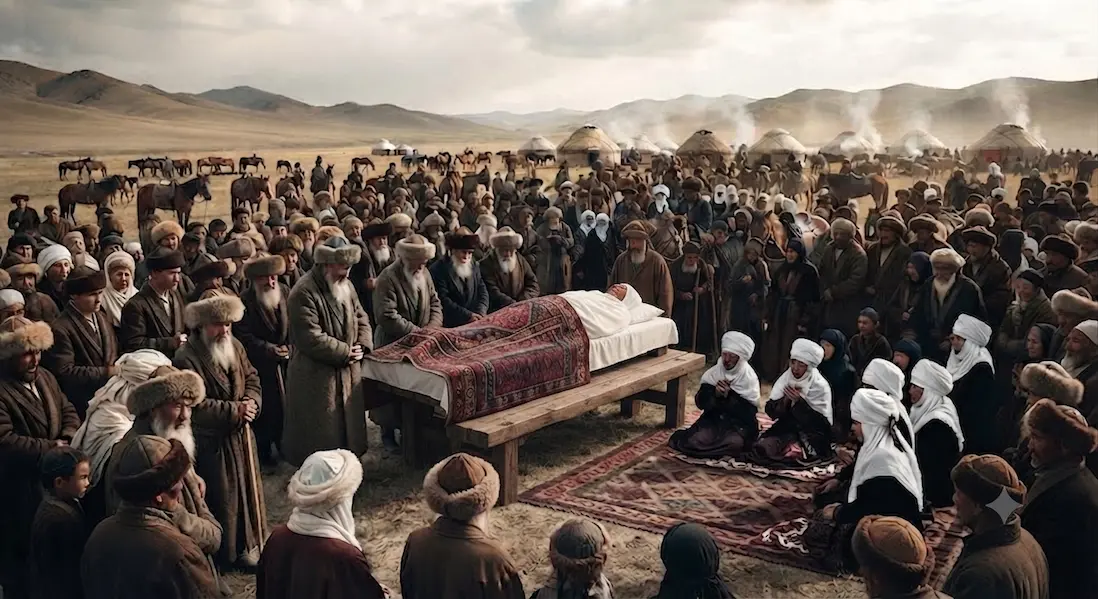
Immediately after a person passed away, the body was moved to a separate yurt where it underwent the ritual washing (meyram suy). This purification was performed meticulously by three respected individuals, with a wide, shallow vessel placed beneath a straw-lined bedding structure to maintain cleanliness.
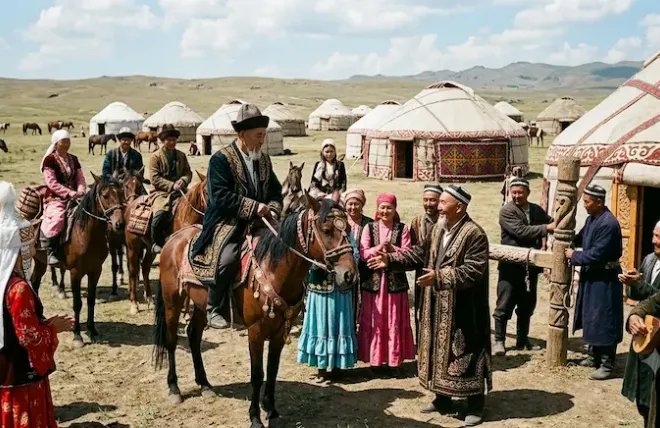
Outside the yurt, the immediate male heirs and closest relatives of the deceased stood leaning on walking staffs, visibly transformed by grief. Upon hearing the news, people from neighboring regions would gallop toward the camp from all directions, crying out, "Oy, bauyrym!" (Oh, my brother!).
The arriving guests would physically lean into and embrace the staff-bearing men (Körisu), sharing their sorrow before offering condolences to the mourning women seated inside.
[Ariving Mourners] ---> Embrace Staff-Bearing Heirs Outside (Körisu) ---> Comfort Mourning Women Inside
Throughout the night, the community kept a protective vigil (kuzet) over the deceased. Neighbors and nearby camps shouldered the entire burden of this initial gathering, slaughtering their own livestock and bringing cooked meat to feed the household and travelers. The grieving family did not spend a single coin or resource during these first days.
In Kazakh custom, women bore the emotional weight of mourning. They were culturally expected to compose and sing spontaneous poetic laments (zhoqtau), recounting every virtue, achievement, and kindness of the departed. Kazakh women possessed an extraordinary gift for this; their raw, heartbreaking melodies could melt the coldest hearts and bring tears to the eyes of the most hardened warriors.
Ölimdi Estirtu: The Art of the Death Announcement
One of the most civilized and compassionate Kazakh traditions was Ölimdi Estirtu—the careful, indirect delivery of tragic news. It was considered a severe breach of humanity to blunt or abruptly tell someone that a loved one had died, especially to children or distant relatives.
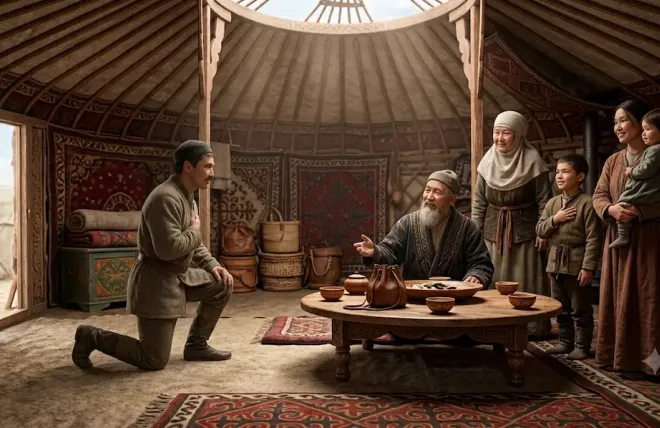
Instead, elders organized a supportive environment. They would invite the closest relatives to a respectful gathering under a pleasant pretext, serve them food, and engage them in philosophical conversations about the transience of life. Only when the guests were emotionally grounded would an eloquent, articulate orator skillfully weave the announcement into the conversation using metaphors, ensuring the shock did not shatter the family's spirit. This tradition of emotional guardianship remains alive in many Kazakh communities today.
Köñil Aytu: Words of Condolence
Visiting the home of the deceased to offer condolences (köñil aytu) and share the family's grief was a foundational social duty. Failing to show up or ignoring a neighbor's loss was viewed as an unforgivable insult and a sign of poor upbringing. Expressing solidarity during tragedy was the ultimate measure of respect and shared humanity.
Expressions of Deep Sorrow
Shashyn Zhayu: Unbraiding the Hair
When a woman lost her husband or a close male relative to an untimely death, she would completely unbraid her hair, letting it fall wildly over her shoulders as she wailed in grief. This striking visual act signaled to the entire steppe that she had suffered an overwhelming, life-altering catastrophe.
Eventually, village elders would step in, offering wise counsel and gentle words to help her regain her composure. Because loose, unbraided hair was strictly associated with tragic loss, Kazakhs strictly forbade their young daughters from walking around with unbraided hair during normal times, viewing it as a bad omen that invited misfortune.
Aqtay Zhoqtau: The Maiden's Lament
This rare and heart-wrenching custom occurred when a betrothed young man died before his wedding took place. His prospective bride, who had not yet been formally sent to his village, would sing a specialized lament called Aqtay Zhoqtau. This song expressed her profound grief over unfulfilled dreams, her broken destiny, and her deep respect for the parents-in-law she would never live with. This specific ritual is no longer practiced today.
Amanat Qoyu: The Temporary Burial
Harsh winters and vast distances often made it impossible to transport a body to its ancestral burial ground immediately. In such cases, Kazakhs practiced Amanat Qoyu (an entrusted burial). The body was laid to rest temporarily in a secure, marked location until conditions improved.
Historically, the great philosopher Khoja Akhmet Yassawi was initially laid to rest via this temporary method. Similarly, when Abai Kunanbayuly’s beloved, highly educated son, Abdrakhman, passed away far from home during the winter, he was placed in a temporary grave before being permanently moved to his ancestral lands in the spring.
Rites of Passage and Memorialization
Bata Zhasau: Material and Spiritual Support
When relatives and friends arrived at a mourning home to pray (bata zhasau), they did not come empty-handed. They brought horses, cattle, or sheep to help the family cover the massive costs of hosting guests. In modern times, this has transitioned into financial assistance. Providing this support was a sacred duty, and showing up empty-handed was considered an embarrassing social failure.
Topyraq Salu: The Sacred Handful of Earth
Every lineage was expected to send at least one representative to a funeral to cast a handful of earth (topyraq salu) onto the grave. This act demonstrated that the entire clan shared the loss and harbored no ill will toward the deceased. Funerals in the steppe served as a powerful mechanism for conflict resolution; custom dictated that all political rivalries, land disputes, and personal grudges had to be completely forgotten at the graveside so the community could find unity.
Grudges & Disputes ---> Extinguished at Graveside ---> Clan Unity Restored
The Visual Symbols of Long-Term Mourning
- Qara Tu Tigu (Raising the Mourning Banner): A spear bearing a specific colored banner was affixed to the right side of the deceased's yurt. The color signaled the age of the departed to passersby: an all-white banner for an elderly person, a blue banner for a middle-aged individual, and a black banner for a young person.
- Tul At (The Retired Horse): The favorite riding horse of the deceased was stripped of its saddle, its mane and tail were ritually cropped, and it was banned from being ridden by anyone else. It roamed the pastures untouched until the anniversary of the death.
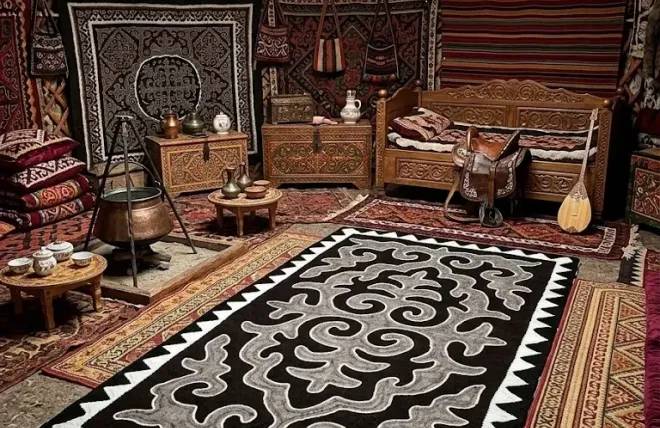
- Tul Kiyim and Tul Zhartys: The finest clothes and personal belongings of the deceased were arranged inside the yurt, forming a silent, life-sized effigy that sat in the place of honor, reminding the family of their lost leader.
Resolving the Mourning Period
- Qarasyn Tastalau (Removing the Black Veil): After a full year passed and the anniversary feast concluded, the widow formally removed her black mourning veil and replaced it with a traditional head covering, symbolizing her return to active community life.
- Qara Zhyqty (Striking the Banner): Once the year-long mourning concluded and the final great feast (as) was served, the mourning spear and its colorful banner were ceremonially taken down and broken, officially ending the family's public period of grief.
As Beru: The Great Anniversary Feast
The final, most magnificent stage of honoring the deceased was the As Beru—a massive commemorative festival held exactly one year after the death. It was not a somber funeral, but a grand celebration of the person's legacy, attracting thousands of guests from distant tribes.
Organizing such a magnificent memorial feast required considerable wealth. The largest As Beru ceremonies were therefore usually hosted by prosperous and influential families. Nevertheless, the feast belonged to the entire community: rich and poor alike gathered to honor the deceased, share the meal, witness the competitions, and strengthen ties between families and clans.
To organize it, the family sent out messengers months in advance (Sauyn Aytu), announcing the location, timing, and prizes for the upcoming festival.
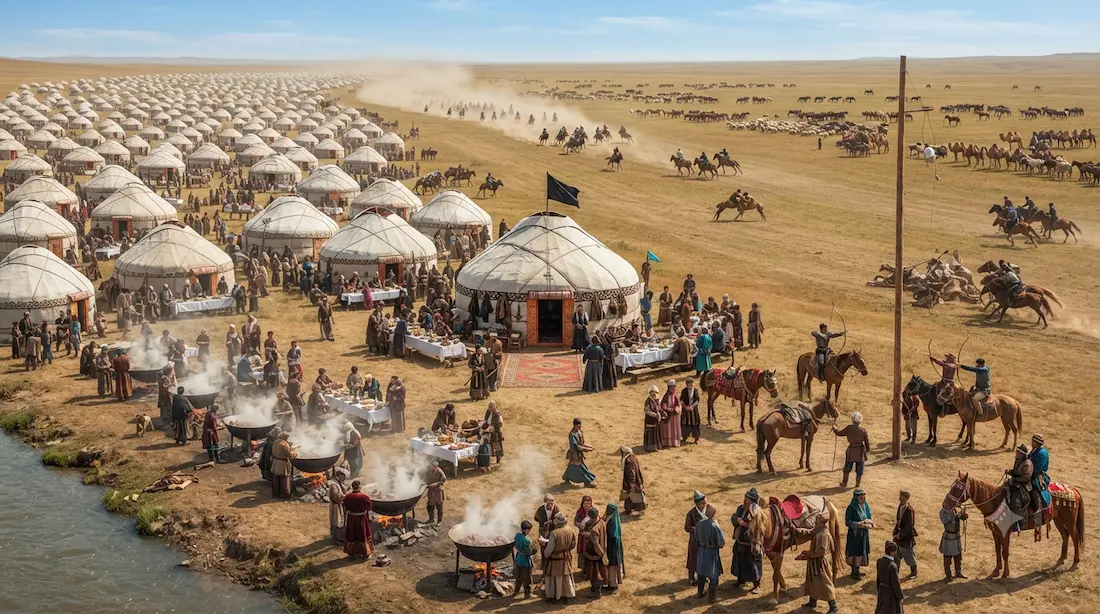
The anniversary feast featured highly competitive sports, games, and intense rivalries that mirrored the grandest weddings. These traditional competitions included:
- At Bayghe: Epic, long-distance horse races stretching across dozens of miles.
- Zhorgha Zharys: High-speed pacing competitions showcasing horse elegance and rhythmic gait.
- Paluandary Kures: Heavyweight wrestling matches between champion athletes representing different clans.
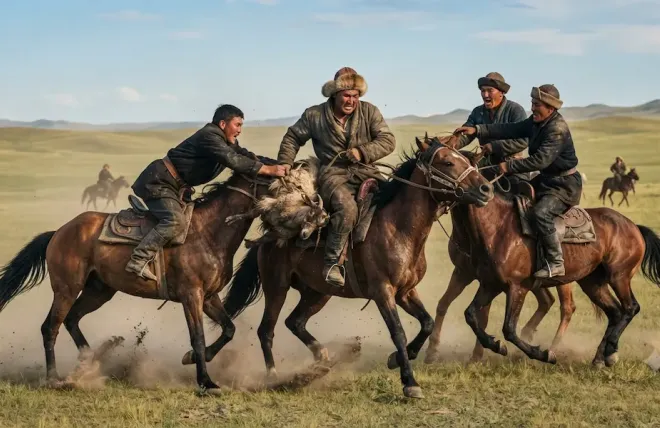
- Audaryspaq: Mounted wrestling where riders attempted to throw their opponents off their horses.
- Kökpar Tartar: A fierce, high-stakes equestrian polo match played with a goat carcass.
- Zhamby Atu: Horseback archery where riders shot at silver targets hung from high poles.
The prizes awarded at these competitions were legendary, traditionally categorized into sets of nine (Toghyzdar). The highest tier, Bas Toghyz (The Grand Nine), included a prized lead stallion followed by eight other premium animals. If a prize lacked a prime stallion, it was called a Toqal Toghyz (The Hornless Nine).
Oshaq Maylau: Anointing the Hearth
Before embarking on the massive undertaking of the grand anniversary feast, the organizers held a preliminary ritual called Oshaq Maylau (Anointing the Hearth).
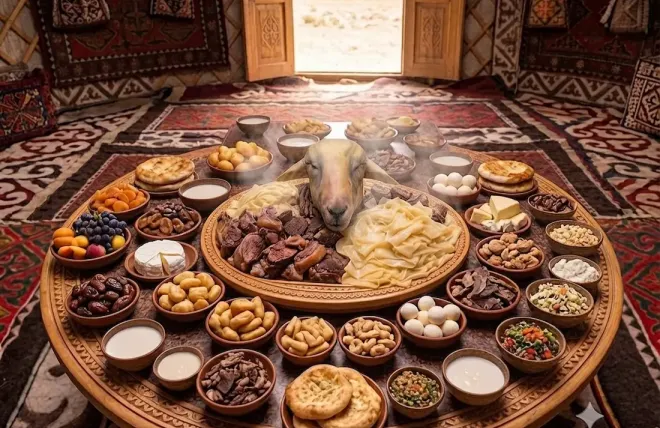
Because hosting an As Beru required flawless execution to preserve the clan's honor, the extended family and organizers held a smaller-scale gathering first. They slaughtered livestock, set up the cooking cauldrons, and reviewed all logistics. The responsible organizers took this duty very seriously; they worked with profound sincerity to ensure that the hospitality extended during the upcoming grand feast would reflect flawlessly on the reputation of the Kazakh people.